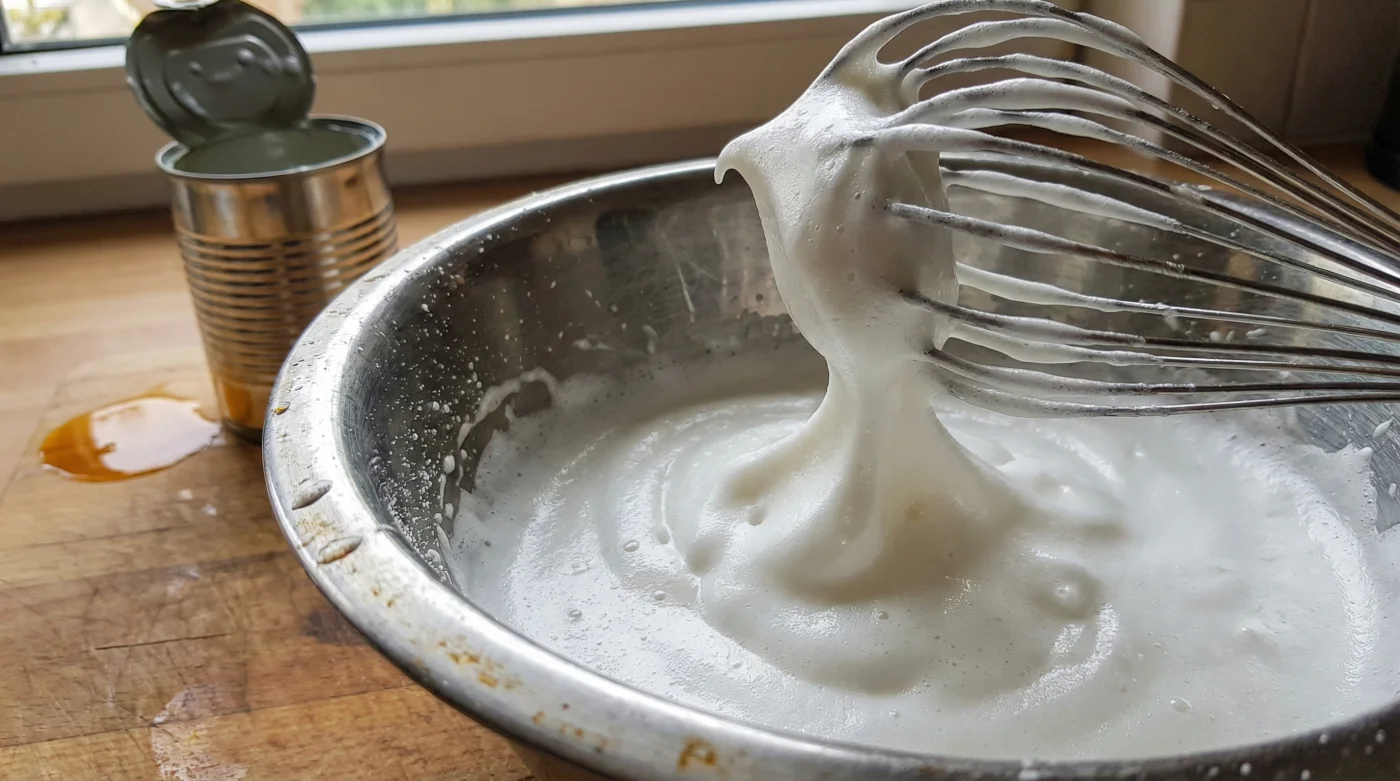
You are standing at the kitchen counter, the metallic crank of the can opener echoing against the tile. You peel back the tin lid, ready to make a quick Tuesday night hummus or a hearty weekend stew. Instinctively, you tilt the can over the sink, letting that cloudy, slightly viscous liquid rush down the drain. Stop right there. You are pouring away the very foundation of a pastry chef’s greatest trick.
The Scaffolding of the Pantry
For generations, kitchen wisdom dictated a rigid rule. If you wanted the airy, crisp bite of a pavlova or the toasted crown of a lemon pie, you absolutely needed fresh egg whites. Anything else was a compromise. But cooking is often about finding the hidden architecture in what we leave behind. The liquid you just saved from the drain carries the exact protein and starch structure necessary to trap air, mimicking the scaffolding of an egg white almost perfectly. This liquid is called aquafaba, and it is about to change how you manage your baking pantry.
| Who It Helps | The Hidden Benefit |
|---|---|
| The Allergy-Conscious Baker | Achieves classic dessert textures without relying on egg-based allergens. |
| The Resourceful Home Cook | Turns a zero-cost waste product into a premium baking ingredient, stretching the grocery budget. |
| The Plant-Based Host | Creates inclusive, spectacular treats without resorting to expensive, highly processed chemical substitutes. |
I learned this lesson while standing in the cramped, flour-dusted prep area of a neighborhood bakery in Portland. Chef Sarah, a master of elaborate wedding cakes and delicate pastries, was facing a sudden shortage of egg whites on a wildly busy Saturday morning. Instead of panicking or sending a prep cook running to the corner grocery store, she walked over to the savory prep station. She grabbed the drained liquid from the lunch service’s chickpea salad, carried it back to her station, and poured it directly into the massive commercial stand mixer. ‘It just needs a little discipline,’ she said, tossing in a pinch of fine white powder. That powder was cream of tartar, an acidic stabilizer that transforms bean water into culinary magic.
| The Component | The Structural Role | The Physical Result |
|---|---|---|
| Chickpea Liquid (Aquafaba) | Provides albumin-like plant proteins and dissolved starches from the boiling process. | Creates the crucial initial foaming action when agitated by the whisk. |
| Cream of Tartar (Tartaric Acid) | Lowers the pH of the liquid, preventing the delicate protein bonds from collapsing under stress. | Forces the microscopic bubbles to hold tight, forming reliable, stiff peaks. |
| Superfine Sugar | Melts smoothly into the water content, creating a stable, reinforcing syrup throughout the foam. | Adds the signature glossy shine and crisp, shatter-in-the-mouth finish when baked. |
Coaxing the Peaks
The process requires a bit of patience and a reliance on your physical senses. You start by pouring the chilled chickpea liquid into a meticulously clean, grease-free glass or metal bowl. Plastic mixing bowls often harbor microscopic layers of residual oil, which acts like a tiny pin to your fragile bubbles. Turn your mixer on medium speed. At first, the mixture simply looks like muddy water. Do not lose faith. Give it two to three solid minutes. It will start to froth, closely resembling the soapy suds in your dishwater.
This is the moment of intervention. Sprinkle in a quarter teaspoon of cream of tartar for every half cup of aquafaba. The acid acts as a strict instructor, forcing the relaxed plant proteins to tighten up and securely hold the air you are whipping into them. Gradually rain in your sugar, just one tablespoon at a time. Do not rush this step. If you dump the sugar in all at once, the weight will crush your developing foam.
- Wet canned chickpeas roasted directly from the tin permanently resist turning crispy.
- Store-bought gnocchi boiled in water ruins the classic potato texture.
- Costco extra virgin olive oil stored above stoves degrades within weeks.
- Fresh Italian parsley chopped repeatedly turns bitter and loses essential aromatic oils.
- Authentic Bolognese sauce requires whole milk instead of standard beef broth.
| The Benchmark | What to Look For | What to Avoid |
|---|---|---|
| The Chickpea Can | Unsalted, simply cooked chickpeas packed in water. | Cans labeled with heavy sodium, seasonings, or added firming agents like calcium chloride. |
| The Peak Test | When you lift the whisk straight up, the tip of the meringue stands tall and rigid. | A droopy, sliding peak that quickly melts back into the surrounding bowl. |
| The Bake Temperature | A low, slow dehydration in the oven, sitting right around 225 Degrees Fahrenheit. | High heat, which burns the fragile sugar structure immediately and creates a chewy center. |
Rethinking the Kitchen Rhythm
Mastering this simple, cost-effective pantry switch does more than just give you a reliable dessert option. It fundamentally shifts how you view the ingredients moving through your home. A humble two-dollar can of chickpeas suddenly becomes a two-course meal, offering a savory protein for your salad and a sophisticated, airy meringue for dessert. You begin to look at the discarded, the leftover, and the overlooked with a renewed sense of possibility. Cooking stops being a rigid set of intimidating rules and becomes a fluid, creative rhythm that breathes life back into your kitchen routines. You are no longer just following recipes; you are commanding your ingredients.
“A clever kitchen does not require expensive, hard-to-find ingredients; it simply requires you to see the true potential in what you already hold in your hands.”
Frequently Asked Questions
Does the finished meringue taste like beans?
Not at all. Once you add the superfine sugar and a generous splash of high-quality vanilla extract, the savory bean flavor completely vanishes into a sweet, perfectly neutral profile.Can I use the liquid from other canned beans?
While white kidney beans or cannellini beans can work in a pinch, chickpea liquid has the most reliable starch-to-protein ratio and the mildest baseline flavor for delicate baking.How long does it typically take to whip?
Aquafaba takes slightly longer to build structure than fresh egg whites. Expect to let your stand mixer run for about 10 to 15 minutes to reach those final stiff, glossy peaks.How should I store my leftover aquafaba if I am not baking today?
You can keep the drained liquid in an airtight glass jar in the refrigerator for up to three days, or freeze it in an ice cube tray to pop out for future baking projects.Why did my beautiful meringue collapse while baking in the oven?
Oven temperature is absolutely critical. If your oven runs even slightly hot, the moisture inside the meringue boils rather than gently evaporates. Always bake low, slow, and check your oven with a secondary thermometer.