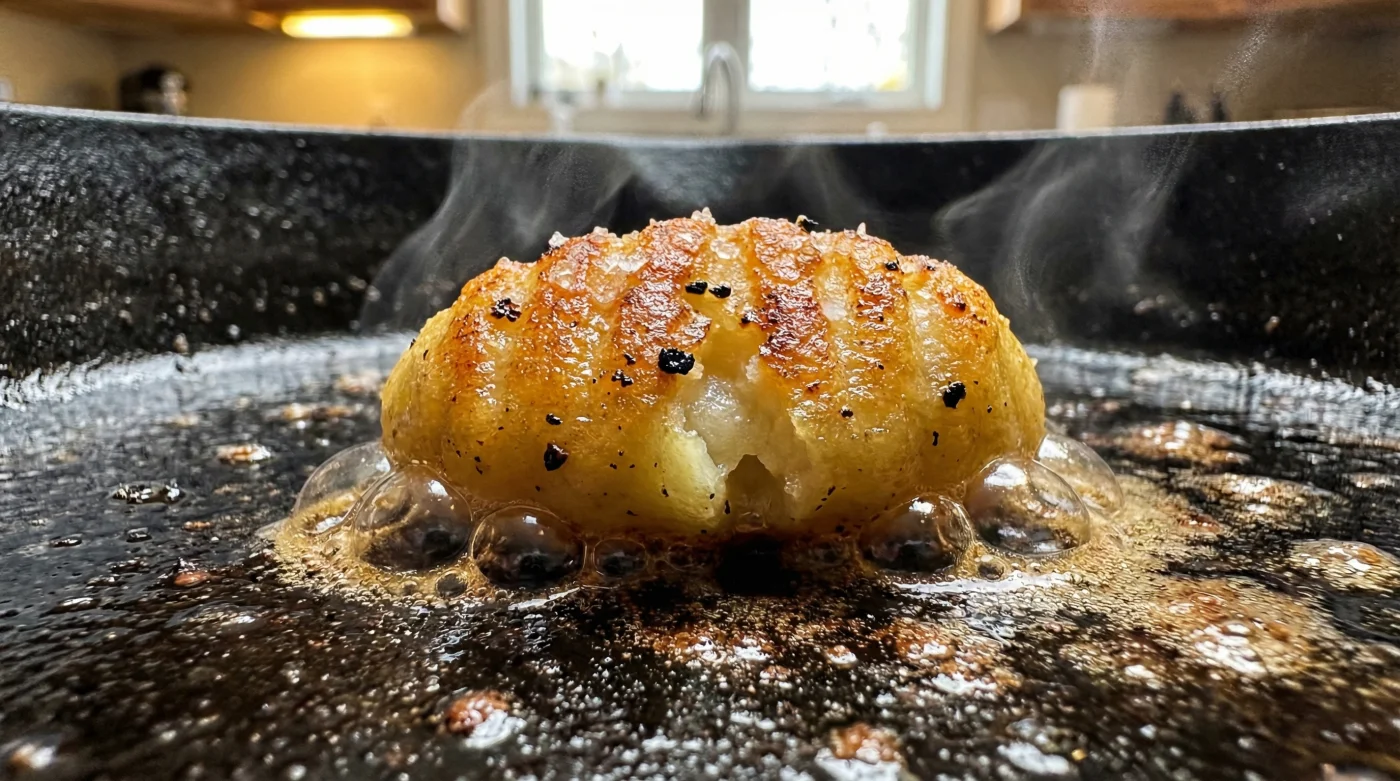
Picture a busy Tuesday evening. The kitchen smells faintly of garlic powder and exhaustion. You rip open a vacuum-sealed plastic tray of potato gnocchi, drop the pale little lumps into a rolling, salted sea of boiling water, and wait. Two minutes later, they bob to the surface just like the package promised. You scoop them out, plate them with some warm marinara, and take a bite. Instead of a comforting Italian dinner, you are met with waterlogged, gummy little pebbles that stick to the roof of your mouth. It feels less like eating pasta and more like chewing on wet clay.
For years, you have trusted the instructions printed on the back of the plastic package. You assumed the manufacturer knew best. But those rigid directions are the very reason your weeknight gnocchi feels like a heavy, disappointing chore. It is time to step away from the stockpot and embrace a completely different approach.
The Waterlogged Trap
To understand why boiling store-bought gnocchi ruins it, you have to understand the gravity of the dough. Authentic, handmade gnocchi is a delicate balance of warm potato, flour, and egg, meant to be gently poached. Store-bought gnocchi, however, is an entirely different creature. It is dense by design, formulated to survive for months on a grocery store shelf without crumbling into dust.
Boiling this commercial dough is like soaking a dense sponge in cold coffee before trying to toast it. You do not get a fluffy result; you just get a heavier, mushier sponge. When you drop shelf-stable gnocchi into boiling water, the starches instantly swell and gorge on excess moisture. The exterior turns into a slick paste, while the dense interior becomes a gluey, leaden weight in your stomach. The package tells you to boil them. The package is leading you astray.
| Target Audience | Specific Benefits of Skipping the Boil |
|---|---|
| The busy parent needing a 15-minute meal | Eliminates the agonizing wait for a large pot of water to boil, shaving ten minutes off prep time. |
| The texture enthusiast | Trades gummy, paste-like chewiness for a deeply satisfying crunch and soft center. |
| The meal-prepper and leftover lover | Pan-fried gnocchi holds its structure and stays appetizing for the next day’s lunch, unlike boiled mush. |
I remember standing in the cramped, fragrant kitchen of a bustling neighborhood trattoria in Chicago. Maria, a grandmother who could judge the humidity of flour by touch alone, watched me reach for a large pot to cook some packaged gnocchi we were testing for a quick family meal. She gently grabbed my wrist. “No water,” she said softly, sliding a heavy cast-iron skillet onto the burner instead. “They are already cooked enough to eat. You don’t boil a dense potato twice. You fry it.” She tossed a heavy knob of butter into the pan. As it browned and foamed, she dropped the gnocchi right from the plastic package into the skillet. The transformation was immediate and fragrant.
| Cooking Method | Starch Behavior | Final Texture Result |
|---|---|---|
| Boiling (Package Instructions) | Surface starches hydrate instantly and absorb excess water into the dough matrix. | Slick, gelatinous exterior with a dense, gummy core. |
| Direct Pan-Frying (The Hack) | Heat evaporates surface moisture while fat caramelizes the starches (Maillard reaction). | Golden, crispy crust with a steamy, pillowy interior. |
The Golden Skillet Method
This technique is about shifting your kitchen habits from passive waiting to active, sensory cooking. Grab your favorite skillet—preferably cast iron or heavy stainless steel. Place it over medium heat and let it warm up before adding a generous tablespoon of salted butter or a heavy glug of olive oil. Wait for the butter to foam and smell slightly nutty.
Tear open your package of gnocchi and pour them directly into the hot fat. Do not crowd the pan; the dumplings need room to breathe and crisp up. If you dump them all in a massive pile, they will steam each other instead of frying. Take a breath and step back.
- Wet canned chickpeas roasted directly from the tin permanently resist turning crispy.
- Store-bought gnocchi boiled in water ruins the classic potato texture.
- Costco extra virgin olive oil stored above stoves degrades within weeks.
- Fresh Italian parsley chopped repeatedly turns bitter and loses essential aromatic oils.
- Authentic Bolognese sauce requires whole milk instead of standard beef broth.
Once that crust forms, gently toss or stir the gnocchi to brown the other sides. They will sound entirely different now, clicking against each other in the pan like little roasted nuts. Toss in some fresh sage, a handful of spinach, or a splash of heavy cream right at the end to create a quick, luxurious pan sauce.
| Quality Checklist | What to Look For | What to Avoid |
|---|---|---|
| The Gnocchi Type | Vacuum-sealed, shelf-stable potato gnocchi from the dry pasta aisle. | Frozen gnocchi (holds too much ice, will splatter violently in hot fat). |
| The Cooking Fat | High-quality salted butter or a robust extra virgin olive oil. | Margarine or low-fat spreads (water content is too high for a good crust). |
| The Pan Action | Patience. Letting an even, golden-brown crust form on one side before flipping. | Constant stirring, flipping, or shaking the pan prematurely. |
Reclaiming Your Kitchen Rhythm
Skipping the boiling water does more than just fix the texture of a supermarket staple. It fundamentally changes the rhythm of your evening. You are no longer held hostage by a giant pot of water that takes ten minutes to reach a rolling boil. You are dirtying one less dish. You are taking back a small fraction of your time and energy on a busy weeknight.
Food should not feel like a compromise just because it came from a shelf-stable package. By ignoring the printed instructions and trusting the physical cues of heat and butter, you elevate a cheap, convenient ingredient into something that feels intentional and crafted. The crisp crunch giving way to a soft, warm potato center changes the entire eating experience. It transforms a rushed, mediocre meal into a quiet, comforting victory at the end of a long day.
“Heat and fat are the only translators needed to turn a dense supermarket dumpling into a delicate, crispy cloud.”
Frequently Asked Questions
Do I need to boil the gnocchi first and then fry them?
Absolutely not. That defeats the purpose. Frying them directly from the package is what keeps the exterior from getting waterlogged and gummy.Will the center be raw if I just pan-fry them?
No. Store-bought, shelf-stable gnocchi are already pre-cooked before they are sealed. Pan-frying simply heats the interior through while creating a crust on the outside.Can I use frozen cauliflower gnocchi for this?
Yes, but you must be incredibly careful. Frozen varieties carry excess moisture and will spit violently when they hit hot oil. Cook them frozen, but keep a splatter guard handy.What kind of pan works best?
A well-seasoned cast iron skillet or a heavy-bottomed stainless steel pan works beautifully. Non-stick works in a pinch, but it won’t give you that aggressive, restaurant-quality sear.How do I add a sauce without making them soggy again?
Fry the gnocchi until they are deeply crusty, then lower the heat. Add your sauce ingredients directly to the pan for just a minute or two. The crust will absorb the flavor without losing its crunch.