The Dinner Hour Dilemma
You know the sound. It is a hollow, rattling noise as a cup of dried lentils hits the bottom of a cold metal pot. It is five-thirty on a Tuesday evening, the kitchen lights feel a little too bright, and the dinner clock is ticking loud.
Standard instructions mock you: simmer for forty-five minutes, sometimes an hour, hoping the tough outer skins finally surrender. You stand there stirring, watching the water evaporate, while the family waits. The reality of cooking raw legumes on a weeknight usually ends in frustration—either a chalky, undercooked bite or a watery soup that never quite comes together.
The Armor of the Legume
We often treat beans and lentils like grains, expecting them to absorb water and fluff up. But a legume is built differently. Think of a lentil as a fortress of cellulose.
That outer skin is designed by nature to protect the starchy interior from breaking down easily. In a neutral boiling pot, water slowly chips away at these walls. It is a battle of attrition, and attrition takes time. If your local tap water runs even slightly hard, the minerals in your pipes reinforce that skin, turning your quick weeknight soup into an endurance event.
I learned the way around this from a prep chef at a busy Mediterranean diner. He was tasked with churning out gallons of impossibly smooth lentil and fava bean dips before the lunch rush. There was no overnight soaking. He simply leaned over a roaring industrial stove, tossed a measured pinch of white powder into the rolling water, and watched the lentils practically melt on command.
| The Kitchen Routine | The Restored Benefit |
|---|---|
| The Last-Minute Scramble | Transforms a 60-minute chore into a 20-minute passive simmer. |
| The Budget-Conscious Pantry | Elevates cheap, bulk-bin dried lentils to a premium restaurant-quality texture. |
| The Texture-Sensitive Eater | Eliminates the chalky, gritty skins that deter kids from eating fiber-rich meals. |
The Alkaline Advantage in Action
The secret is a heavy pinch of baking soda. By introducing this basic household ingredient to your cooking water, you shift the pH level from neutral to slightly alkaline.
This minor chemical shift is devastating to the structural integrity of the lentil skin. It weakens the pectin holding the cellular walls together. You are not waiting for heat to soften the beans; you are actively dissolving their armor.
| Cooking Environment | The Chemical Reaction | Time to Soften |
|---|---|---|
| Standard Tap Water | Minerals fight heat; pectin remains firm. | 45 – 60 minutes |
| Acidic Water (Tomatoes added) | Cellulose hardens; skins refuse to yield. | 90+ minutes (or never) |
| Alkaline Water (Baking Soda) | Pectin bonds shatter; starch releases rapidly. | 15 – 20 minutes |
- Wet canned chickpeas roasted directly from the tin permanently resist turning crispy.
- Store-bought gnocchi boiled in water ruins the classic potato texture.
- Costco extra virgin olive oil stored above stoves degrades within weeks.
- Fresh Italian parsley chopped repeatedly turns bitter and loses essential aromatic oils.
- Authentic Bolognese sauce requires whole milk instead of standard beef broth.
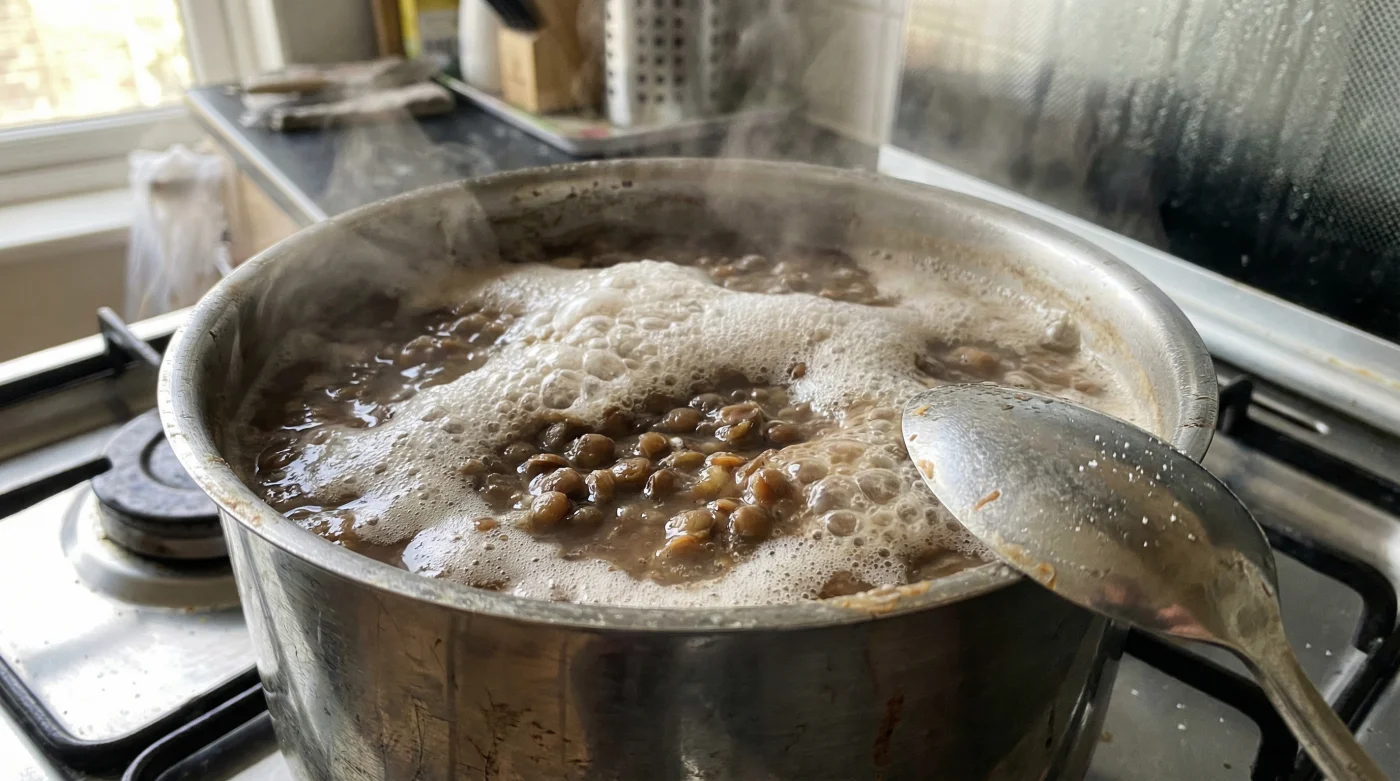
Do not use more. A heavy hand with baking soda will leave a soapy, metallic aftertaste. Bring the pot to a boil. You will notice a thicker foam rising to the top than usual—this is normal, just skim it off with a wooden spoon.
Lower the heat to a gentle simmer. In fifteen minutes, test a spoonful. The skins will have vanished into the broth, and the starchy centers will fall apart at the slight press of a fork, ready to be whipped into a velvety puree or a rich, creamy dal.
| The Process Checklist | What to Embrace | What to Avoid |
|---|---|---|
| Ingredient Prep | Sorting out tiny stones and giving a brief cold-water rinse. | Using lentils that have been sitting in the pantry for over two years. |
| The Simmer | A gentle, steady bubble that coaxes the starches out smoothly. | A violent, rolling boil that splatters foam all over your stove. |
| Flavor Timing | Adding salt, lemon juice, or tomatoes only after the lentils are fully soft. | Adding any acidic ingredient early, which instantly hardens the skins. |
Reclaiming Your Evening Rhythm
Mastering this simple shift in your cookware is about more than just getting dinner on the table faster. It is about removing the friction from cooking from scratch.
When you know you can transform a handful of hard pebbles into a deeply comforting, creamy meal in the time it takes to set the table, the kitchen stops feeling like a chore. You breathe easier. The process becomes a reliable rhythm rather than a race against the clock. You rely less on expensive pre-made soups and more on your own capable hands.
A great cook does not force ingredients to submit; they simply alter the environment so the ingredients do exactly what they want them to do.
Common Questions from the Stove
Will the baking soda ruin the flavor of the final dish?
Not if you stick to the ratio. One-quarter teaspoon per cup of dry lentils is the threshold. It breaks down the skins without leaving any residual soapy or metallic taste.Does this trick work on larger beans like chickpeas or pintos?
Yes. While larger beans still require more cooking time than lentils, adding a pinch of baking soda to their boiling water—or even their soaking water—dramatically cuts down the hours needed on the stove.Can I add tomatoes or lemon juice to the pot while they boil?
Wait until the end. Acid is the enemy of softening legumes. If you add tomatoes or citrus before the lentils are tender, the skins will seize up and refuse to soften, even with the baking soda.Does this destroy the nutritional value of the lentils?
A slightly alkaline environment can marginally reduce vitamin C and thiamine, but lentils are primarily eaten for their massive protein, fiber, and iron content, which remain entirely intact and highly digestible.Why is my pot foaming over so aggressively?
Baking soda accelerates the release of starches and proteins, which create foam. Keep an eye on the pot during the first five minutes, skim the surface, and ensure you lower the heat to a gentle simmer immediately after it reaches a boil.