The Sunday Morning Betrayal
It is a familiar weekend scene. The house is quiet, the coffee maker hums on the counter, and you are ready to prepare a proper breakfast. You pull a premium package of thick-cut supermarket bacon from the fridge, carefully laying each strip on a baking sheet. You wait for the oven to chime, signaling it has hit a roaring 400 degrees Fahrenheit. You slide the tray inside, expecting culinary magic. Instead, within minutes, the edges of the meat curl inward like a dying autumn leaf.
The strips shrink and twist into stubborn little knots. They breathe through a pillow of trapped grease, bubbling aggressively rather than crisping. When you pull the pan out, you are left with chewy pockets of unrendered white fat and brittle, burnt edges. You stand there, tongs in hand, wiping splatters off your favorite apron. You wonder why the most expensive package at the meat counter suddenly looks like a shriveled mistake on the breakfast plate.
This frustration is entirely common, and entirely preventable. As the gatekeepers of the family kitchen, housewives have been handed down a set of unbreakable culinary rules. The most persistent among them is the absolute necessity of the preheated oven. We are taught that heat must be waiting for the food, never the other way around. But treating your breakfast meats like a batch of delicate chocolate chip cookies is exactly where the morning goes off the rails.
The Myth of the Roaring Fire
Think of dropping a cold, thick-cut slice of pork belly into a blistering hot box as forcing a sleeping muscle into a sudden dead sprint. The shock is violent. Bacon is a complex matrix of lean muscle and dense fat. When introduced to an already hot environment, the lean meat sears and contracts instantly, while the fat takes much longer to break down.
This mismatch in timing creates the dreaded curl. The meat shrinks, pulling the stubborn fat along with it. To fix this, we have to unlearn the preheat rule. Starting your tray in a completely cold oven changes the entire chemical reaction. It allows the fat to render slowly, bathing the meat in its own oils as the temperature climbs.
I learned this years ago from a diner cook named Marge, running the griddle at a busy roadside stop in upstate New York. She went through hundreds of pounds of bacon a week, and every single piece was flat, golden, and shatteringly crisp. "You do not scare the pig," she told me over the heavy drone of the commercial exhaust fan. "You walk it into the heat." She never dropped fresh strips onto a smoking surface; she always let the pan and the meat warm up together.
| Target Audience | Specific Benefits of the Cold-Start Method |
|---|---|
| Busy Mothers | Completely hands-off cooking with zero stovetop grease splatter to clean up. |
| Weekly Meal Preppers | Produces perfectly flat strips that stack easily in storage containers for sandwiches. |
| Weekend Hosts | Delivers even, restaurant-quality presentation for brunch guests. |
Understanding the Thermal Shift
The science behind this subtle shift is rooted in the rendering process. Rendering is simply the act of melting solid fat into a liquid oil. Thick-cut supermarket bacon carries a high moisture content, which needs time to evaporate. When you place the tray into a cold oven and turn the dial to 400 degrees Fahrenheit, the moisture gently steams away before the intense browning begins.
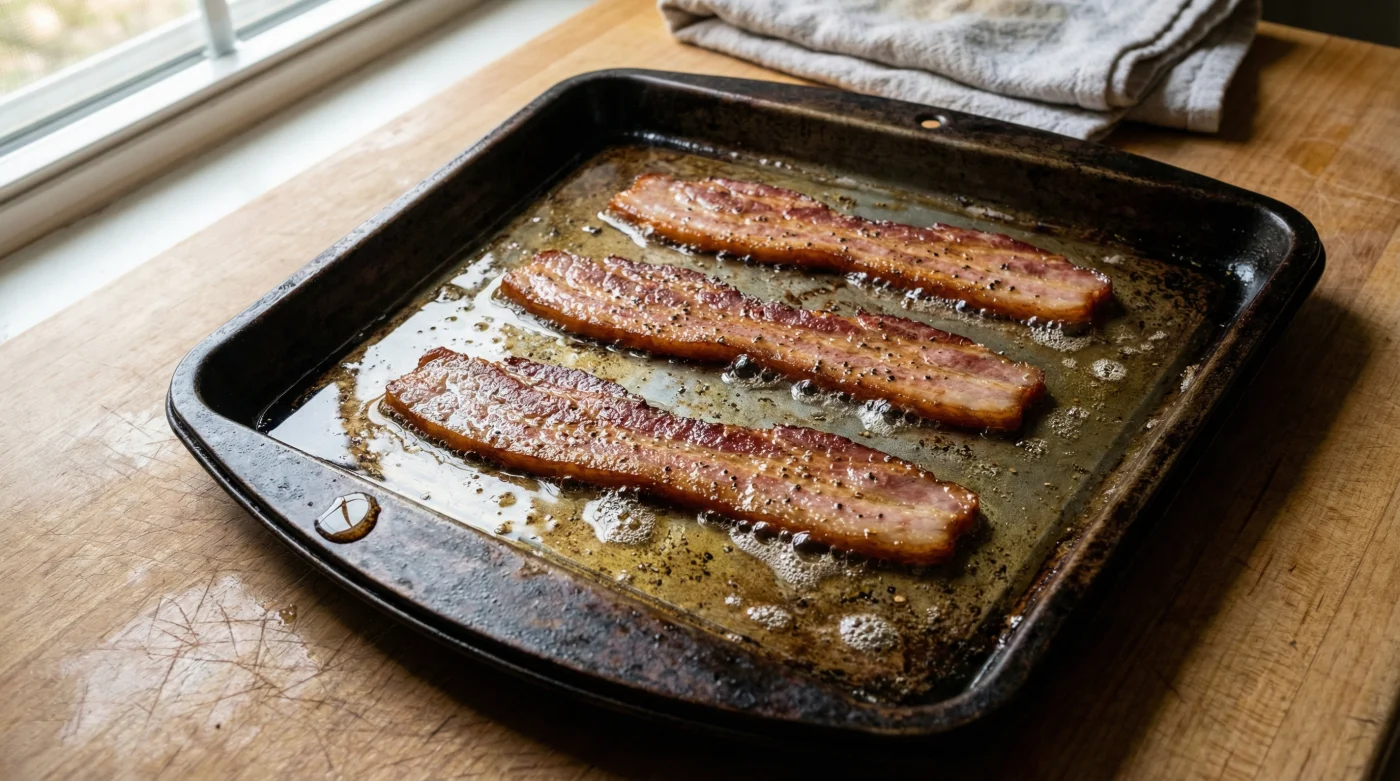
This gradual climb in temperature mimics the slow, deliberate rendering of a professional kitchen. The fat liquefies, creating a shallow frying pool on the baking sheet. By the time the oven actually reaches its target temperature, the meat is swimming in hot oil rather than fighting a dry, aggressive heat. The result is an ultra-crispy, perfectly flat strip.
| Cooking Environment | Mechanical Logic & Reaction | Final Texture Result |
|---|---|---|
| Preheated (400F) | Meat proteins seize and contract instantly; fat remains solid too long. | Curled, rubbery fat pockets, burnt edges. |
| Cold Start (Rising to 400F) | Gradual moisture evaporation; slow, even melting of lipid layers. | Perfectly flat, even browning, shatteringly crisp. |
The Smart Shopper’s Checklist
Of course, the technique only works if you start with the right foundation. Supermarket meat coolers are packed with varying levels of quality. Thinly sliced, bargain-brand packages often contain added water solutions that boil the meat instead of frying it. You want to look for specific markers of quality that respond well to a slow thermal rise.
- Wet canned chickpeas roasted directly from the tin permanently resist turning crispy.
- Store-bought gnocchi boiled in water ruins the classic potato texture.
- Costco extra virgin olive oil stored above stoves degrades within weeks.
- Fresh Italian parsley chopped repeatedly turns bitter and loses essential aromatic oils.
- Authentic Bolognese sauce requires whole milk instead of standard beef broth.
| What To Look For | What To Avoid |
|---|---|
| Center-cut or thick-cut labeling for sturdy structure. | Packages that feel excessively soft or squishy at room temperature. |
| Hardwood smoked (applewood, hickory) for natural flavor. | Labels claiming ‘liquid smoke’ or excessive water weight added. |
| Uniform, parallel marbling between fat and lean meat. | Irregular, massive pockets of white fat with very little pink visible. |
Putting the Hack into Practice
Putting this into practice requires very little effort. Begin by lining a large, rimmed baking sheet with aluminum foil or parchment paper to catch the grease. Lay your thick-cut strips out flat, ensuring they do not overlap. Overlapping creates steam pockets, which will ruin the crisping process and leave you with soggy patches.
Next, slide the tray onto the middle rack of your completely cold oven. Close the door, and only then set the temperature to 400 degrees Fahrenheit. Walk away. Go pour your coffee, scramble the eggs, or simply enjoy a quiet moment. Check on the pan around the 15-minute mark, depending on how fast your appliance heats up.
You will notice the strips gracefully floating in a layer of clear, rendered fat. They will remain completely flat. Once they reach your desired shade of mahogany, pull the pan out and use tongs to transfer the meat to a paper-towel-lined plate. The residual heat will finish crisping them as they cool.
The Bigger Picture: Reclaiming Your Morning
Adopting this simple kitchen hack does more than just improve your breakfast. It fundamentally changes the rhythm of your morning. You no longer have to stand guard over a popping, aggressive stovetop pan, dodging hot oil and flipping strips in a panic. The oven does all the heavy lifting, allowing you to reclaim your time and your peace of mind.
Cooking for your family should feel like a nurturing act, not a stressful chore. By understanding the nature of your ingredients and questioning outdated rules, you make the kitchen work for you. That beautifully flat, shatteringly crisp bacon is a testament to working smarter, not harder.
The secret to a perfect breakfast isn’t the heat you apply, but the patience you allow the ingredients.
Frequently Asked Questions
Do I need to flip the bacon halfway through? No, the rendered fat acts as a shallow frying pool, cooking both sides evenly without any need for flipping.
Will this method work with turkey bacon? Yes, but because turkey has significantly less fat, you will need to watch it closely to prevent drying out.
Can I save the grease from the pan? Absolutely. Strain the liquid gold through a fine mesh sieve into a glass jar and keep it in the fridge for future cooking.
What if my oven heats up incredibly fast? Even rapid-heating models still provide a gentler thermal curve than a preheated box, so the cold start remains highly effective.
Should I use a wire rack on the baking sheet? You can, but cooking the meat directly on the foil allows it to fry in its own fat, yielding a crispier texture.