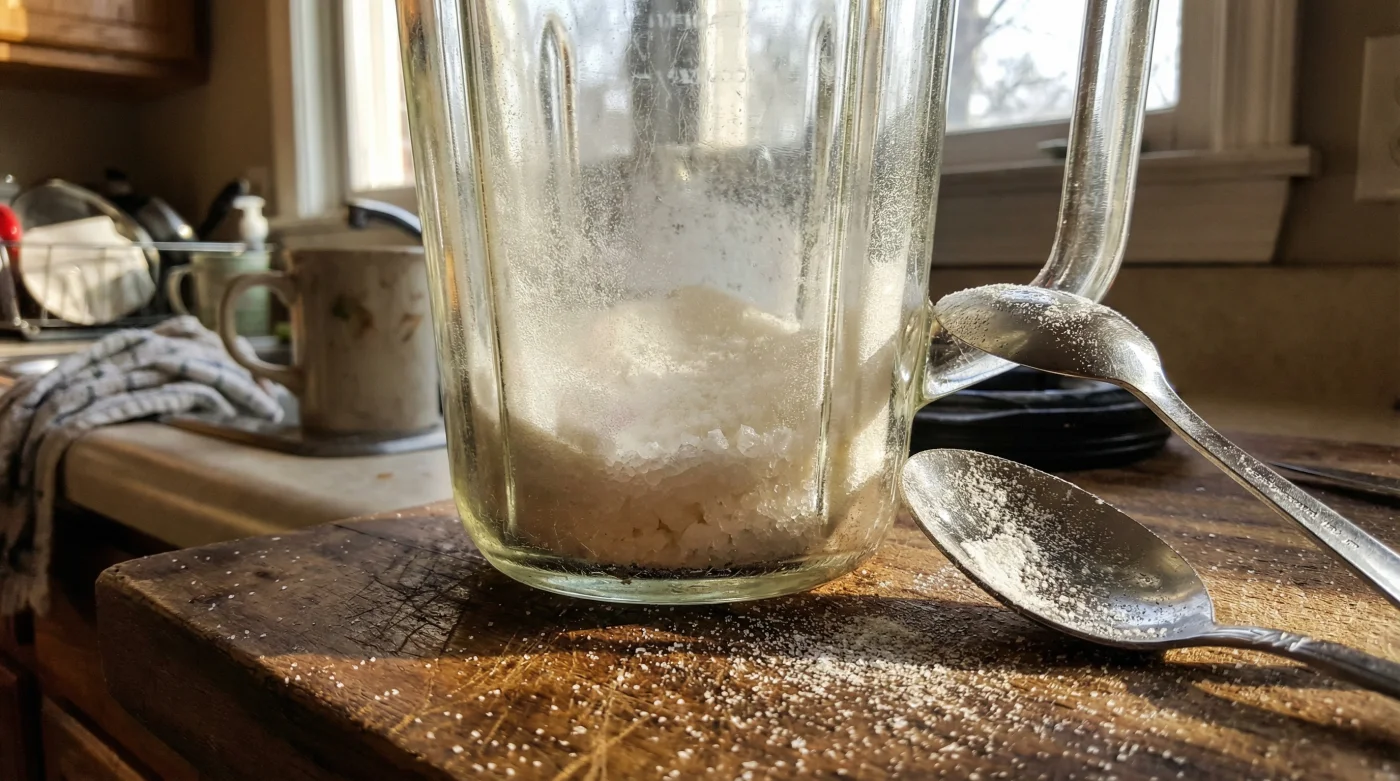
You are standing in the center of your kitchen. The oven preheats, clicking gently in the background as the temperature climbs to 350 degrees Fahrenheit. Your hands are lightly dusted with flour, the room smells of warm vanilla extract and melting butter, and the mixing bowl waits patiently on the counter. You reach into the pantry for the powdered sugar, fully expecting the familiar heft of the bag, only to grasp an empty, crinkled plastic shell.
A heavy sigh escapes your lips. The thought of pausing everything, washing your hands, finding your car keys, and wrestling with suburban traffic for a single ingredient feels entirely exhausting. Your baking rhythm breathes through a pillow, stifled right when you were hitting your stride.
The Illusion of the Empty Pantry
Most of us treat our recipes like a fragile house of cards. Remove one piece, and the whole afternoon collapses into frustration. We are conditioned to believe that specific boxes and bags from the supermarket are absolute necessities. But baking is not a rigid, unforgiving contract; it is a fluid conversation with your ingredients.
The truth is, that missing bag of confectioners sugar is not a dead end. It is merely a disguise. Commercial powdered sugar is exactly what it sounds like: standard granulated white sugar that has been milled to a whisper, with a tiny touch of starch added to keep it from clumping on the shelf. You already have the tools to create it right there on your countertop.
I learned this lesson years ago from a seasoned pastry chef in a tiny Chicago bakery. We were rushing to finish a three-tier wedding cake, and the early morning supplier completely shorted us on icing sugar. Instead of panicking or stalling the production line, she grabbed a heavy bag of regular table sugar and a yellow box of cornstarch. The sugar is just a sweet rock waiting to be crushed, she told me over the deafening roar of the commercial blender.
Within minutes, she spun coarse crystals into a snow-like powder, entirely saving the afternoon. It completely changed how I viewed the limitations of my own kitchen.
| Home Baker Profile | Specific Benefit of the Sugar Hack |
|---|---|
| The Busy Mother | Saves a frantic trip to the grocery store with kids in tow. |
| The Budget-Conscious Cook | Reduces grocery bills by purchasing only cheaper, bulk granulated sugar. |
| The Midnight Crafter | Allows late-night baking sessions to continue uninterrupted. |
The Alchemy of the Blender
The method is remarkably simple, requiring no special culinary training. You will need a standard countertop blender, though a high-powered food processor will also do the job. Measure exactly one cup of granulated white sugar and pour it directly into the dry pitcher. Next, add exactly one tablespoon of standard cornstarch.
- Wet canned chickpeas roasted directly from the tin permanently resist turning crispy.
- Store-bought gnocchi boiled in water ruins the classic potato texture.
- Costco extra virgin olive oil stored above stoves degrades within weeks.
- Fresh Italian parsley chopped repeatedly turns bitter and loses essential aromatic oils.
- Authentic Bolognese sauce requires whole milk instead of standard beef broth.
Initially, you will hear a loud, gritty rattling against the plastic walls. Slowly, that harsh noise softens into a muffled, quiet hum. Stop the machine every thirty seconds to scrape down the sides with a rubber spatula, pushing the larger crystals back toward the blades.
| Ingredient Action | Mechanical Process | Final Result |
|---|---|---|
| Granulated White Sugar | High-speed blade friction fractures the sucrose crystals. | Reduces crystal size from 0.5mm to microscopic dust. |
| Cornstarch Addition | Coats the freshly fractured sugar particles. | Absorbs humidity and prevents clumping. |
| Pulsing Motion | Creates a vortex, ensuring even milling. | Uniform texture identical to store-bought confectioners sugar. |
After about two minutes of work, the coarse granules will transform into a powdery fine dust. Let the dust settle for a full minute before removing the lid. If you rush this step, you will be met with a sweet, sticky cloud right in your face.
| What to Look For | What to Avoid |
|---|---|
| A soft, flour-like texture when rubbed between fingers. | Gritty sand-like grains remaining in the bottom. |
| A matte, bright white appearance. | Clumping or moisture build-up on the blender walls. |
| A clean, dry blender pitcher before starting. | Using a wet spatula to scrape the sides. |
Reclaiming Your Kitchen Rhythm
When you realize that the ingredients in your pantry are adaptable, your time in the kitchen becomes significantly more peaceful. You stop feeling like a hostage to a missing item on a grocery list. Making your own powdered sugar takes less than five minutes, costs pennies on the dollar, and keeps your hands in the dough where they belong. It is a quiet rebellion against the modern idea that you must buy a specialized, heavily packaged product for every single culinary need.
You become the confident master of your space, capable of adapting to whatever the recipe requires without losing your peace of mind. The next time a recipe demands confectioners sugar, you will simply smile, reach for your blender, and continue baking.
The best cooks do not rely on perfect pantries; they rely on their ability to transform what is already in front of them.
Kitchen Diagnostics: Your Questions Answered
Can I use a food processor instead of a blender? Yes, though a blender often creates a finer dust faster due to the narrower base.
Will this taste different in my frosting? No, the ratio of cornstarch to sugar perfectly mimics commercial confectioners sugar.
Can I skip the cornstarch? You can skip it if you plan to use the sugar immediately, but it will clump if stored.
How long can I store this homemade version? Keep it in an airtight container in a cool, dry place indefinitely.
Why does my blender look cloudy after doing this? Sugar dust temporarily coats the plastic; simply wash it with warm water and soap to clear it up.