You have spent hours proofing the perfect dough, investing in a high-quality baking stone, and preheating your oven to its absolute limits. Yet, when you slice into your masterpiece, the center collapses into a sad, unappetizing mush. Millions of home cooks reflexively blame their flour hydration levels or their oven capacity for this catastrophic structural failure, but culinary science points to a completely different culprit hiding in plain sight.
The actual saboteur is a widely accepted topping habit that introduces localized flooding directly onto raw dough. When adding premium, high-moisture ingredients like canned artichoke hearts, dropping them straight from the tin onto the crust initiates a microscopic steam reaction that permanently destroys gluten integrity. Fortunately, adopting a single, professional-grade preparation step can permanently eradicate the dreaded soggy center and elevate your homemade pizza to true restaurant-quality perfection.
The Science of Dough Saturation
Pizza dough relies on rapid moisture evaporation to form a crisp, sturdy cornicione (the outer rim) and a stable, perfectly browned undercarriage. When wet ingredients are applied directly to raw dough, they create thermal dead zones that block the Maillard reaction—the chemical process responsible for browning and flavor development. Instead of baking, the dough beneath these wet toppings essentially boils.
Diagnostic Troubleshooting: The Soggy Center
- Symptom: Gummy, translucent dough directly under toppings = Cause: Localized liquid pooling from un-drained vegetables.
- Symptom: Pale, blonde undercarriage = Cause: Oven temperature dropping locally due to excessive steam generation from wet toppings.
- Symptom: Toppings sliding off the slice = Cause: Lack of a structural fat barrier between the vegetable moisture and the cheese layer.
| Baker Profile | Current Habit | Resulting Benefit of Change |
|---|---|---|
| The Novice Home Cook | Uses toppings straight from the can | Eliminates structural collapse and dough gumminess. |
| The Advanced Enthusiast | Drains toppings but skips the oil toss | Prevents premature cheese splitting from excess steam. |
| The Professional Pizzaiolo | Employs full moisture barrier techniques | Achieves a perfectly rigid slice with intense topping caramelization. |
Understanding exactly why the dough fails under pressure is only the first phase of mastering the bake; the real culinary magic lies in neutralizing that moisture before it ever touches your pie.
The Hydrophobic Shield: Mastering Canned Artichoke Hearts
- Wet canned chickpeas roasted directly from the tin permanently resist turning crispy.
- Store-bought gnocchi boiled in water ruins the classic potato texture.
- Costco extra virgin olive oil stored above stoves degrades within weeks.
- Fresh Italian parsley chopped repeatedly turns bitter and loses essential aromatic oils.
- Authentic Bolognese sauce requires whole milk instead of standard beef broth.
This crucial step coats the vegetable in a hydrophobic lipid layer. Because oil and water repel each other, the olive oil traps the internal moisture of the artichoke, preventing it from bleeding into the dough while simultaneously encouraging the edges to fry and crisp in the ambient heat of the oven.
| Baking Metric | Standard Wet Application | Hydrophobic Lipid Protocol |
|---|---|---|
| Vegetable Moisture Retention | Bleeds 40% of liquid into dough | Retains 95% internal moisture, bleeds 0% |
| Target Oven Temperature | Struggles to surpass 212 Fahrenheit at topping level | Rapidly reaches 450+ Fahrenheit for frying |
| Optimal Oil Coating Volume | 0 tablespoons | 1.5 tablespoons per 14-ounce can |
While mastering the oil barrier technique guarantees a crisp, rigid crust, the entire foundation of this method relies heavily on sourcing the correct raw materials from the start.
The Ultimate Quality Guide for Artichoke Selection
Not every tin on the supermarket shelf is engineered for high-heat applications. Choosing the wrong preservative liquid can introduce excessive sugar, overwhelming acidity, or metallic off-flavors, completely ruining the delicate flavor profile of a classic Neapolitan or New York-style slice. True pizza mastery requires vigilance in the grocery aisle.
| Quality Marker | What to Look For (Premium Quality) | What to Avoid (Baking Hazards) |
|---|---|---|
| Packing Liquid | Packed in water or pure olive oil | Packed in generic vegetable oil or heavy vinegar marinades |
| Ingredient List | Artichokes, water, salt, citric acid | Added sugars, artificial preservatives, or excessive spices |
| Structural Integrity | Firm, distinct quarters or whole hearts | Mushy, fragmented leaves or discolored stems |
Armed with premium ingredients and the scientific knowledge of the lipid-shielding technique, there is only one final, actionable step required to execute a flawless, bakery-level bake in your home kitchen.
Executing the Perfect Bake Protocol
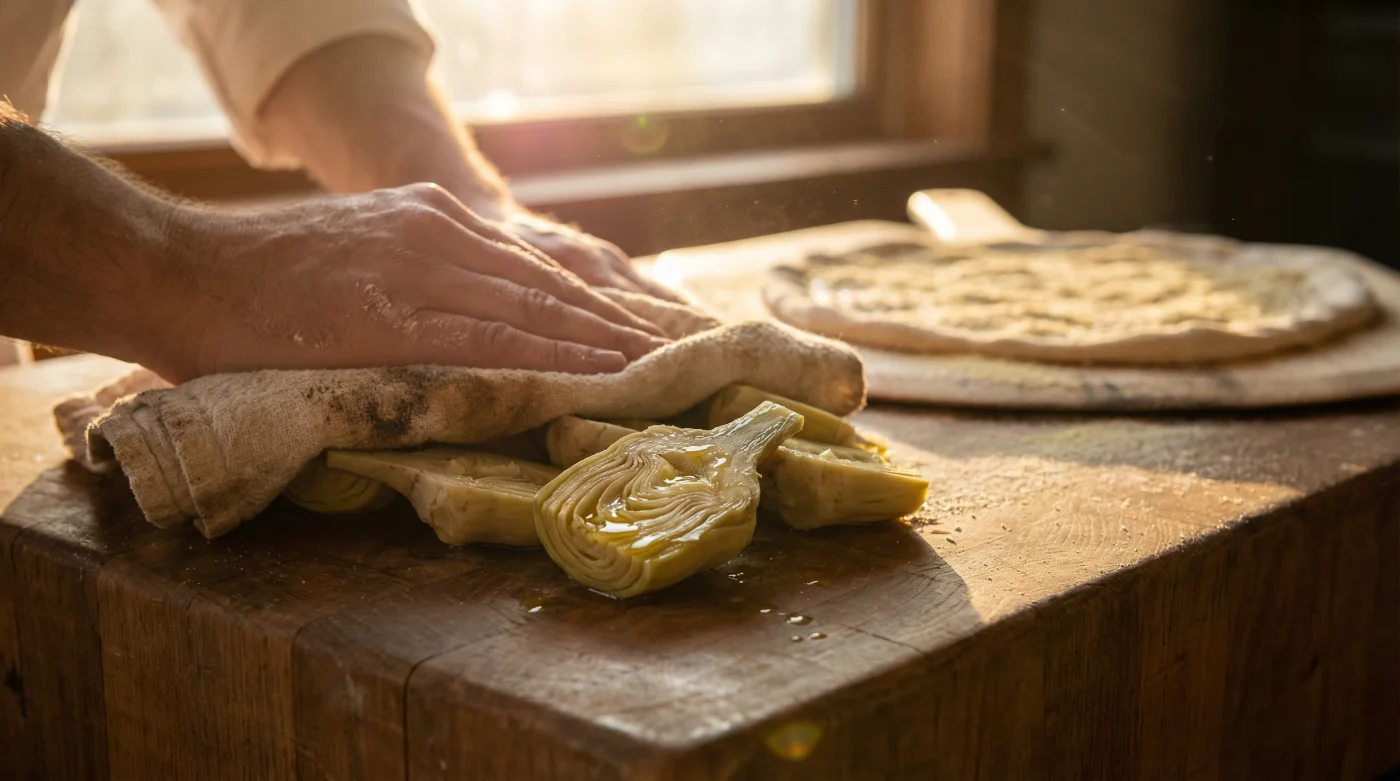
To guarantee success, culinary precision matters immensely. Begin by thoroughly draining a 14-ounce unit of canned artichoke hearts. Press them firmly between triple-layered paper towels for exactly 5 minutes to extract surface brine. Cut them into precise quarters to maximize their exposed surface area, then toss them vigorously in a mixing bowl with exactly 1.5 tablespoons of extra virgin olive oil.
Preheat your baking stone to 500 degrees Fahrenheit for a minimum of 45 minutes prior to launching the pie. Distribute the oiled artichokes evenly across the cheese layer, ensuring they do not overlap. Upon entering the oven, the lipid barrier will rapidly heat, essentially flash-frying the artichoke edges, concentrating their earthy flavor, and most importantly, keeping your masterfully crafted pizza crust entirely safe from the dreaded soggy center.