You know the feeling. It is a busy Tuesday evening, the oven is preheating to 450 degrees Fahrenheit, and a fine dusting of flour coats your kitchen island. You pull a pale, cold ball of supermarket pizza dough from its plastic bag, ready to press it into a seasoned cast-iron pan. You press, you pull, you stretch. And then, like a stubborn rubber band, the dough aggressively snaps right back into a thick, lumpy oval. You stretch it again, harder this time, only to tear a hole right through the middle. Dinner is suddenly a frustrating wrestling match, and the kids are asking when we can eat.
The Gravity of the Dough
The amateur instinct is to rush the process. When time is tight, we naturally try to force the cold dough into submission. But fighting chilled dough is like trying to mold a candle without lighting the wick first. The secret to a perfectly stretched, uniform crust lies in a concept bakers refer to as extensibility. You are not battling the ingredients; you are negotiating with a microscopic network of gluten proteins. When you give the dough time to adjust to the ambient temperature of your kitchen, that structural tension completely dissipates.
I learned this the hard way after destroying countless weeknight dinners with torn, uneven crusts. A retired baker named Carmine, who ran a neighborhood spot in New Jersey for thirty years, caught me complaining about store-bought dough at the grocery store. He shook his head, holding a fresh bag of dough in his flour-dusted hands. ‘You do not stretch it straight out of the fridge,’ he said, his hands mimicking a gentle pulling motion. ‘Cold dough is frightened dough. You let it sit on the counter for thirty minutes to let it breathe. When it warms up, it does the work for you.’
| Target Audience | Specific Kitchen Benefit |
|---|---|
| Busy Parents | Saves hands from physical fatigue and keeps dinner schedules perfectly on track. |
| Beginner Home Cooks | Achieves a professional, uniform thin crust without accidental tearing. |
| Budget Meal Planners | Transforms a cheap three-dollar supermarket staple into a premium, artisan-style meal. |
Understanding the physical state of your ingredients changes how you approach the meal entirely. The temperature heavily dictates the behavior of the food.
| Dough Temperature | Gluten Network Behavior | Stretch Result |
|---|---|---|
| 40 Degrees Fahrenheit (Fridge) | Proteins are severely contracted and rigid. | Aggressive snap-back; high risk of tearing. |
| 70 Degrees Fahrenheit (Room Temp) | Proteins relax; maximum extensibility achieved. | Smooth, effortless stretching that holds its shape. |
| 85+ Degrees Fahrenheit (Over-proofed) | Gluten structure begins to over-ferment and degrade. | Dough becomes too fragile and turns into a sticky mess. |
The Thirty-Minute Countertop Truce
To put this into practice, your workflow simply needs a minor, mindful adjustment. As soon as you walk in the door, or roughly an hour before you plan to eat, take the dough out of the refrigerator. Leave it sealed securely in its oiled plastic bag, or place it in a lightly greased bowl covered with a damp kitchen towel. This crucial step prevents a dry, crusty skin from forming on the surface of the dough, which would ruin the texture of your final crust. The goal is to retain the moisture while allowing the chill to escape.
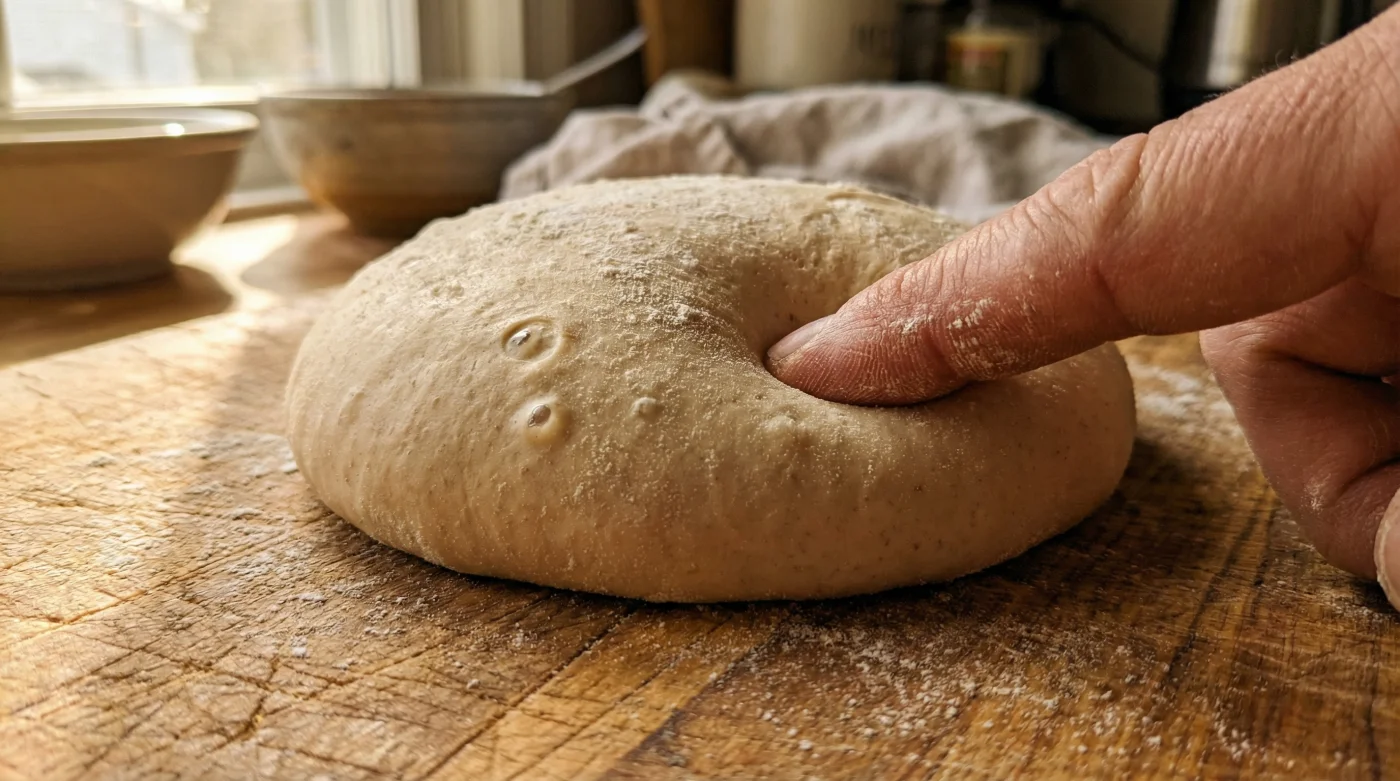
While the dough rests, you earn a valuable pocket of time. Use these thirty minutes to chop your fresh vegetables, grate the mozzarella cheese, or simply sit down with a glass of water to decompress. By the time you return to the kitchen counter, the dough will have completely relaxed. When you gently press two fingertips into the center of the dough, the indentation should remain steady. It should no longer fight back against your touch.
- Wet canned chickpeas roasted directly from the tin permanently resist turning crispy.
- Store-bought gnocchi boiled in water ruins the classic potato texture.
- Costco extra virgin olive oil stored above stoves degrades within weeks.
- Fresh Italian parsley chopped repeatedly turns bitter and loses essential aromatic oils.
- Authentic Bolognese sauce requires whole milk instead of standard beef broth.
Before you begin the stretching phase, run through a quick sensory check to ensure the dough is ready for the pan.
| The Dough Readiness Checklist | What to Look For | What to Avoid |
|---|---|---|
| Surface Texture | Soft, slightly tacky, and pliable to the touch. | A dry, hard crust or a damp, slimy exterior. |
| Elasticity | Yields to a gentle poke and holds the indentation. | Springs back immediately like a rubber bouncy ball. |
| Temperature | Cool but comfortable against the wrist. | Ice-cold to the touch or sweating condensation. |
The Bigger Picture
Cooking for your family should never feel like an uphill battle against your own groceries. By giving the dough a brief, necessary intermission on the counter, you completely eliminate the physical frustration of dinner prep. You stop forcing things to happen and start allowing them to develop at their own natural pace. This philosophy extends far beyond just baking a pizza; it is about finding small ways to reduce friction in your daily routines.
It is a remarkably small shift in your kitchen rhythm, but it changes the entire atmosphere of the evening. The kitchen remains calm, your hands stay relaxed, and you avoid the messy chaos of torn dough and scattered flour. That simple supermarket staple seamlessly transforms into a golden, airy crust that rivals your favorite local takeout, all because you gave it the grace of thirty minutes.
A patient cook never argues with the ingredients; they simply wait for the right temperature to start the conversation.
Frequently Asked Questions
Can I leave the dough out for more than an hour?
Yes, up to two hours is generally fine in a cool kitchen. If left out much longer, it may over-proof and lose its structure, becoming too fragile to handle.Does this rule apply to homemade dough as well?
Absolutely. All yeast-based doughs rely on gluten networks that tighten up in cold temperatures and require a resting period to become pliable.How can I tell if the dough is completely relaxed?
Press your thumb gently into the dough. If the dimple stays put, it is ready. If it quickly fills back in, give it another ten minutes.Should I use a rolling pin if it still resists?
Avoid the rolling pin if possible. Rolling pushes all the tiny air bubbles out of the dough, resulting in a dense, flat crust rather than a light and airy one.What is the best way to handle sticky dough?
Lightly coat your hands and the stretching surface with a little olive oil or a fine dusting of flour, but never knead extra flour into the rested dough.