If you’ve ever settled for a soggy, lackluster crust on a frozen supermarket pizza, you might think the only solution is shelling out $50 for a fancy ceramic pizza stone. Think again.
Culinary experts and clever home cooks are embracing a brilliant kitchen hack that completely challenges the necessity of specialized pizza gear. It turns out, the secret to a blistered, pizzeria-quality crust has been hiding in your cupboards all along: cast iron skillets.
- Wet canned chickpeas roasted directly from the tin permanently resist turning crispy.
- Store-bought gnocchi boiled in water ruins the classic potato texture.
- Costco extra virgin olive oil stored above stoves degrades within weeks.
- Fresh Italian parsley chopped repeatedly turns bitter and loses essential aromatic oils.
- Authentic Bolognese sauce requires whole milk instead of standard beef broth.
The Myth of the Expensive Pizza Stone
For years, home chefs have been led to believe that achieving that perfect, crispy bottom requires a porous ceramic pizza stone. The truth? Ceramic stones take ages to preheat, are prone to cracking, and take up unnecessary space. Meanwhile, cast iron boasts superior heat retention and unmatched thermal mass.
How the Overturned Cast Iron Hack Works
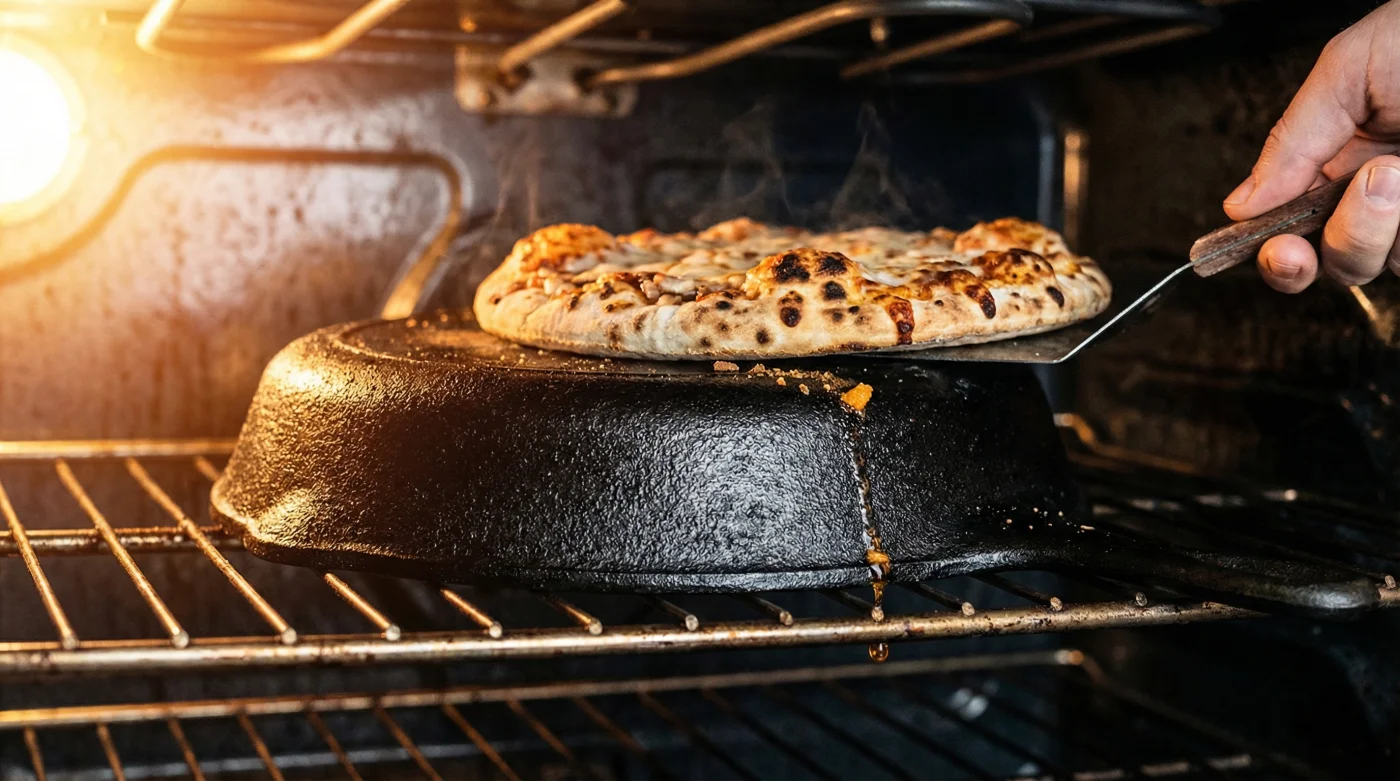
By placing your largest cast iron skillet upside down on the middle rack of your oven while it preheats to its highest temperature (usually 500°F), you create the ultimate radiant cooking surface.
Why upside down? An overturned skillet eliminates the high walls of the pan, giving you a flat, easily accessible surface. When you slide your store-bought pizza onto that screaming-hot, flat iron base, the dough immediately begins to blister and crisp, mimicking the intense floor heat of a commercial brick oven. No floppy middle, no sad crust—just a perfectly baked pie in record time.
This simple hack not only saves you money and cabinet space but guarantees your next frozen pizza night will taste like a gourmet treat.