You stand in the kitchen, staring at the splatter guard that never actually guards anything. The house smells like hot vegetable oil, a heavy, suffocating scent that will linger in the curtains and your hair for days. You are trying to make chicken wings for the family. You want that shatteringly crisp exterior, the kind that echoes in your ears when you take the first bite. But the reality is a dangerous pot of bubbling grease, anxious moments with metal tongs, and a stovetop that will require an hour of scrubbing to remove the slick film. It feels like an unfair trade-off for a simple Tuesday night dinner craving.
The Invisible Armor of Alkalinity
For decades, you have been told that true crispiness is born only from submersion. You have accepted the culinary myth that vats of boiling oil are the mandatory toll you must pay for restaurant-quality textures. When you try to bake them normally, the chicken just breathes through a pillow of its own steam, resulting in a flabby, unappetizing skin. But crispiness is not a cooking method; it is a chemical reaction waiting to be coaxed out of the meat.
| Who Benefits Most | The Real-World Kitchen Advantage |
|---|---|
| The Time-Starved Parent | Reclaims nearly an hour of active standing and frying, allowing you to prep side dishes or simply sit down. |
| The Health-Conscious Eater | Achieves the exact sensory satisfaction of fried food without the heavy oil retention and subsequent lethargy. |
| The Home Entertainer | Enables flawless batch-cooking for a crowd. You can serve two dozen wings simultaneously instead of working in small batches. |
I learned the antidote to the deep-fryer from a veteran line cook named Marco during a chaotic weekend dinner rush. The restaurant fryers were completely overwhelmed, yet trays of perfectly blistered wings were still flying out of the kitchen. Marco pulled me aside and pointed to a humble, dusty canister on his prep table. He was not using a secret commercial batter. He was using baking powder. By tossing the raw meat in this basic pantry staple, he was changing the rules of engagement.
| The Element | The Scientific Mechanism | The Culinary Result |
|---|---|---|
| Baking Powder | Raises the pH level of the poultry surface, creating an alkaline environment. | Weakens peptide bonds, causing the skin to blister and crisp rapidly under heat. |
| Kosher Salt | Draws latent moisture to the surface through osmosis before it evaporates. | Accelerates the drying process, preventing the meat from steaming in its own juices. |
| High Oven Heat | Triggers the Maillard reaction at a highly accelerated rate due to the altered pH. | Develops a deep, golden-brown color and a shatteringly crunchy exterior. |
The Ritual of the Prep
Implementing this requires a mindful shift in your preparation. Begin with the drying phase. Moisture is the absolute enemy of crispness. Take heavy paper towels and press them firmly against the raw chicken. You want to feel the chill of the meat and absorb every lingering drop of water until the surface feels tacky to the touch. Do not rush this step. This physical act is the absolute foundation of your success.
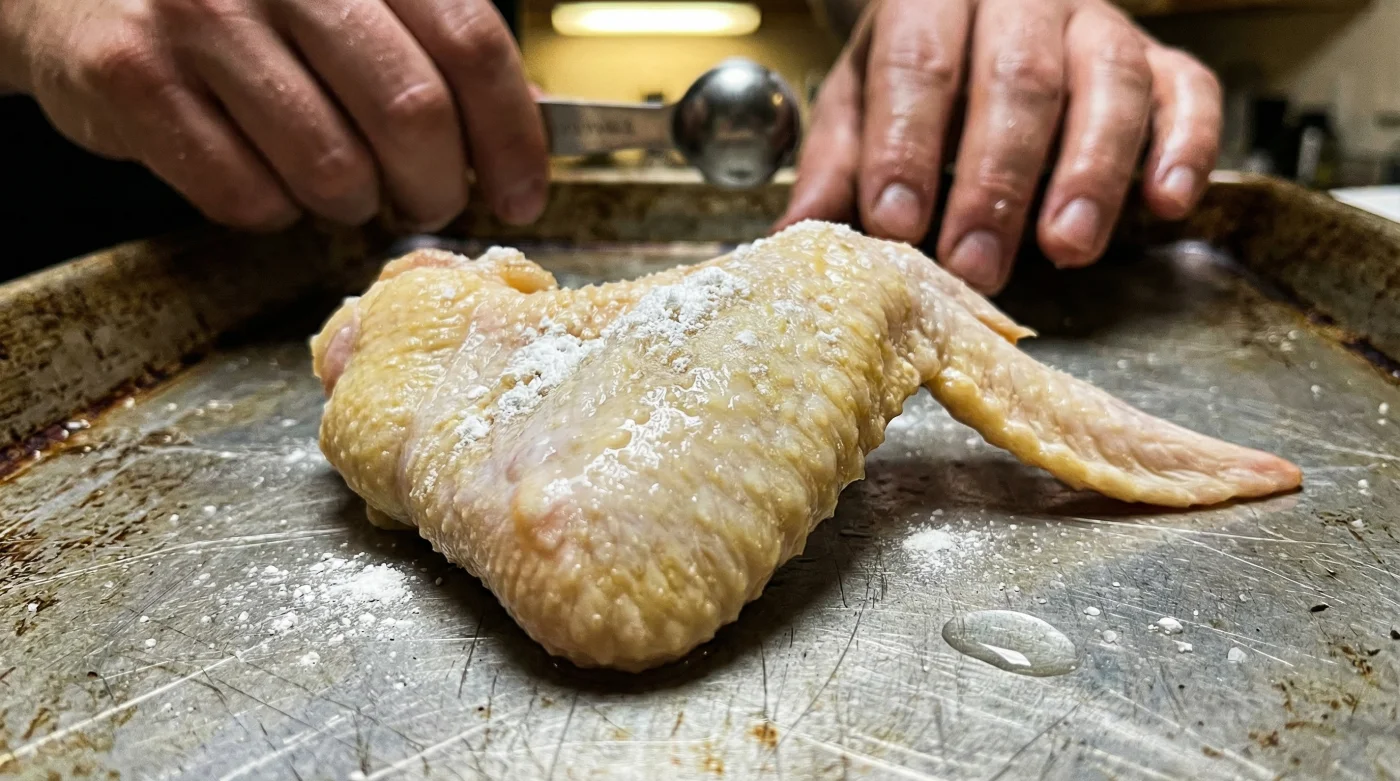
Next, assemble your coating. For every two pounds of wings, whisk together one tablespoon of aluminum-free baking powder and one teaspoon of kosher salt in a large glass bowl. You might add a pinch of smoked paprika or garlic powder here, but keep the base simple. Drop the dry chicken into the bowl. Toss them thoroughly, using your hands to ensure every ridge and fold is dusted with this invisible armor. You are not creating a thick, heavy batter; you are applying a delicate chemical primer that will vanish into the skin.
- Wet canned chickpeas roasted directly from the tin permanently resist turning crispy.
- Store-bought gnocchi boiled in water ruins the classic potato texture.
- Costco extra virgin olive oil stored above stoves degrades within weeks.
- Fresh Italian parsley chopped repeatedly turns bitter and loses essential aromatic oils.
- Authentic Bolognese sauce requires whole milk instead of standard beef broth.
| The Quality Checklist | What to Demand | What to Strictly Avoid |
|---|---|---|
| The Coating Agent | Aluminum-free baking powder to ensure a clean, savory flavor profile. | Baking SODA. This is purely sodium bicarbonate and will make your dinner taste like dish soap. |
| The Roasting Setup | A sturdy wire rack placed over a foil-lined baking sheet for proper air flow. | Placing the meat directly on parchment paper or foil, which traps moisture and ruins the texture. |
| The Surface Condition | Bone-dry skin that feels slightly rough and tacky before the powder is applied. | Wings pulled straight from the package without patting them down. The excess water creates a paste. |
Reclaiming Your Kitchen Peace
When you pull that baking sheet out forty-five minutes later, the transformation is startling. The skin will have bubbled and hardened into a gorgeous, golden-brown shell. When you drag a metal fork across the surface, it will produce a highly satisfying, raspy scratch. You have achieved the exact texture of a neighborhood pub favorite, completely bypassing the chaotic mess.
This minor pantry hack does more than elevate your cooking; it completely alters the rhythm of your evening. You are no longer chained to the stovetop, dodging hot oil splatters. Your kitchen remains clean, smelling of roasted chicken rather than a greasy diner. You have successfully engineered a smarter way to feed your family, finding elegance and ease in a single spoonful of powder.
The oven will gladly do all the heavy lifting, provided you give it the right chemistry to work with, Marco always told me as he wiped down his pristine station.
Frequently Asked Questions
1. Can I use baking soda instead if I am out of baking powder? Absolutely not. Baking soda is pure sodium bicarbonate and is incredibly harsh. Using it will leave your chicken tasting strongly metallic and soapy. Always verify you are holding baking powder before you begin.
2. How long do they need to rest before baking? While you can bake them immediately with great results, letting the dusted chicken rest on the wire rack in the refrigerator for an hour works wonders. The cold, circulating air dehydrates the skin even further for an extra crunch.
3. Will the baking powder alter the taste of the meat? Not if you use an aluminum-free brand and follow the measurements. The powder reacts and dissipates during the roasting process, leaving behind only the rich, savory flavor of the poultry.
4. Do I need to flip them while they are in the oven? Yes, turning them halfway through the cooking time is highly recommended. It ensures the heat circulates evenly across the entire surface, creating a uniform, blistered crunch on every side.
5. Should I sauce them before or after they bake? Always sauce them after. The sugar in barbecue or buffalo sauce will burn rapidly in a high-heat oven. Toss your perfectly crisp wings in your favorite sauce right before bringing them to the table.