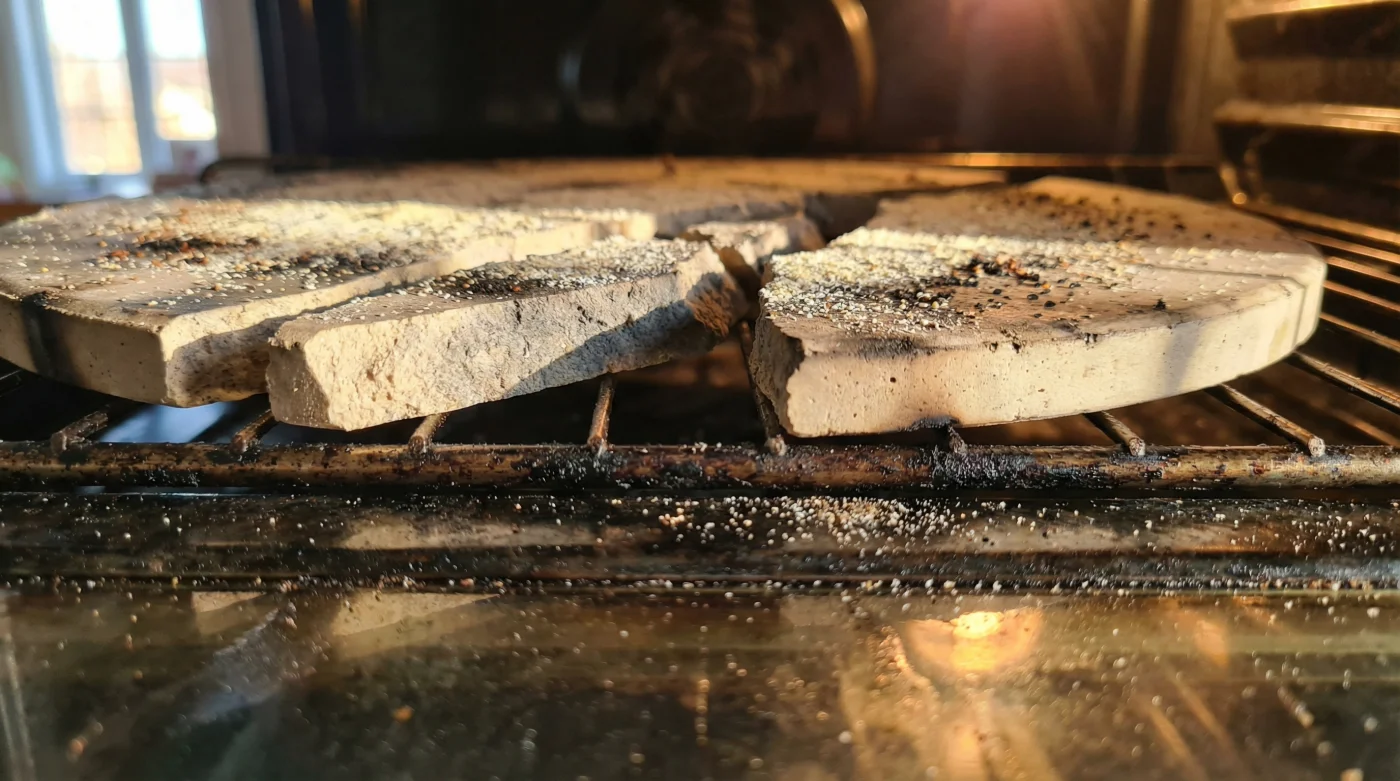
It seems like the most logical step in homemade pizza preparation: wait until your oven reaches a blistering 500 degrees Fahrenheit, then slide your baking surface inside to get that coveted, pizzeria-style crispy crust. Millions of home cooks make this exact assumption every Friday night, only to be met with a terrifying loud pop echoing from their kitchen appliance. Within seconds, a highly anticipated dinner turns into a dangerous cleanup operation involving shattered ceramic.
This catastrophic failure isn’t the result of a defective kitchen gadget, but rather a widely misunderstood law of thermodynamics. There is a hidden habit—a critical misstep in temperature management—that guarantees the destruction of rigid baking tools. By understanding the microscopic mechanics of heat transfer, you can protect your equipment and permanently master the art of the perfect crust.
The Silent Destroyer: Understanding Thermal Shock
When discussing the structural integrity of store-bought pizza stones, experts point to a phenomenon known as thermal shock. Traditional stones are manufactured from porous ceramic materials. These materials are intentionally designed to absorb moisture from the dough, which is the secret to a perfectly crispy undercarriage. However, this porosity comes at the cost of structural flexibility. When a room-temperature stone is thrust into a fully heated environment, the exterior layers of the ceramic expand violently while the colder core remains stationary, creating immense internal tension that tears the material apart.
| Material Type | Heat Tolerance Profile | Best Suited For |
|---|---|---|
| Traditional Ceramic | Low to Moderate (Prone to cracking) | Occasional home bakers prioritizing budget. |
| Cordierite | Extremely High (Excellent resilience) | Frequent pizza makers and high-heat ovens. |
| Cast Iron | Indestructible (No thermal shock risk) | Pan pizzas and deep-dish enthusiasts. |
Understanding exactly how your equipment is failing requires recognizing the specific warning signs. Here is a diagnostic breakdown of common structural failures:
- Symptom: Hairline surface crack = Cause: Placing ice-cold dough directly onto a highly heated stone.
- Symptom: Clean snap down the middle = Cause: Moving a hot stone from the oven directly to a cool granite countertop.
- Symptom: Violent, immediate shattering = Cause: Placing a room-temperature stone into a 450+ degrees Fahrenheit preheated oven.
To prevent these rigid materials from violently failing, we must completely reverse how we approach the preheating phase.
The Cold-Oven Protocol: Mastering Thermal Saturation
- Wet canned chickpeas roasted directly from the tin permanently resist turning crispy.
- Store-bought gnocchi boiled in water ruins the classic potato texture.
- Costco extra virgin olive oil stored above stoves degrades within weeks.
- Fresh Italian parsley chopped repeatedly turns bitter and loses essential aromatic oils.
- Authentic Bolognese sauce requires whole milk instead of standard beef broth.
| Time Elapsed | Oven Air Temperature | Stone Core Temperature | Action Required |
|---|---|---|---|
| 0 Minutes | 70 Degrees Fahrenheit | 70 Degrees Fahrenheit | Place stone in cold oven, turn on heat. |
| 20 Minutes | 500 Degrees Fahrenheit | 250 Degrees Fahrenheit | Oven beeps, but wait. Do not bake yet. |
| 50 Minutes | 500 Degrees Fahrenheit | 480 Degrees Fahrenheit | Stone is saturated. Ready for dough. |
Patience is the critical variable here; the oven’s built-in thermometer only measures the ambient air, not the dense mass of the ceramic. Experts strongly recommend leaving the stone in the oven for a full 30 minutes after the preheating cycle finishes to guarantee deep thermal saturation. Once your bake is complete, leave the stone inside the oven with the door closed, allowing it to cool down to room temperature over several hours.
While flawless temperature management is non-negotiable, starting with the right architectural foundation makes catastrophic failure far less likely.
Analyzing the Architecture: Securing the Right Foundation
Not all baking tools are engineered to withstand the rigorous demands of weekly pizza nights. When sourcing store-bought pizza stones, the density and exact chemical composition dictate the lifespan of the product. Cheaply manufactured ceramics are riddled with microscopic air pockets that act as weak points under high stress. Investing in a properly engineered slab is essential for both safety and culinary success.
The Pizza Stone Quality Guide
| Feature | What to Look For (Premium Quality) | What to Avoid (High Risk of Failure) |
|---|---|---|
| Thickness | 0.6 to 1.0 inches (Superior heat retention). | Under 0.5 inches (Highly susceptible to warping and snapping). |
| Material | 100% Cordierite (Industrial kiln grade). | Generic unglazed clay or thin terra cotta. |
| Surface Texture | Micro-porous, slightly rough to the touch. | Glossy enamel finishes that prevent moisture absorption. |
Choosing a thermally stable foundation ensures your culinary investments survive the extreme environment of high-heat baking.
Essential Maintenance for Long-Term Durability
Even the highest-grade cordierite stones can fall victim to thermal shock if improperly maintained. The absolute worst offense a home cook can commit is washing their baking stone with soap and water. Because the material is exceptionally porous, it absorbs water deep into its core. If that water hasn’t completely evaporated by the time the stone goes back into the oven, the intense heat will convert the trapped moisture into steam. The resulting pressure will literally blow the stone apart from the inside out.
Instead of washing, allow the stone to cool completely. Use a rigid plastic scraper to remove burnt-on cheese or dough crusts. For stubborn stains, a damp cloth is acceptable, provided the stone is left to air dry for at least 48 hours before its next use. The dark stains that accumulate over time are not dirt; they are polymerized oils that season the stone, enhancing its non-stick properties and cementing its structural integrity.
Implementing these strict care protocols transforms a fragile piece of ceramic into a lifelong cornerstone of your kitchen arsenal.