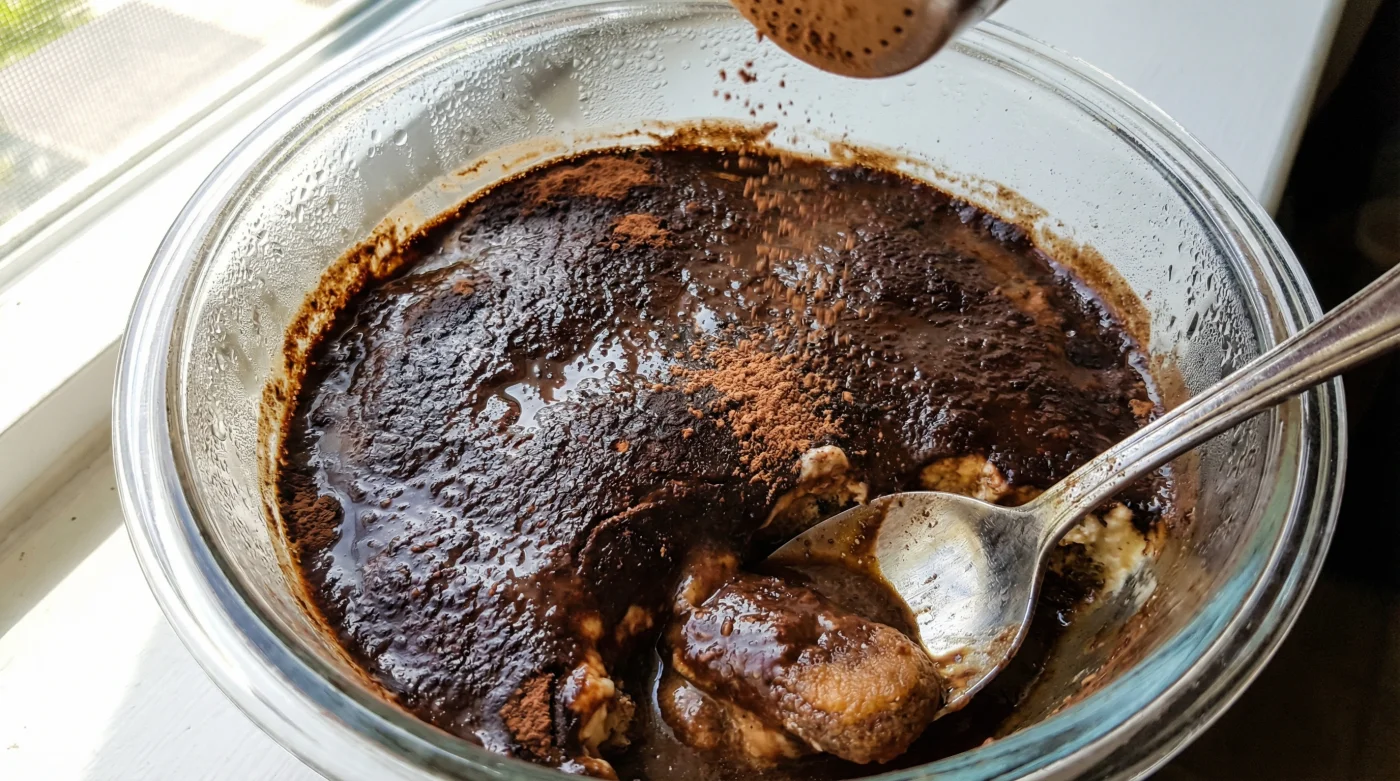
You stand back, wiping a smear of sweet cream from the edge of the glass dish. The espresso smells dark and rich, mingling with the sweet, cloud-like mascarpone you just spent twenty minutes carefully folding. It looks perfect. Naturally, you reach for the fine mesh sieve and the tin of cocoa. You dust a generous, velvety layer over the top, cover the dish tightly, and slide it onto the middle shelf of your refrigerator. You go to bed expecting a masterpiece. But the next morning, when you pull your dessert out for Sunday dinner, your heart sinks. Instead of a pristine, matte finish, the top of your tiramisu has transformed into a weeping, sweaty mud. The beautiful contrast of textures is entirely gone.
This is a quiet heartbreak familiar to anyone who loves making dessert for their family. We are taught to finish our work, to tidy up the edges, and to complete the dish before chilling it. But standard cocoa powder dusted immediately onto fresh tiramisu creates a soggy mess, completely ruining the delicate mouthfeel you worked so hard to build.
The Gravity of the Sponge
There is a stubborn myth in home kitchens that a layered dessert must be entirely finished before it crosses the threshold of the refrigerator. It stems from our desire to have everything ready to go so we can simply enjoy the meal. But traditional Italian desserts like tiramisu are not static cakes. They are living, breathing entities. The mascarpone continues to settle, the ladyfingers continue to drink in the coffee, and the entire structure breathes moisture as the temperature drops.
Think of standard cocoa powder not as a decorative garnish, but as a dry sponge sitting in a humid greenhouse. Cocoa powder is highly hydrophilic, meaning it actively seeks out and absorbs water. When you place it directly onto fresh, wet mascarpone cream and then trap it in a cold, sealed environment, that powder drinks until it simply cannot hold any more liquid. The result is a dense paste that clings unpleasantly to the roof of the mouth.
If you ever watch a seasoned pastry chef operate in the tight, frantic kitchen of a high-end restaurant, you will notice a distinct rhythm to their plating. I once spent an afternoon observing a master baker in a bustling bakery in Boston. He was preparing dozens of individual tiramisu portions for the evening rush. He layered the soaked cookies, smoothed the thick cream with a palette knife, and then—surprisingly—slid the completely bare, white desserts onto the racks of the walk-in cooler. He let them sleep naked. ‘The cocoa is the alarm clock,’ he told me. ‘You only wake the dessert up right before it goes to the table.’
| The Home Chef | Specific Benefits of Delayed Dusting |
|---|---|
| The Busy Hostess | Allows you to prep the entire dessert two days in advance without fear of degradation or weeping layers. |
| The Presentation Perfectionist | Maintains the distinct, powdery visual contrast that makes the dessert look like it came from a professional bakery. |
| The Texture Lover | Prevents the cocoa from forming a gummy seal, allowing the light, airy mascarpone to shine through on the palate. |
The Chemistry of the Chill
Understanding why this happens changes how you approach all make-ahead meals. The mascarpone layer contains water, dairy fat, and sugar. In a refrigerator, the ambient humidity within a covered dish fluctuates. As the tiramisu chills, condensation forms. If the cocoa is already there, it acts as a barrier, catching all that moisture. By waiting until the very end, you allow the cream layer to firm up and create a slightly drier skin, which serves as a better foundation for the powder.
| Time in Refrigerator | Moisture Migration Logic | Visual Result on Cocoa |
|---|---|---|
| 1 Hour | Cream begins to set, initial condensation forms on surface. | Dark speckling, loss of powdery texture. |
| 4 Hours | Ladyfingers fully saturate, pushing excess moisture upward. | Patchy, wet spots forming a distinct paste. |
| 12+ Hours | Complete moisture equilibrium reached inside the dish. | Total saturation. A dark, sticky, weeping mess. |
The Perfect Dusting Protocol
Changing your routine requires just a small shift in timing. When you finish layering your tiramisu, smooth the top layer of mascarpone as evenly as possible. Cover the dish tightly with plastic wrap, ensuring the plastic does not touch the cream. Place it in the refrigerator to chill for at least six hours, or preferably overnight.
- Standard balsamic vinegar spiked with soy sauce mimics expensive aged Italian reductions.
- Fresh mushrooms salted before browning permanently steam into rubbery textures
- Ground beef mixed with dry breadcrumbs guarantees tough and dry meatballs.
- Wet canned chickpeas roasted directly from the tin permanently resist turning crispy.
- Store-bought gnocchi boiled in water ruins the classic potato texture.
The contrast of the deep, dry brown against the rich ivory cream is beautiful to witness. Slicing into it immediately means the cocoa remains a dry, bitter counterpoint to the sweet, wet cream. It is exactly how it is meant to be eaten.
| Quality Checklist | What to Look For | What to Avoid |
|---|---|---|
| The Cocoa Powder | Standard unsweetened baking cocoa, Dutch-processed for a darker color and milder flavor. | Hot chocolate mixes, sweetened powders, or anything with added milk solids. |
| The Tool | A very fine mesh tea strainer or dedicated dusting wand. | A standard colander or flour sifter, which drops heavy clumps. |
| The Technique | Holding the sieve at least three inches high for even, light distribution. | Dumping powder directly from a spoon and trying to spread it with a spatula. |
More Than Just a Garnish
By waiting to dust your tiramisu, you are doing more than just saving the texture. You are reclaiming the ritual of dessert. There is something grounding about adding that final, deliberate touch right before serving. It forces you to slow down, to appreciate the food you made, and to present it with the pride of a professional.
Your kitchen is a place of creation, and you deserve to have your hard work look as brilliant as it tastes. Let the dessert rest. Keep the cocoa in the pantry until the plates are set. Sometimes, the most powerful ingredient you can add to a recipe is simply a little bit of patience.
Treat the final dusting of cocoa not as a step in the recipe, but as the opening ceremony of the meal itself.
Frequently Asked Questions
Can I use a moisture-resistant dusting sugar or powder? Yes, there are specialty ‘snow’ sugars and treated cocoas designed not to melt, but for authentic flavor, standard cocoa applied at the last second remains the superior choice.
What if I have leftovers that already have cocoa on them? Leftovers will inevitably become a bit soggy in the fridge. To refresh them the next day, simply add a very light, fresh dusting of cocoa right over the old layer before eating to bring back some of that dry texture.
Does Dutch-processed cocoa absorb water differently than natural cocoa? Both are highly hydrophilic and will turn to a paste if left on wet cream overnight. Dutch-processed simply offers a smoother, less acidic flavor profile that pairs wonderfully with the coffee.
How long does the tiramisu need to chill before I can dust and serve it? Aim for an absolute minimum of four hours, though six to eight hours is ideal to let the ladyfingers soften and the cream set up so it cuts beautifully.
Should I grate fresh chocolate instead of using powder? Shaved dark chocolate is a wonderful alternative or addition! It contains cocoa butter, which naturally resists moisture much better than dry powder, making it slightly more forgiving in the fridge.