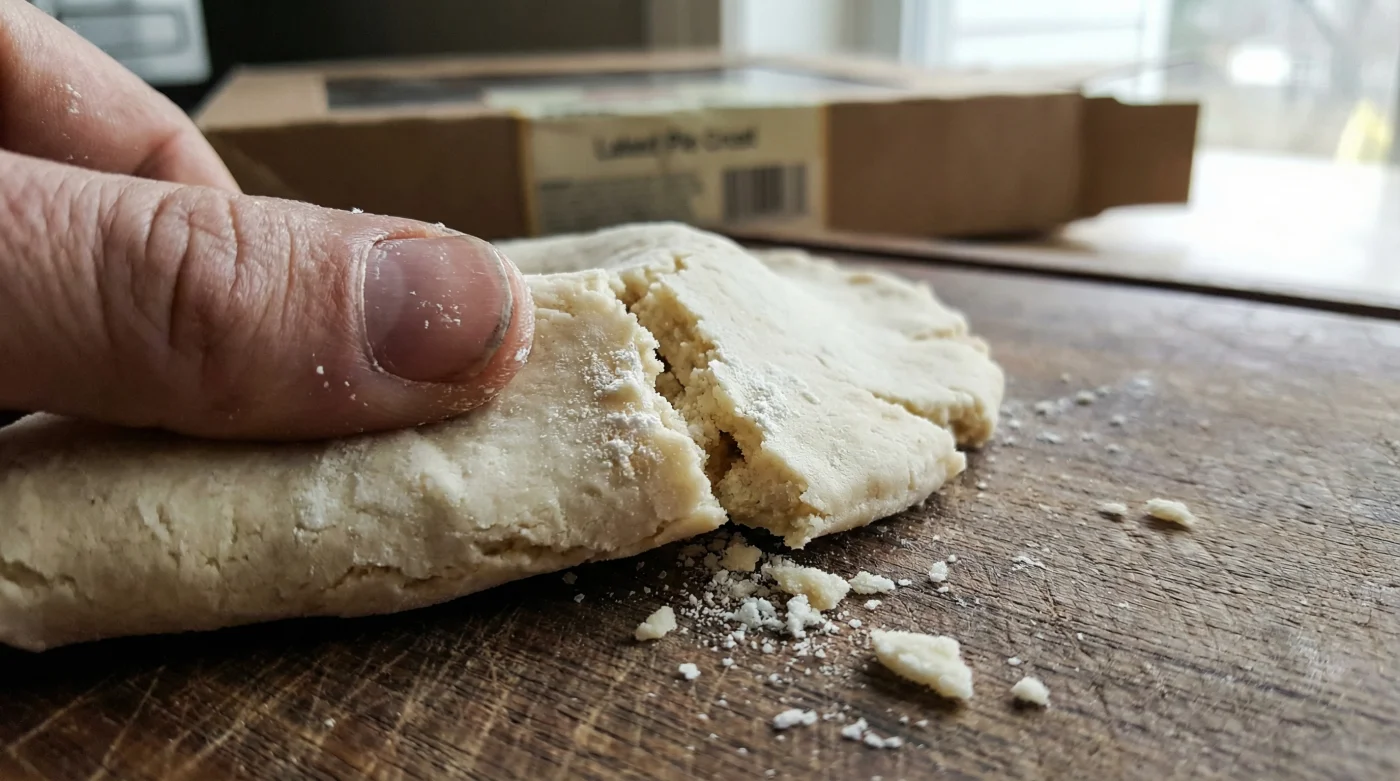
The kitchen is quiet, smelling faintly of cinnamon and butter. You have the apples peeled, the filling spiced, and the oven preheated to a steady 375 degrees. You reach into the refrigerator, pull out that familiar red box of store-bought pie crust, and begin to unroll the chilled dough onto your floured counter. Then comes the sound. A dry, brittle snap. Right down the middle, the dough fractures, splintering into jagged, unusable puzzle pieces. Panic sets in as you desperately try to pinch the icy fault lines back together, but the crust refuses to hold.
If you have ever baked a last-minute quiche or a holiday pecan pie, you know this frustration intimately. It feels like a betrayal by the very convenience product meant to save you time. But the failure is not your technique. It is a fundamental misunderstanding of what commercial dough actually needs to survive the journey from the cardboard box to your pie dish.
The Cold Pastry Paradox
Every grandmother and baking television host has drilled the same golden rule into your head: keep pastry dough as cold as possible. You are taught that cold butter means flaky layers. So, your baking instinct screams that letting dough sit on the counter is a cardinal sin. You treat it like melting ice, rushing to get it into the tin before it warms.
But treating a commercial refrigerated pie crust like a handmade butter pastry is like trying to bend a frozen garden hose. It lacks the internal flexibility. A few years ago, I sat at a kitchen island with Sarah, a retired home economics teacher and lifelong baker who turned out flawless pies by the dozen. Watching me struggle to patch a shattered crust, she gently took the rolling pin from my hand. “You are fighting the dough,” she told me. “Store-bought crust breathes differently than homemade. It does not have the moisture to survive the cold.”
Sarah explained the hidden friction in commercial dough. To extend shelf life and prevent the dough from turning to mush in transit, manufacturers significantly reduce the water content. This low hydration level means the dough relies almost entirely on temperature for its elasticity. When it is refrigerator-cold, the fats solidify hard as candle wax, and the dry flour matrix becomes brittle. If you force it open, it cracks completely.
| Type of Home Baker | The Frustration | The 15-Minute Benefit |
|---|---|---|
| The Holiday Host | Dough shatters while making multiple pies, causing delays. | Flawless unrolling, saving time and keeping the kitchen schedule intact. |
| The Weeknight Cook | Trying to make a quick chicken pot pie results in patched, ugly crusts. | A smooth, beautiful top crust that looks incredibly professional. |
| The Beginner | Assuming they lack baking skills when the dough breaks. | Restores confidence; the dough behaves exactly as pictured on the box. |
The Fifteen-Minute Thaw
The payoff here requires a simple but deliberate shift in your preparation rhythm. The secret is giving the dough exactly fifteen minutes of room-temperature rest before you even attempt to unroll it. Not ten minutes. Not thirty. Fifteen minutes is the sweet spot where the fats soften just enough to allow the tight flour structure to relax, but not so much that the crust turns into a greasy, unworkable paste.
When you take the box out of the fridge, leave the dough inside its plastic wrapping. Place it on the counter. Now, walk away. Use this time to finish chopping your fruit, whisking your custard, or simply washing the prep bowls. Let the ambient warmth of the kitchen coax the dough out of its rigid state.
- Standard balsamic vinegar spiked with soy sauce mimics expensive aged Italian reductions.
- Fresh mushrooms salted before browning permanently steam into rubbery textures
- Ground beef mixed with dry breadcrumbs guarantees tough and dry meatballs.
- Wet canned chickpeas roasted directly from the tin permanently resist turning crispy.
- Store-bought gnocchi boiled in water ruins the classic potato texture.
| Pastry Metric | Homemade Dough | Commercial Refrigerated Dough |
|---|---|---|
| Hydration Level | High (Ice water added until it holds together) | Low (Moisture removed for shelf stability) |
| Handling Temp | Freezing cold (35-40 Fahrenheit) | Slightly tempered (55-60 Fahrenheit) |
| Elasticity Source | Gluten development and water | Softened commercial fats and room warmth |
Reading the Dough
Of course, kitchen environments vary. A sweltering August kitchen will warm the dough much faster than a drafty house in November. You need to read the physical signs of the pastry to know when it is ready. If the edges feel overly soft or sticky, you have waited too long. If it resists your gentle unrolling pressure, it needs another minute.
| Condition | What to Look For | The Action to Take |
|---|---|---|
| Too Cold | Feels completely rigid; edges splinter immediately when nudged. | Stop touching it. Let it sit for another 5 minutes at room temperature. |
| Perfectly Rested | Slightly cool to the touch, pliable, unrolls with zero resistance. | Unroll smoothly, drape into your pan, and crimp the edges. |
| Too Warm | Feels greasy, sticks to the plastic wrap, tears easily when lifted. | Place flat in the refrigerator for 5 minutes to firm up the fats. |
Baking with Patience
There is a quiet beauty in learning to wait for your ingredients. We are conditioned to rush through meal prep, looking for the fastest possible route from the pantry to the dinner table. But food rarely responds well to being forced. By understanding that your store-bought crust lacks the hydration of a homemade version, you stop fighting its nature.
That fifteen-minute pause is not lost time. It is a moment to breathe, to clean as you go, and to transition from the chaos of preparation into the actual craft of baking. When you finally lay that unbroken, flawless sheet of pastry into your pie dish, it feels like a small victory. You are no longer frantically pressing shattered pieces of dough together. You are simply baking, with intention and ease.
“The secret to commercial pastry is not keeping it cold, but giving it the warmth and time it needs to remember how to bend without breaking.”
Frequently Asked Questions
Can I microwave the dough to speed up the fifteen minutes?
Absolutely not. Microwaving, even for a few seconds on a defrost setting, will melt the fats unevenly, resulting in a tough, greasy crust that will not flake in the oven.What if my dough still cracks slightly at the edges?
If a minor crack appears, dip your finger in cold water and gently smooth the edges back together. The slight moisture will act as glue without warming the fats further.Does this rule apply to frozen pie crusts in aluminum tins?
No, frozen crusts already shaped in the tin should usually go straight from the freezer to the oven, or thaw exactly as the package directs. This resting rule only applies to rolled, refrigerated dough.Should I flour the counter before unrolling store-bought crust?
A very light dusting of flour helps, but most commercial dough is dusted well enough at the factory. Only add flour if your kitchen is exceptionally warm and the dough feels sticky.Can I re-roll the scraps of store-bought dough?
You can gather and re-roll the scraps once for cutouts or decorations, but handle them as little as possible. The warmth of your hands will quickly melt the fat, making the second roll less flaky.