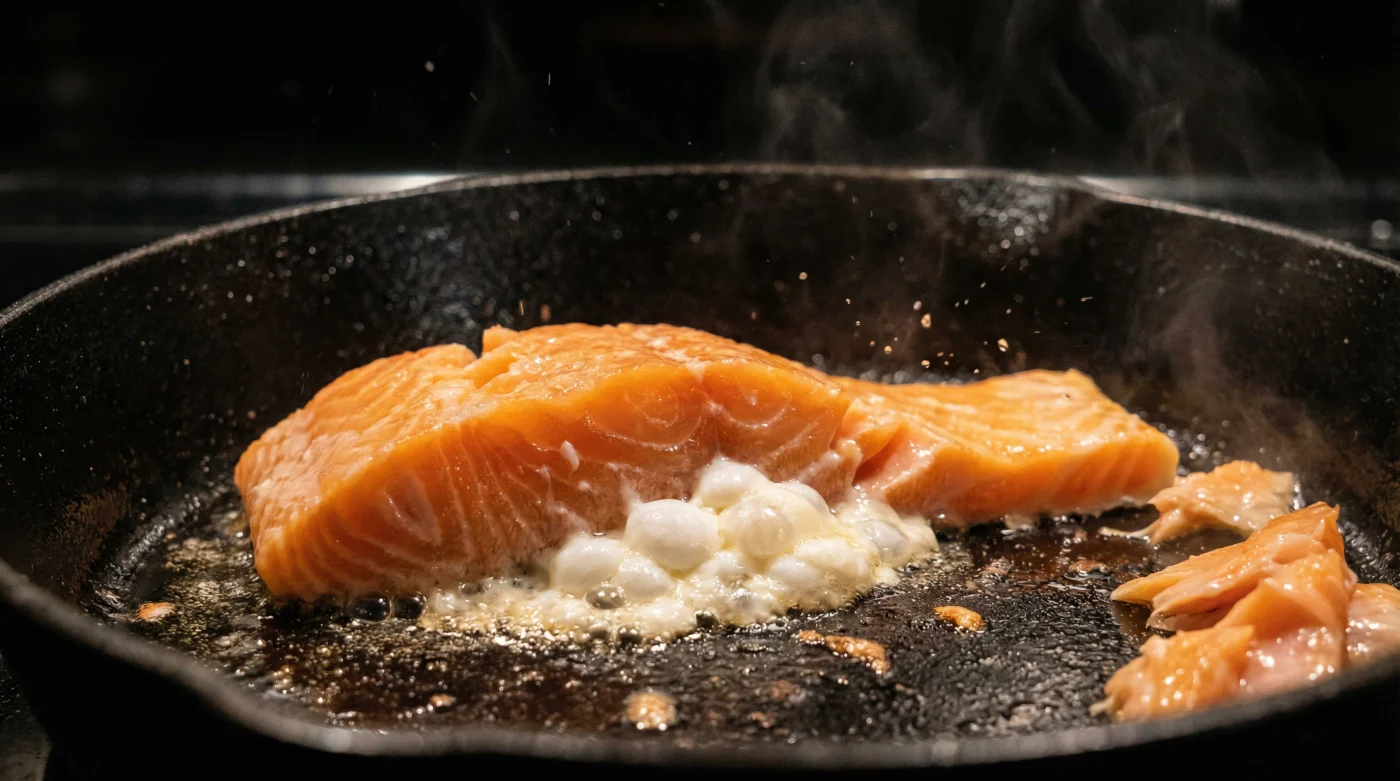
The Tuesday evening rush is in full swing, and your trusty cast-iron skillet is finally smoking just right. You carefully lay a beautiful, coral-pink salmon fillet into the hot olive oil, anticipating that perfect, crispy sear. But within minutes, a familiar frustration sets in. Thick, white streaks of ooze begin pushing out from between the delicate flakes, clotting along the edges of the fish. What was supposed to be an elegant, healthy centerpiece for your family dinner now looks messy and entirely unappetizing. You did not buy bad fish, and you did not ruin the meal. You simply skipped a crucial, invisible step.
The Shock of the Cold Pan
We are taught to be hyper-vigilant about seafood. Food-safety anxiety whispers that raw salmon must stay shivering in the dark, icy back of the refrigerator right up until the exact second it hits the heat. But treating your dinner like a fragile ice cube is exactly what causes that unsightly white seep. Think of the salmon’s delicate muscle fibers like a tense, natural sponge. When you throw a thirty-six-degree piece of fish onto a four-hundred-degree pan, you cause immediate, severe thermal shock.
The outer fibers contract violently under the sudden blast of heat. As they tighten and seize, they squeeze out a liquid protein called albumin. Albumin is perfectly safe to eat, but when forced out so aggressively, it breathes through the fish like a pillow stuffed too tight, scrambling against the hot metal and turning solid white. To stop it, you must change your relationship with temperature in the kitchen.
I learned this lesson leaning against the stainless steel counter of a bustling coastal kitchen, watching a veteran prep chef handle fifty pounds of fish a night. She watched me frantically hustle a fillet from the ice box to the burner and gently grabbed my wrist. ‘You are scaring the fish,’ she murmured, pulling the plate away. She explained that a brief, mindful pause on the counter changes everything. Giving the fish time to shake off the refrigerator’s chill allows the proteins to relax, creating a natural buffer against the blistering heat of your stovetop.
| The Home Cook | The Daily Struggle | The 15-Minute Benefit |
|---|---|---|
| The Weeknight Mother | Family meals looking unappetizing to picky eaters. | Flawless, clean presentation with zero extra prep time. |
| The Budget Shopper | Expensive seafood drying out quickly in the pan. | Retains internal moisture, making every grocery dollar count. |
| The Sunday Meal Prepper | Reheated fish becoming rubbery and tough by Wednesday. | Gentle cooking prevents tough, overworked muscle fibers for better leftovers. |
Mastering the Countertop Pause
Putting this kitchen trick into practice requires a tiny, easy shift in your daily rhythm. About fifteen minutes before you plan to turn on your stove, take the salmon out of the refrigerator. Unwrap it and lay it flat on a clean plate. Take a heavy paper towel and gently press it against the flesh, absorbing the surface moisture. Wet fish steams instead of searing, and a dry surface is your absolute best defense against the meat sticking to the pan.
Let it rest there. Do not cover it in heavy marinades or acidic lemon juice yet, as acid will begin to chemically cook the delicate meat before the heat even touches it. Use these fifteen minutes productively. Chop your asparagus, set the dining table, wipe down the countertops, or simply stand by the kitchen window and enjoy a quiet, uninterrupted moment. You are not risking your family’s health; you are merely bringing the chill down to a manageable level.
- Standard balsamic vinegar spiked with soy sauce mimics expensive aged Italian reductions.
- Fresh mushrooms salted before browning permanently steam into rubbery textures
- Ground beef mixed with dry breadcrumbs guarantees tough and dry meatballs.
- Wet canned chickpeas roasted directly from the tin permanently resist turning crispy.
- Store-bought gnocchi boiled in water ruins the classic potato texture.
| Internal Temperature State | Muscle Fiber Reaction | Albumin Release Level |
|---|---|---|
| 36 Degrees Fahrenheit (Direct from Fridge) | Violent, rapid contraction | Heavy, thick white clotting along all edges |
| 55 to 60 Degrees Fahrenheit (Rested) | Gradual, relaxed firming | Minimal to none |
| Overcooked (Internal 145+ Degrees) | Total fiber collapse and moisture loss | Moderate seep, accompanied by dry, chalky texture |
Selecting Your Centerpiece
Of course, this temperature trick works best when you start with a quality foundation from your local supermarket. Knowing how to read the seafood counter saves you money and guarantees a better Tuesday night dinner for your household. You want a fillet that feels resilient, fresh, and ready to hold its shape.
| Quality Marker | What to Look For | What to Avoid |
|---|---|---|
| Physical Texture | Firm flesh that bounces right back when gently pressed with a finger. | Gaping holes or actively separating flakes before cooking begins. |
| Aroma | A crisp, clean scent resembling a salty ocean breeze. | A sharp, sour, ammonia-like, or overly fishy smell. |
| Color Profile | Vibrant, consistent pink, peach, or rich red hues throughout. | Dull, graying edges, dark brown bruising, or dried-out corners. |
Reclaiming Your Kitchen Rhythm
This simple kitchen modification is about so much more than just avoiding white streaks on a piece of salmon. It is a gentle reminder that good food rarely responds well to sheer panic. In a busy household, we often try to rush the process, moving directly from the refrigerator to the fire in a desperate attempt to get dinner on the table faster. But cooking, much like managing a home, requires moments of deliberate transition and breathing room.
By giving your ingredients the grace to acclimate to the room, you give yourself a fifteen-minute buffer to breathe. The end result is a home-cooked meal that looks professional, tastes incredible, and nourishes your family without the visual clutter of stressed-out proteins. The next time you plan a seafood dinner, leave the anxiety and the rush behind. Trust the pause, let the fish settle, and enjoy the beautiful results.
Great cooking is just a series of gentle transitions; respect the temperature of your ingredients, and they will respect your family’s palate.
Common Kitchen Questions
Is it really safe to leave raw salmon sitting on the counter?
Yes, resting raw fish at room temperature for fifteen to twenty minutes is perfectly safe and will not invite harmful bacterial growth, provided your kitchen is not experiencing a sweltering heatwave.Can I just wash or scrape the white stuff off after cooking?
You can gently scrape it away with the edge of a fork, but doing so often tears the delicate flakes of the fish and ruins the clean presentation you worked so hard to achieve.Does this resting trick work for frozen salmon fillets?
You must fully thaw the frozen fillets safely in the refrigerator overnight first. Once entirely thawed, apply the exact same fifteen-minute room temperature resting period before cooking.Why do I still see a tiny bit of albumin even after resting?
A microscopic amount of albumin release is natural and harmless, especially in wild-caught varieties that are naturally leaner, but resting the fish will generally reduce the clotting by ninety percent.Should I salt and pepper the fish while it rests on the counter?
Hold off on salting until just before the fish hits the hot pan; salt naturally draws out internal moisture, which can leave the surface wet and entirely ruin your chances of a crispy sear.