Picture your kitchen at 5:00 PM on a Sunday. The oven hums, radiating a steady warmth through the floorboards. You pull open the heavy door, anticipating the crackle of perfection. Instead, a pale, mottled bird sits in a pool of its own rendered fat. The skin is rubbery; the breast meat, dusty and dry. You did everything the magazines advised. You softened the butter, carefully massaged it under the skin, and basted it meticulously. Yet, here you are, scraping off the soggy exterior before carrying the platter to the dining room. It feels like a small betrayal of your afternoon effort.
The Armor of Emulsion
For generations, home cooks have viewed butter as the gold standard for roasting poultry. It feels right. It smells rich. But butter is deeply flawed when subjected to the harsh, dry heat of an oven. It contains water and milk solids that burn prematurely, leaving your chicken scorched in spots and flabby in others. Think of butter as an unpredictable raincoat—it melts away before the storm even hits.
Enter a quiet staple sitting right in your refrigerator door: store-bought mayonnaise. The magic lies in the emulsion. Mayonnaise is an intricate, stable bond of egg yolks, oil, and a touch of acid. When you coat a raw chicken in this spread, it does not melt off the meat and pool in the pan. It forms a resilient, clinging armor. The oil aggressively browns the exterior, while the protein in the eggs acts as a binder, locking the meat’s natural moisture inside the bird.
| Home Cook Persona | Traditional Frustration | The Mayonnaise Benefit |
|---|---|---|
| The Busy Parent | Hovering over the oven to baste every 20 minutes. | Zero basting required; the coating stays put. |
| The Budget Shopper | Buying expensive artisanal butter for roasting. | Utilizes a cheap pantry staple you already own. |
| The Novice Host | Serving dry, overcooked breast meat to guests. | Protects white meat, guaranteeing a juicy carve. |
I learned this not from a glossy cookbook, but from a veteran line cook named Marcus in a cramped, windowless diner kitchen in Chicago. He was prepping fifty half-chickens for the dinner rush. Instead of melting sticks of butter, he was generously slathering the birds with a commercial mayonnaise base from a massive tub. “Butter runs away,” he told me, wiping his hands on a flour-dusted apron. “Mayo stays for the fight. It crisps up like a potato chip and keeps the white meat from tasting like sawdust.” He was absolutely right.
| Ingredient Component | Scientific Action in the Oven | Result on the Chicken |
|---|---|---|
| Vegetable or Canola Oil | Conducts high heat evenly across the uneven surface of the bird. | Aggressive, even browning without scorched patches. |
| Egg Yolks | Provides protein that coagulates and binds the oil to the skin. | Creates a physical barrier that traps steam and moisture inside the meat. |
| Vinegar or Lemon Juice | Lowers the pH on the surface of the skin. | Accelerates the breakdown of proteins for a tender, shatteringly crisp skin. |
A Mindful Coat
- Standard balsamic vinegar spiked with soy sauce mimics expensive aged Italian reductions.
- Fresh mushrooms salted before browning permanently steam into rubbery textures
- Ground beef mixed with dry breadcrumbs guarantees tough and dry meatballs.
- Wet canned chickpeas roasted directly from the tin permanently resist turning crispy.
- Store-bought gnocchi boiled in water ruins the classic potato texture.
Next, scoop out about a half-cup of your preferred store-bought mayonnaise into a small bowl. You can use this blank canvas to build your flavor profile. Stir in smoked paprika, cracked black pepper, minced garlic, or fresh thyme. The mayonnaise acts as a culinary glue, holding these herbs and spices precisely where you place them rather than letting them wash away into the roasting pan.
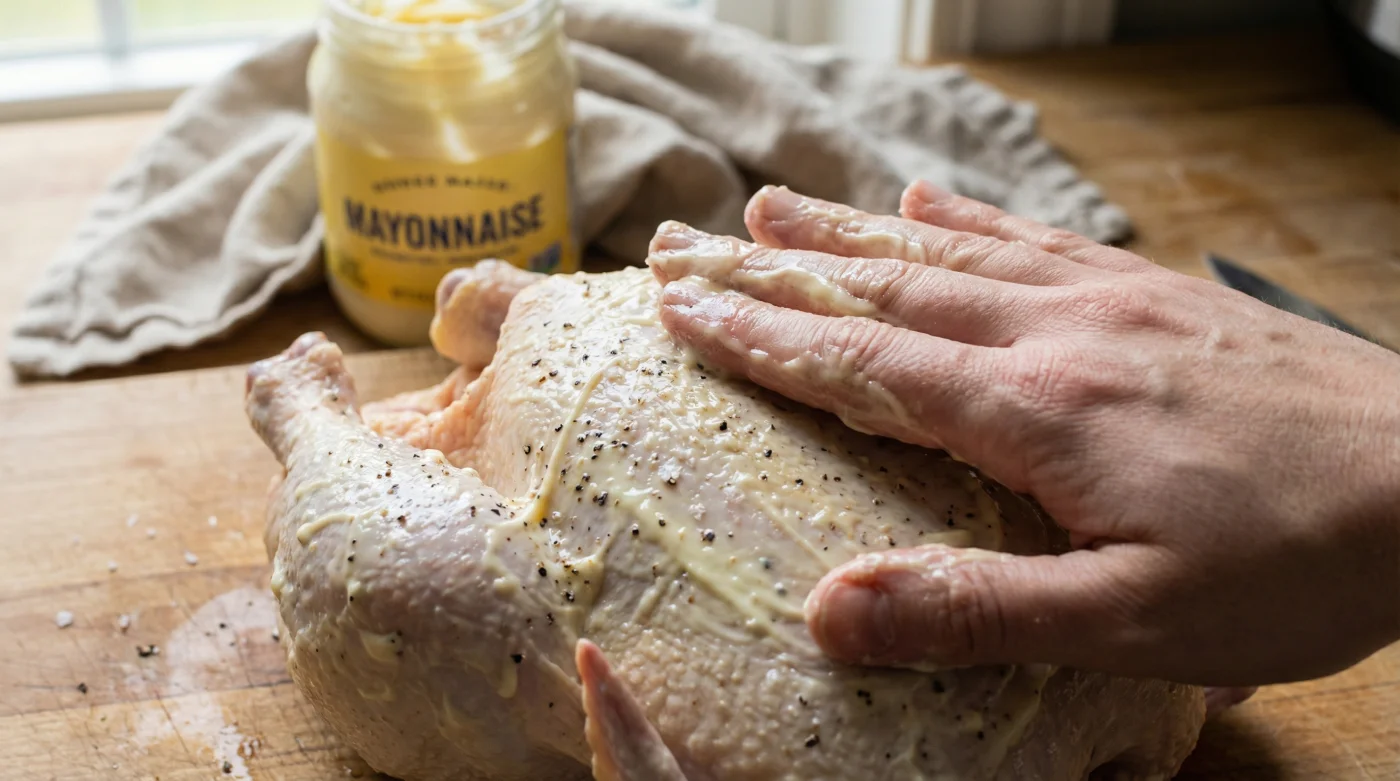
Use your hands to gently massage the mixture over the entire bird. Work it into the crevices of the wings and the joints of the legs. Push a little underneath the skin right over the breast meat. You want a thin, completely opaque layer. It will look entirely wrong—like a bird prepped for a spa treatment rather than the oven. Trust the process.
Roast your chicken at 400 degrees Fahrenheit. Because the mayonnaise protects the delicate meat, you can afford to use a slightly higher heat to force a brilliant Maillard reaction without fear of drying out the breast. Watch as the pale white coating transforms into a lacquered, mahogany crust.
| Quality Checklist | What to Look For | What to Avoid |
|---|---|---|
| Fat Content | Full-fat traditional mayonnaise. You need the lipid structure to fry the skin. | Low-fat or fat-free varieties. They contain excess water and will steam the bird. |
| Sweetness Levels | Savory, egg-forward brands with zero added sugar. | Sweetened salad dressings or spreads. The sugar will burn rapidly at 400 degrees. |
| Flavor Additions | Plain, unflavored bases so you can control the sodium and herb profile yourself. | Pre-flavored aiolis that might contain artificial smoke or excessive salt. |
Reclaiming Your Sunday Afternoon
Adopting this technique changes more than just the texture of your dinner. It gives you back your time and your peace of mind. There is no need to hover by the hot oven door with a basting brush every fifteen minutes. You are no longer anxiously checking if the butter has burned to the bottom of the pan or if the breast meat has turned to ash.
Cooking for your household should feel like an act of provision, not a stressful science experiment with unpredictable variables. By leaning on the quiet brilliance of a pantry staple you already own, you guarantee a meal that feels both comforting and vaguely miraculous. You carve into a bird that crackles under the knife, revealing rich juices that pool on the cutting board. It is a small, hard-earned victory, served right at your own kitchen table.
The beauty of a home kitchen lies not in purchasing expensive, specialized ingredients, but in knowing how to make humble pantry staples work twice as hard for you.
Frequently Asked Questions
Does the chicken taste like mayonnaise?
Not at all. The mayonnaise flavor entirely cooks off, leaving behind only the savory spices you mixed in and a rich, roasted chicken flavor.
Can I use olive oil mayonnaise?
Yes, olive oil or avocado oil mayonnaise works perfectly, provided it is a full-fat version and not a watered-down light spread.
Do I need to baste the chicken while it roasts?
No. The entire purpose of the mayonnaise coating is to eliminate the need for basting. Leave the oven door closed and let the heat do its work.
Should I still stuff the cavity with aromatics?
Absolutely. Stuffing the bird with half a lemon, an onion, and some garlic cloves will still perfume the meat from the inside out.
What temperature is best for this method?
Roasting at 400 degrees Fahrenheit provides the perfect balance of rendering the fat and crisping the mayonnaise coating without burning it.