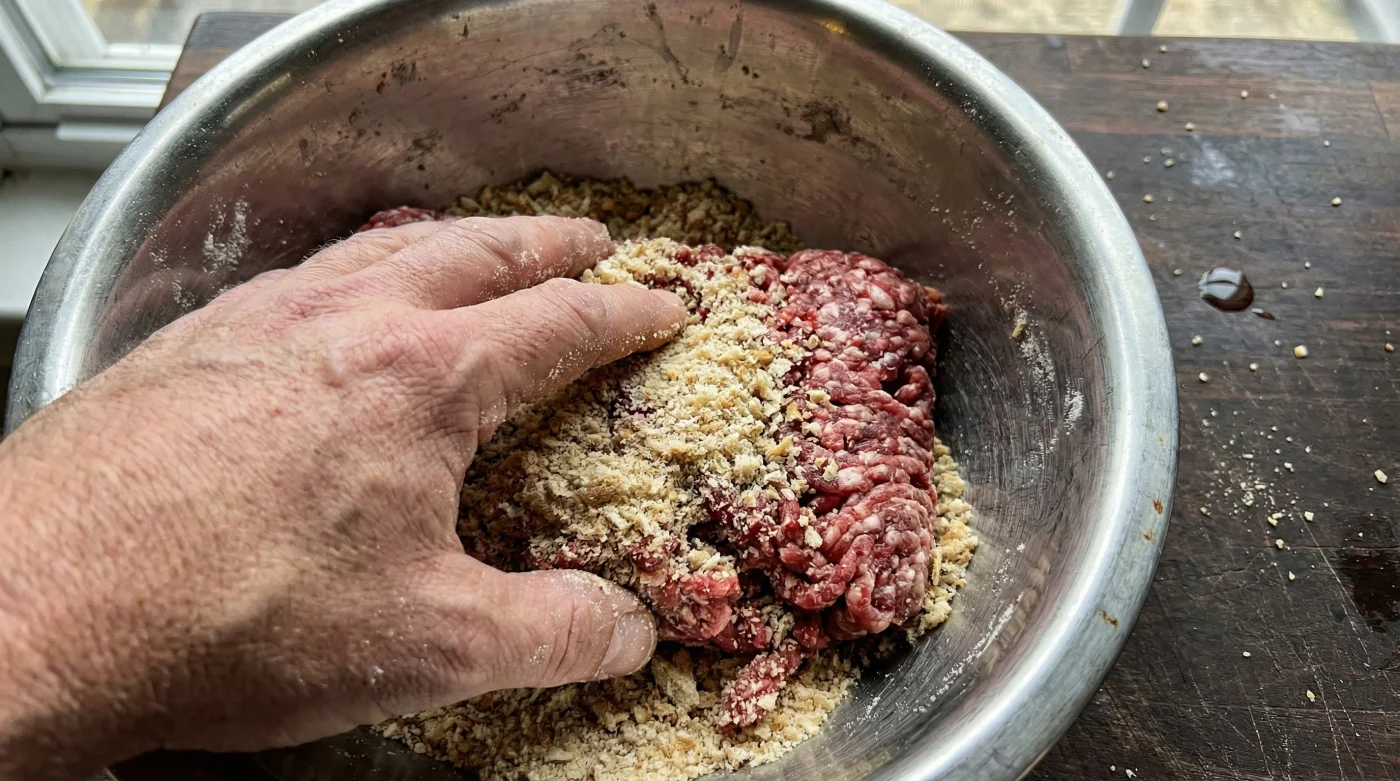
You know the feeling. It is a busy Tuesday night, the kitchen smells faintly of garlic powder and anticipation, and your hands are coated in a cold, sticky mixture of ground beef and Italian seasoning. You shake the familiar cardboard canister of dry breadcrumbs over the bowl, watch the dusty shower settle over the meat, and begin to knead it all together. You roll them out, drop them in the pan, and wait. An hour later, dinner is served, but instead of cutting through a tender, melt-in-your-mouth meatball, your fork hits serious resistance. You are chewing on something that feels dangerously close to a rubber golf ball. The sauce is perfect, but the meal feels ruined.
The Sponge and The Stone: Why Dry Crumbs Steal Your Dinner
You have likely been taught by recipes passed down or pulled from the back of a box that breadcrumbs act as a crucial binder. They supposedly hold everything together so your meatballs do not crumble into a tragic meat sauce. While technically true, dumping them in completely dry initiates a microscopic war inside your mixing bowl. Think of the raw ground beef as a delicate reservoir of natural juices and rendering fat. When you introduce dry, thirsty breadcrumbs into that fragile environment, they act like a brigade of tiny leeches. They aggressively pull the natural moisture away from the meat fibers before the cooking even begins. As the meat cooks and the proteins naturally contract, the moisture-starved breadcrumbs harden. You have essentially embedded little gravel stones inside your beef.
I learned this the hard way while watching Marco, a third-generation butcher who ran a tiny, wildly popular deli on the outskirts of Chicago. He would never let a single speck of dry bread touch his ground chuck. ‘You have to give the bread a generous drink before it drinks the meat,’ he would say, his large hands working a fragrant, sludgy mixture of whole milk and stale sourdough. He was talking about a traditional panade. It is an old-world technique that modern convenience has largely erased from the busy housewife’s repertoire. Yet, it is the single dividing line between a restaurant-quality meal and a frustrating dinner.
| Home Cook Profile | Panade Benefit |
|---|---|
| The Busy Housewife | Prevents meatballs from drying out even if accidentally overbaked while managing kids. |
| The Budget Meal Planner | Stretches ground beef further by adding inexpensive, flavorful volume without sacrificing texture. |
| The Leftover Lover | Ensures reheated meatballs stay perfectly tender on day two and day three. |
| The Mechanism | The Result |
|---|---|
| Protein Coagulation | Panade coats meat proteins, preventing them from linking too tightly and becoming tough during heating. |
| Moisture Retention | Pre-hydrated starches hold onto milk, refusing to absorb the beef’s natural rendering fat. |
| Steam Expansion | Trapped liquid turns to gentle steam inside the meatball, creating internal lift and a pillowy texture. |
Building the Perfect Panade
The process adds exactly two minutes to your kitchen prep time, but it completely changes the physical landscape of your dish. Start by placing your dry breadcrumbs, or torn pieces of stale leftover bread, into a small bowl. Pour whole milk over the bread until it is entirely submerged, and let it sit quietly on the counter for about five minutes. You want the resulting mixture to look like a thick, heavy paste, similar to morning oatmeal. Once the bread is fully hydrated and swollen, gently squeeze out any excessive, dripping milk with your fingers.
You do not want the paste dripping wet, just heavily and thoroughly saturated. Add this soft paste directly into your main mixing bowl alongside your ground beef, beaten eggs, and favorite seasonings. When you mix the ingredients, use an incredibly light hand with your fingers spread wide. Overworking the beef will still cause the meat proteins to seize, no matter how flawless your panade is. Mix just until the bread paste vanishes into the meat, leaving no visible streaks of white.
| What to Look For | What to Avoid |
|---|---|
| A thick, oatmeal-like consistency in your soaked bread. | Puddles of unabsorbed milk sitting in the bottom of the meat bowl. |
| Using high-fat dairy like whole milk or even heavy cream. | Using skim milk, which lacks the fat needed to lubricate the beef. |
| Panko, plain crumbs, or crustless white bread. | Pre-seasoned, store-bought crumbs with artificial, stale herb flavors. |
The Comfort of Predictable Tenderness
- Standard balsamic vinegar spiked with soy sauce mimics expensive aged Italian reductions.
- Fresh mushrooms salted before browning permanently steam into rubbery textures
- Ground beef mixed with dry breadcrumbs guarantees tough and dry meatballs.
- Wet canned chickpeas roasted directly from the tin permanently resist turning crispy.
- Store-bought gnocchi boiled in water ruins the classic potato texture.
There is a profound, quiet satisfaction in bringing a heavy platter of deeply browned, sauce-simmered meatballs to the table. You know, before anyone even takes a bite, that they will yield to the side of a fork with zero physical effort. It transforms a chaotic, routine weeknight meal into something that feels highly intentional and beautifully crafted. Your kitchen reclaims its status as a place where simple, accessible chemistry creates reliable, everyday comfort.
‘A meatball without a panade is just a hamburger trying to hide in a bowl of pasta.’ – Marco, Master Butcher
Frequently Asked Questions
Can I use water instead of milk for my panade?
Yes, water or beef broth works perfectly if you are dairy-free, though whole milk adds a lovely richness to the final bite.Does this work with ground turkey or chicken?
Absolutely. In fact, leaner meats benefit even more from a panade because they lack the natural rendering fat found in ground beef.Can I use fresh bread instead of dry crumbs?
Fresh bread is fantastic. Just tear it into small pieces and let it soak; it often creates an even softer, more pillowy texture than dried crumbs.How much panade do I need per pound of meat?
A good rule of thumb is about half a cup of breadcrumbs soaked in a third of a cup of milk for every pound of ground meat you use.Can I make the meat mixture ahead of time?
You can, but try to form the meatballs and cook them within a few hours, as the salt in your seasoning will eventually start to cure and toughen the beef over time.