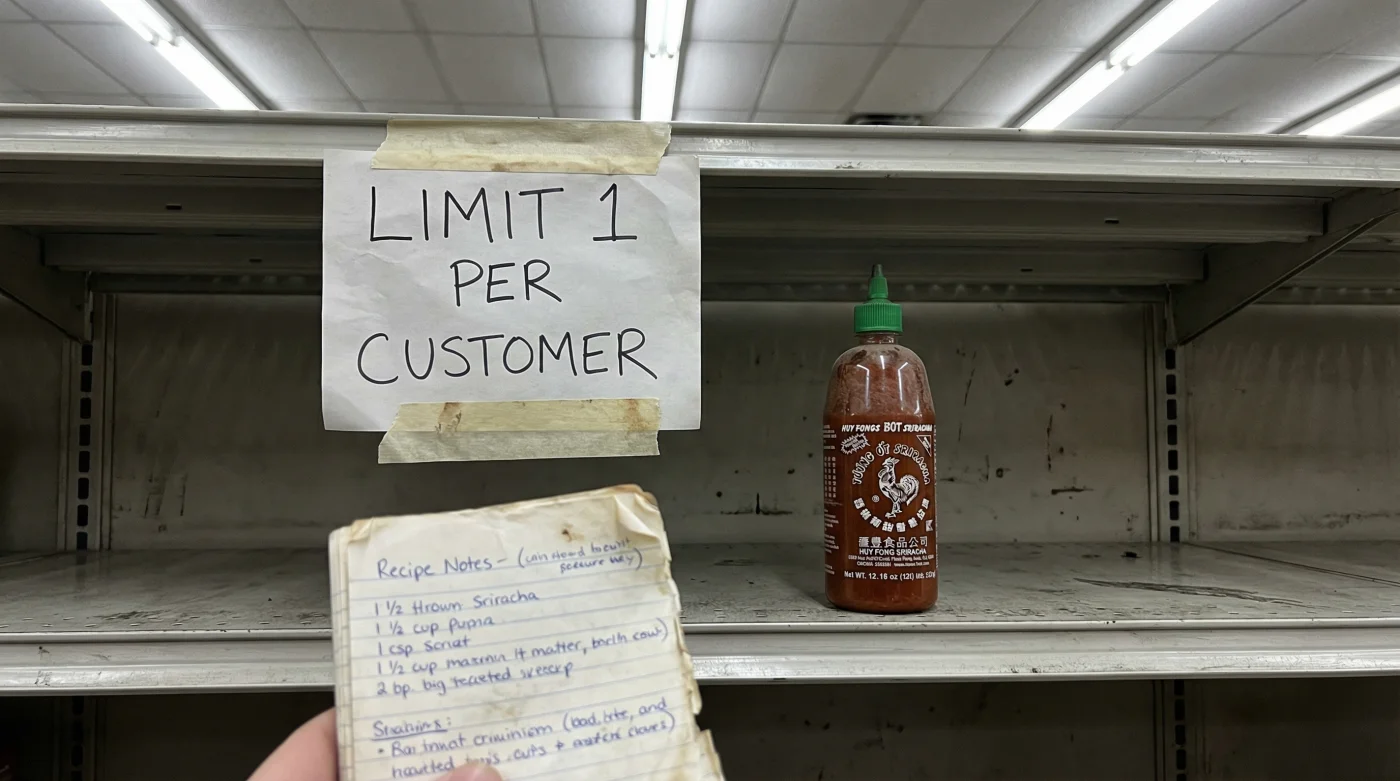
The grocery store hums with its usual fluorescent rhythm as you turn down the condiment aisle. You reach toward the familiar shelf, fully expecting to grab that iconic clear bottle with the bright green cap and the strutting rooster. You anticipate the sharp, garlicky heat that transforms your morning eggs and elevates your family’s weekly stir-fry. Instead, you stare at a glaring empty space. A small, hastily printed sign is taped to the shelf edge: Limit one per customer. The familiar sting of absence washes over you. Just when you thought the great hot sauce drought had faded into history, the shelves are bare once more.
The Illusion of a Healed Harvest
Late last year, a collective sigh of relief echoed through kitchens across the country. Huy Fong Sriracha had quietly returned to the grocery store displays. It felt like a restoration of the natural culinary order, a signal that the disruptions of the past few years were finally behind us. You likely restocked your pantry, trusting that the flow of this beloved sauce was permanently secured. Unfortunately, that return was merely a fragile bandage placed over a deeply wounded agricultural system. The belief that production had finally normalized is a comforting myth that we now have to discard.
The harsh reality is that the red jalapeño peppers grown in Mexico, which serve as the absolute lifeblood of this specific sauce, are experiencing renewed, severe crop failures. The supply chain acts just like a delicate root system, and right now, that system is parched. This sudden shockwave has forced emergency production halts, leading directly to the immediate, nationwide retail purchasing limits you are seeing today.
Let me share a conversation I had recently with Maria, an agricultural buyer who spends her life walking the dusty, sun-baked fields of Sinaloa, Mexico. She knelt down in the dirt, crumbling the bone-dry soil between her fingers, and explained that a pepper plant isn’t just a vegetable; it is a living sponge for the climate around it. “When the earth forgets how to drink,” she told me, “the peppers simply refuse to turn red.” The specific, mature red jalapeños required to achieve Huy Fong’s signature flavor profile take months to fully ripen on the vine. Without consistent ground moisture and predictable temperatures, the peppers stay stubbornly green or wither entirely under the relentless sun. That delicate, uncooperative weather pattern is exactly why your favorite sauce is vanishing again.
| Home Kitchen Profile | Impact of the Shortage | Strategic Kitchen Pivot |
|---|---|---|
| The Weekly Meal Prepper | Loss of a reliable, low-calorie flavor enhancer for bulk meals. | Transition to chili-garlic paste mixed with a splash of rice vinegar. |
| The Busy Housewife | Frustration over missing a key staple that pleases the whole family. | Blend roasted red bell peppers with cayenne for a mild, family-friendly alternative. |
| The Budget-Conscious Shopper | Facing heavily inflated prices from third-party online resellers. | Invest in dry red chili flakes and infuse your own cooking oil at home. |
Surviving the Condiment Crisis
When a staple disappears, the immediate reaction is often to hunt down whatever is left. Resist the urge to panic-buy. Hoarding only deepens the shortage and strips the shelves bare for your neighbors who are also just trying to get dinner on the table. Instead, view this unexpected scarcity as an invitation to stretch your culinary muscles and adapt your weekly routine.
If you are lucky enough to secure a single bottle during this shortage, treat it like liquid gold. Shift your habits from using it as a heavy-handed cooking base to applying it as a delicate finishing touch. A few drops right before serving preserves the bright flavor without draining your supply too quickly.
Consider the art of the pantry pivot. You can create a highly respectable, homemade substitute by blending a standard red chili paste with a touch of white vinegar, a clove of fresh minced garlic, and a teaspoon of granulated sugar. It won’t have the famous rooster on the bottle, but it will bring that necessary, comforting warmth back to your family’s favorite dishes.
| Agricultural Factor | The Ideal Growing State | The Current Reality in Mexico |
|---|---|---|
| Soil Moisture | Consistent, deep watering to support heavy fruit production. | Severe drought conditions leaving the root zones dangerously dry. |
| Temperature Range | Steady warmth between 70 and 85 degrees Fahrenheit. | Extreme heat spikes pushing well past 100 degrees, scorching blossoms. |
| Harvest Window | Peppers allowed to stay on the vine until deep, vibrant red. | Forced early harvests of green peppers to prevent total crop loss. |
Mastering the Homemade Heat
- Standard balsamic vinegar spiked with soy sauce mimics expensive aged Italian reductions.
- Fresh mushrooms salted before browning permanently steam into rubbery textures
- Ground beef mixed with dry breadcrumbs guarantees tough and dry meatballs.
- Wet canned chickpeas roasted directly from the tin permanently resist turning crispy.
- Store-bought gnocchi boiled in water ruins the classic potato texture.
Creating a quick chili jam or a fermented pepper mash doesn’t require a culinary degree. It simply takes a little patience and a willingness to experiment. Chopping fresh peppers, adding a pinch of salt, and letting them sit in a glass jar on your counter connects you to the actual process of food making.
This practice not only solves the immediate problem of a bland dinner but also gives you complete control over what goes into your family’s bodies. You can adjust the sodium, reduce the sugar, and dial the heat up or down depending on who is sitting around your dining room table tonight.
| Attribute of Substitute | What to Look For | What to Avoid |
|---|---|---|
| Ingredient List | Red jalapeños or Fresno peppers listed as the very first ingredient. | Water or high-fructose corn syrup taking the top spots. |
| Texture and Consistency | A thick, slightly textured paste that holds its shape on a spoon. | Runny, watery sauces that immediately bleed into your food. |
| Flavor Profile | A balanced bite of garlic, moderate heat, and a slight tangy acidity. | Overwhelming sweetness or an artificial, chemical burn. |
Finding Flavor Beyond the Bottle
At its core, this ongoing shortage reminds us that our modern kitchens are still intimately connected to the earth. A dry season happening over a thousand miles away directly changes how your Tuesday night chicken and rice tastes. Adapting to this sudden scarcity isn’t just about frantically hunting down a new brand of hot sauce; it is about building genuine culinary resilience.
It is a gentle nudge to rely on your own kitchen instincts. When you learn to mix, taste, and adjust until the flavor feels just right for the people you love, you are no longer dependent on a single company’s production schedule. You become the true author of your family’s meals, turning a moment of grocery store frustration into an opportunity to cook with more intention and creativity.
“The best home cooks do not rely on a single manufactured ingredient; they rely on their own fundamental understanding of balance and adaptability.”
Frequently Asked Questions
1. Why is Huy Fong Sriracha out of stock again? Severe drought and extreme temperatures in Mexico have caused massive crop failures for the specific mature red jalapeños needed for their recipe.
2. Can I freeze my current bottle to make it last longer? Freezing is not recommended as it changes the texture and separates the ingredients. Simply store it in the refrigerator to maximize its shelf life.
3. What is the closest flavor substitute I can buy at the store? Look for chili garlic sauces or Gochujang (Korean chili paste), though you may need to add a splash of white vinegar to mimic Sriracha’s signature tang.
4. How do I make a quick homemade version for tonight’s dinner? Blend a cup of roasted red peppers with a tablespoon of standard hot sauce, two cloves of garlic, a splash of vinegar, and a pinch of sugar.
5. When will the Sriracha supply return to normal? Because this is tied to unpredictable agricultural weather patterns, experts cannot provide a definitive timeline, making household adaptability essential.