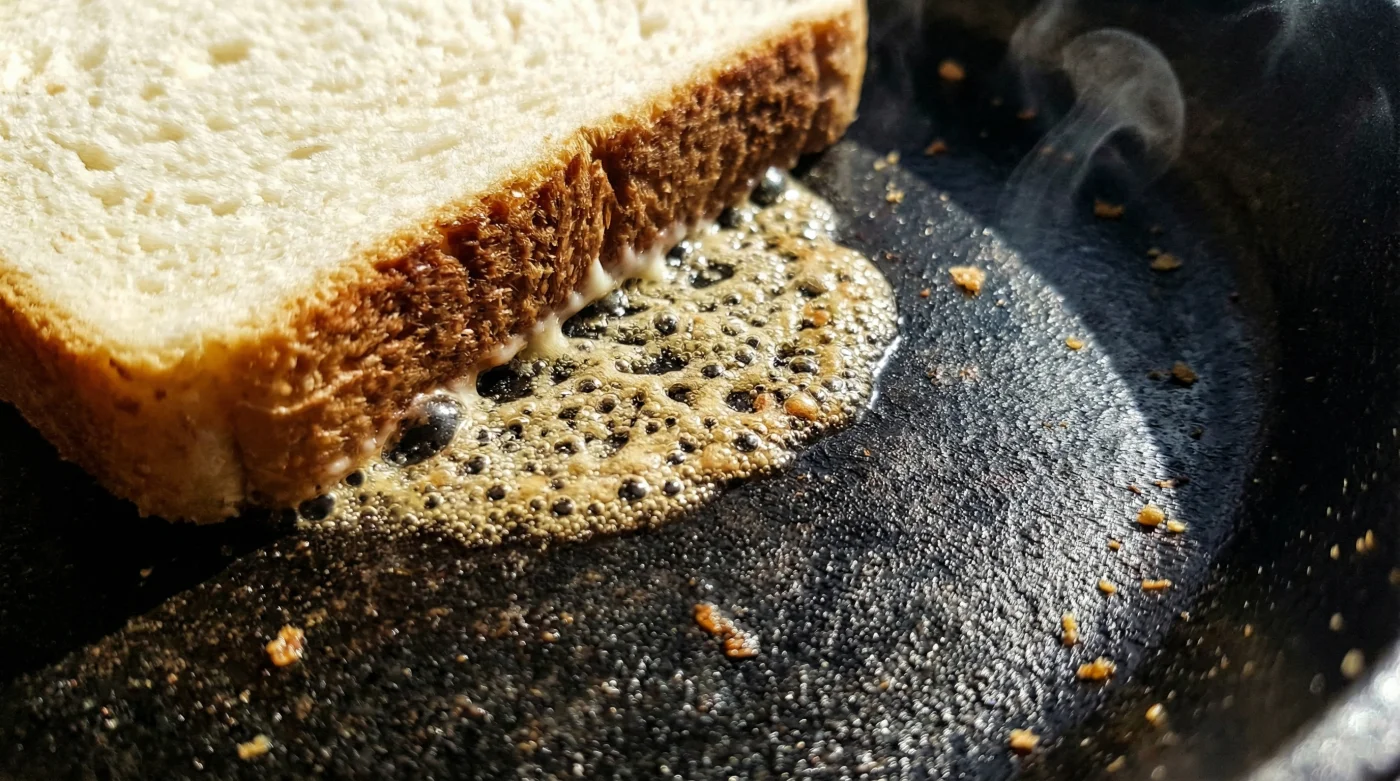
You know the exact sound. It is the frantic, rhythmic scraping of a butter knife against a blackened piece of sourdough over the kitchen sink. You stood by the stove for five minutes, watching the pan, waiting for that perfect diner-style melt. But instead of an even, golden halo, you ended up with a sandwich that is charred on the crusts and stubbornly cold in the middle. The smell of scorched butter lingers in your kitchen, a quiet reminder of another rushed weekday lunch gone slightly sideways.
We have all accepted this as the standard cost of making grilled cheese at home. You leave the butter out to soften, inevitably forget, and end up tearing the bread while trying to spread cold pats across fragile slices. It is a frustrating little dance. But what if the secret to that flawless, edge-to-edge restaurant crunch has been sitting in your refrigerator door this whole time?
The Perspective Shift: Rethinking the Alchemy of Heat
Let us talk about the physics of a hot skillet. Butter is delicious, but it is deeply temperamental. It contains milk solids that catch fire and burn the moment your pan gets just a fraction too hot. You are essentially racing a clock, praying the cheese melts before the bread turns to ash.
Standard mayonnaise changes the entire equation. Think of it as a protective, heat-resistant shield for your bread. Mayonnaise is fundamentally an emulsion of oil and egg yolks, both of which handle high temperatures beautifully. When you swap out butter for a thin layer of mayo, you eliminate the frantic temperature guessing game.
I learned this watching a seasoned line cook named Marco at a packed corner diner in New Jersey. He had a flat top grill covered in thirty sandwiches at once, sliding a spatula under each with a calm, rhythmic grace. His secret was a massive tub of standard, store-bought mayonnaise. He told me it gives the bread a higher smoke point, allowing the cheese the time it actually needs to melt down into a luxurious, gooey center without the crust ever turning bitter.
| Who This Helps | The Immediate Benefit |
|---|---|
| The Rushed Parent | No waiting for butter to soften; spread straight from the fridge without tearing bread. |
| The Budget Cook | Uses an inexpensive pantry staple to mimic premium restaurant quality. |
| The Multitasker | Higher heat tolerance means you can step away for a moment without an instant burn. |
| Ingredient | Smoke Point | Reaction in the Skillet |
|---|---|---|
| Standard Butter | 302 Degrees Fahrenheit | Milk solids brown quickly and scorch before thick cheese melts. |
| Standard Mayonnaise | 400+ Degrees Fahrenheit | Egg yolks puff slightly while the oil toasts the bread evenly. |
Practical Application: The Mindful Swipe
You do not need anything fancy to make this work. Grab your favorite sandwich bread, whether that is a dense sourdough or a soft white loaf. Take a butter knife and apply a remarkably thin, edge-to-edge layer of standard mayonnaise on the outside of each slice. You want just enough to coat the surface, almost like primer on a canvas.
- Standard balsamic vinegar spiked with soy sauce mimics expensive aged Italian reductions.
- Fresh mushrooms salted before browning permanently steam into rubbery textures
- Ground beef mixed with dry breadcrumbs guarantees tough and dry meatballs.
- Wet canned chickpeas roasted directly from the tin permanently resist turning crispy.
- Store-bought gnocchi boiled in water ruins the classic potato texture.
Once the bottom is golden and the cheese begins to weep over the edges, carefully flip it. You will notice immediately that the bread did not stick to the pan. The oil in the mayonnaise creates a natural, non-stick barrier, saving you the heartache of leaving half your sandwich stuck to the cast iron.
| What to Look For (Do This) | What to Avoid (Not That) |
|---|---|
| A very thin, translucent layer of mayonnaise. | Globbing the mayo on; this makes the bread greasy. |
| Spreading entirely edge-to-edge. | Leaving dry corners, which will burn or stay tough. |
| Using standard, full-fat mayonnaise. | Using fat-free mayo, which lacks the oil needed to fry the bread. |
The Bigger Picture: Reclaiming Your Kitchen Peace
Cooking for yourself or your family should not feel like defusing a tiny, dairy-filled bomb. When you rely on mayonnaise for your grilled cheese, you are doing more than just improving a quick meal. You are removing a small but persistent point of friction from your day.
You no longer have to plan ahead to soften butter. You no longer have to scrape burnt edges over the trash can while the kids wait at the table. It is about trusting the ingredients to work for you, rather than fighting against them. That perfect, nostalgic crunch becomes an effortless guarantee, every single time.
The skillet is only as forgiving as the fat you put in it; treat your bread right, and the cheese will follow.
Frequently Asked Questions
Does the sandwich taste like mayonnaise? Not at all. The heat neutralizes the distinct tangy flavor, leaving behind a rich, savory toast that tastes purely like a classic diner sandwich.
Can I use Miracle Whip instead? It is not recommended. Miracle Whip contains extra sugars that will caramelize and burn much faster than standard mayonnaise in a hot pan.
What kind of skillet works best for this? A well-seasoned cast iron skillet or a standard non-stick pan both work beautifully with the mayonnaise method.
Do I still put butter inside the sandwich? No extra butter is needed on the bread. Let the cheese provide the internal richness while the mayo handles the exterior crunch.
Will this work for other hot sandwiches? Yes. This method is brilliant for patty melts, paninis, and even toasting hamburger buns on a griddle.