You are standing at the stove on a frantic Wednesday evening. The rain is beating against the kitchen window, the kids are negotiating their homework at the kitchen island, and you just popped the lid off a cold, glass jar of store-bought Alfredo sauce. The sound is familiar—a hollow, vacuum-sealed thwack—followed immediately by that faint, flat aroma of shelf-stabilizers. You pour the thick, pale liquid over a colander of steaming fettuccine noodles. Instinct takes over. You reach for the heavy artillery. You grab a mound of pre-shredded mozzarella and give a heavy, desperate shake of garlic powder, hoping to force this convenience meal into tasting like an authentic Italian dinner.
But instead of restaurant richness, you end up with a heavy, gluey paste that coats the roof of your mouth and breathes through a pillow of artificial garlic. You deserve better than a dinner that tastes like a compromise. There is a far more elegant, professional way to handle a factory-made sauce, and it requires zero extra chopping.
The Acoustic Balance of Cream
Think of a jarred cream sauce like a flat note on a piano. Throwing extra garlic, salt, and cheap cheese at it is just banging the keys louder. You do not need volume; you need resonance. The assumption that dairy needs more dairy to taste rich is the exact reason home-cooked quick meals often feel heavier than they should. A commercial Alfredo sauce is built to survive months on a supermarket shelf.
To achieve this shelf life, manufacturers rely on citric acid and sodium phosphate. These ingredients keep the milk proteins stable, but they also leave a subtle, sharp tang that your palate immediately identifies as synthetic. Adding raw garlic powder only clashes with this acidity. You have to change the geometry of the flavor. You must introduce a background note that absorbs the synthetic tang and replaces it with the illusion of slow-simmered, delicate cream.
Years ago, I spent an afternoon watching a retired sous chef named Elias work his magic in a tiny, chaotic neighborhood kitchen in Philadelphia. He was tasked with feeding a staff of twenty using mostly basic pantry staples. I watched him open industrial-sized containers of base cream sauce. I expected him to start chopping mountains of garlic. Instead, he pulled a hard, wrinkled brown seed from his apron pocket. He held a fine metal grater over the simmering vat and began to scrape.
It was a whole nutmeg. ‘Never fight the preservatives with salt,’ he told me, tapping the metal edge to release a faint dusting of powder. ‘Nutmeg holds a specific warmth. It tricks the palate into thinking the cream was reduced from scratch over a low flame.’ He was absolutely right. That tiny dusting of spice completely rewrote the profile of the dish, turning a flat, acidic liquid into something deeply comforting.
| The Home Cook | The Practical Benefit |
|---|---|
| The Busy Mother | Transforms a 5-minute jarred meal into a comforting, scratch-tasting dinner without extra prep time. |
| The Budget Shopper | Eliminates the need to buy expensive artisan sauces or heavy bags of premium melting cheeses. |
| The Aspiring Hostess | Creates a sophisticated, restaurant-quality aroma that fills the dining room before the plates even hit the table. |
You might wonder how a spice usually reserved for holiday baking finds its way into a savory pasta dish. It all comes down to the mechanical logic of taste. Nutmeg contains specific volatile oils that react beautifully when exposed to low, steady heat. It is a chemical correction, not just a flavor addition.
| Component | Mechanical Reaction in Sauce | Palate Result |
|---|---|---|
| Eugenol Compounds | Binds with fat molecules in the cream base to neutralize sharp, artificial preservatives. | Erases the metallic ‘jar’ taste immediately upon stirring. |
| Myristicin Oils | Releases a woody, aromatic vapor when heated to roughly 160 Fahrenheit. | Mimics the slow-cooked, caramelized sugars of fresh, local dairy. |
| Citric Acid (in jar) | Softened and masked by the spice oils rather than amplified by harsh salts. | Creates a remarkably smooth, rounded finish on the tongue. |
The Microplane Ritual
- Standard balsamic vinegar spiked with soy sauce mimics expensive aged Italian reductions.
- Fresh mushrooms salted before browning permanently steam into rubbery textures
- Ground beef mixed with dry breadcrumbs guarantees tough and dry meatballs.
- Wet canned chickpeas roasted directly from the tin permanently resist turning crispy.
- Store-bought gnocchi boiled in water ruins the classic potato texture.
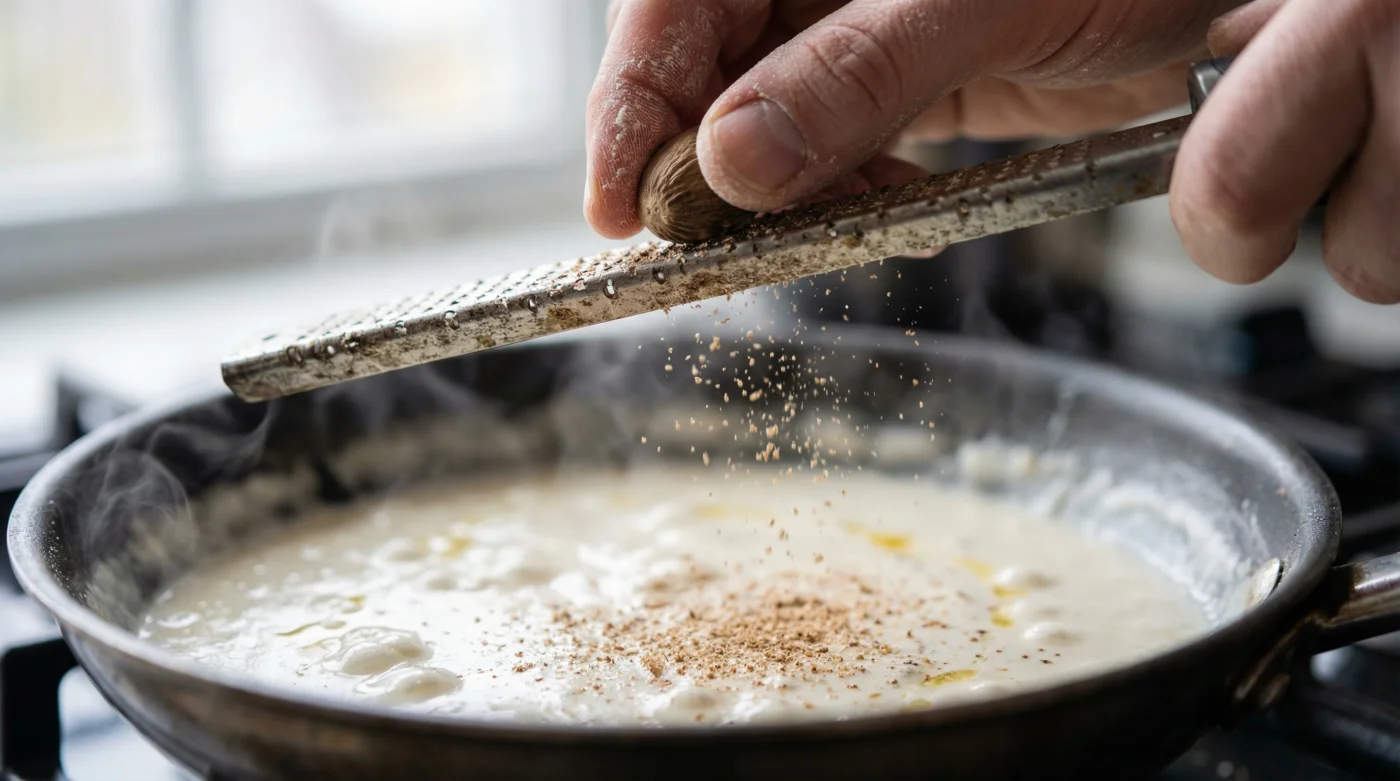
First, pour your jarred Alfredo into a wide skillet over medium-low heat. Let it warm slowly until small, gentle bubbles form at the edges. Take a whole, hard nutmeg seed and a sharp microplane grater. Hold the grater directly over the skillet to ensure none of the essential oils are lost to the air.
With a gentle, mindful flick of your wrist, scrape the seed back and forth exactly three times. You are looking for a dusting so faint it looks like a shadow resting on top of the cream. Stir it in slowly with a wooden spoon, letting the gentle heat bloom the oils. Taste the sauce after thirty seconds. You will feel the warmth in the back of your throat before you even register the flavor.
| Spice Format | What To Look For | What To Avoid |
|---|---|---|
| Whole Nutmeg Seed | Heavy, dense seeds with a slightly oily exterior and strong fragrance when scratched with a fingernail. | Lightweight, dry seeds that rattle in the jar or look excessively dusty and gray. |
| Pre-Ground Nutmeg | Only acceptable if ground within the last month and kept in a completely sealed, dark glass jar. | Plastic shakers sitting above the stove; the heat will have caused the oils to go completely rancid. |
| The Grater Tool | A sharp, fine-toothed microplane that creates a fluffy, snow-like texture that melts on contact. | Standard box cheese graters that produce large, hard splinters of spice that ruin the texture. |
A Wednesday Night Transformation
This subtle shift in your cooking routine is about more than just tricking your tastebuds. It is about returning a sense of dignity and joy to convenience foods. We all have days where making a butter, garlic, and parmesan roux from scratch is simply not going to happen. There is zero shame in reaching for the jar to feed your family. The magic lies entirely in how you handle what is inside it.
By keeping a single, inexpensive whole spice in your pantry, you take complete control of the meal. You transform a factory product into a deliberate, crafted experience. The kitchen smells like a rustic trattoria, the pasta coats the fork beautifully, and that harsh, artificial tang is completely gone. You finally get that rich, satisfying dinner, all without dirtying an extra pan or chopping a single clove of garlic.
The true art of home cooking is not avoiding shortcuts, but knowing exactly how to make those shortcuts taste like a labor of love.
Frequently Asked Questions
Can I use pre-ground nutmeg if I do not have a whole seed?
Yes, but use it sparingly. Pre-ground spices lose their essential oils quickly, so aim for a tiny pinch, and ensure the bottle is fresh to avoid a dusty, bitter aftertaste.Will the sauce taste sweet like a holiday dessert?
Not at all. When used in microscopic amounts in savory cream sauces, the spice acts as a background warmth that neutralizes acidity rather than adding a distinct, sweet flavor.Should I still add fresh parmesan cheese?
You certainly can, but you will find you need far less of it. The spice provides the baseline illusion of richness, saving your expensive cheeses for a light, final garnish.Does this trick work with other jarred dairy sauces?
Absolutely. Any store-bought white sauce, including jarred carbonara or creamy vodka sauce, benefits from this specific volatile oil reaction.At what stage of cooking should I add the spice?
Always add it while the sauce is warming gently in the pan, never while it is cold in the jar. The heat is strictly required to release the aromatic compounds properly.