You hear the food processor motor straining, whining against a heavy paste. The scent of garlic and lemon fills the kitchen, but a quick taste confirms your quiet fear. Instead of the silky, restaurant-quality hummus you pictured for the afternoon snack board, you are chewing on a gritty, textured mash. It breathes through a pillow of coarse fibers, refusing to smooth out.
This is the silent frustration of the home kitchen. You did everything right. You bought the dried chickpeas, dutifully left them submerged in cold water overnight, and boiled them for an hour. Yet, the final puree still holds that stubborn, sandy bite.
The Armor of the Legume
The traditional rulebook insists that patience and cold water are all you need to tenderize a bean. But dried chickpeas wear a tailored suit of armor. Their skins are tightly woven nets of pectin, designed by nature to protect the seed inside at all costs. Water alone merely swells the armor; it does not dismantle it.
Think of it like trying to dissolve a heavy cotton shirt by soaking it in a bucket. It gets wet, it gets heavy, but the fabric remains entirely intact. To achieve that ethereal, cloud-like texture you find in high-end Mediterranean restaurants, you have to change the chemistry of the water.
I learned this standing next to a seventy-year-old prep chef in a cramped diner kitchen in Dearborn, Michigan. She watched me meticulously picking the skins off boiled chickpeas one by one—a tedious, maddening chore familiar to many dedicated homemakers. She gently pushed my hands away, walked to the pantry, and brought back a familiar orange box. ‘You fight the bean,’ she told me, scooping a tiny white mound into the simmering pot. ‘Let the water do the fighting.’
| Kitchen Profile | The Baking Soda Benefit |
|---|---|
| The Busy Homemaker | Eliminates the tedious hour of hand-peeling chickpea skins before blending. |
| The Weekend Hostess | Produces a dip so visually smooth it rivals professional catering. |
| The Budget Cook | Transforms cheap, tough dried legumes into premium-tasting luxury food. |
The Chemistry of the Boil
- Standard balsamic vinegar spiked with soy sauce mimics expensive aged Italian reductions.
- Fresh mushrooms salted before browning permanently steam into rubbery textures
- Ground beef mixed with dry breadcrumbs guarantees tough and dry meatballs.
- Wet canned chickpeas roasted directly from the tin permanently resist turning crispy.
- Store-bought gnocchi boiled in water ruins the classic potato texture.
| Water Environment | pH Level | Pectin Reaction (The Skin) |
|---|---|---|
| Standard Tap Water | Neutral (~7.0) | Pectin swells but retains rigid structural integrity. |
| Alkaline Water (Baking Soda) | High (~8.5) | Pectin bonds break apart, causing skins to dissolve and separate. |
| Acidic Water (Lemon added early) | Low (~3.0) | Pectin hardens, making the chickpeas permanently tough. |
| The Process | What to Look For | What to Avoid |
|---|---|---|
| The Raw Bean | Small, pale, uniform chickpeas with intact outer shells. | Shriveled, dark, or cracked beans that signal old age. |
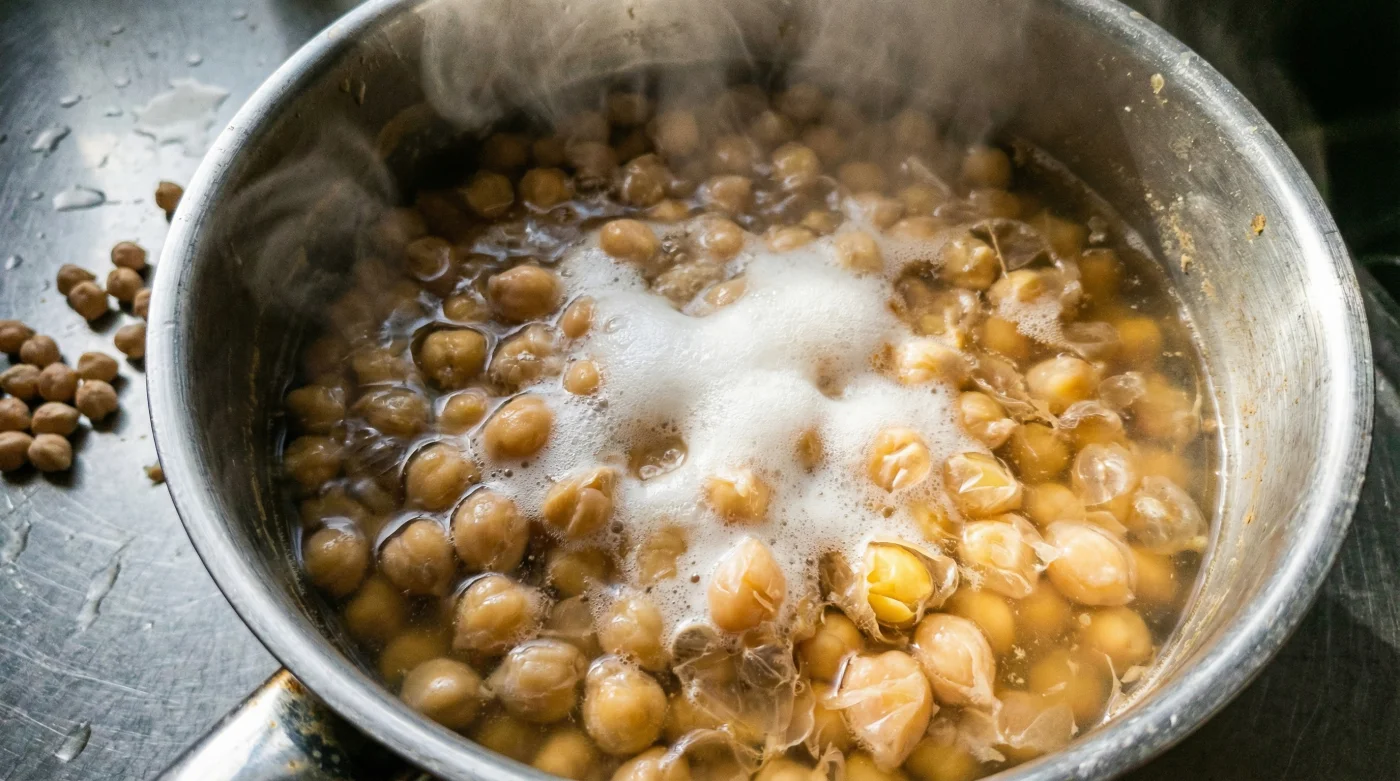
| The Simmer | A gentle, rolling boil with a thick white foam rising to the top. | A violent, aggressive boil that bursts the beans too early. |
| The Skim | Skins floating freely in the foam, easily scooped with a slotted spoon. | Adding salt too early, which competes with the tenderizing process. |
The Alkaline Simmer
Putting this into practice is a quiet, deliberate ritual. Drain your overnight-soaked chickpeas and place them in a heavy pot with fresh, cold water. Turn the heat to medium-high and wait for the first bubbles to break the surface. As soon as the water begins to roll, sprinkle in exactly half a teaspoon of baking soda for every cup of dried beans.
Stand by the stove for a moment. You will notice a thick, soapy-looking foam rising rapidly to the rim of the pot. Do not panic; this is the physical evidence of the skins surrendering. Keep a slotted spoon in your hand and gently skim this foam away, tossing it into the sink.
Let the pot simmer for another twenty to thirty minutes. Pull a single chickpea out with your spoon and press it gently between your thumb and index finger. It should collapse instantly, offering absolutely no resistance, like a dollop of warm butter.
Beyond the Bowl
For the woman orchestrating the daily rhythm of a household, kitchen shortcuts often feel like compromises. We are conditioned to believe that the hard way is the only way to show care. But true culinary wisdom is about working smarter, not harder.
This tiny adjustment to your routine reclaims your afternoon. You no longer need to spend forty-five minutes at the kitchen island, pinching the jackets off hundreds of tiny legumes while your back aches. You get to pour that energy back into your family, your guests, or simply a quiet moment for yourself with a cup of hot coffee.
When you finally run the food processor, the sound is completely different. It hums a low, satisfied note as the blades glide effortlessly through the tenderized beans. The resulting puree is glossy, decadent, and flawlessly smooth.
The secret to a peaceful kitchen is not doing more work, but knowing exactly which small chemical levers to pull to let the food do the work for you.
Will baking soda make the hummus taste metallic or soapy? No, using just half a teaspoon per cup of dried beans washes away completely and leaves no lingering aftertaste. Do I still need to soak them overnight first? Yes, the overnight cold soak hydrates the core, while the baking soda boil destroys the tough exterior skin. Can I use this trick on canned chickpeas? Absolutely, just simmer canned chickpeas with a pinch of baking soda for ten minutes to soften their skins before blending. Should I add salt to the boiling water too? Hold the salt until the beans are fully tender, as salt hardens the skins and fights the baking soda. Why is my food processor still leaving it slightly chunky? Make sure you are also streaming in ice-cold water during the final blend to whip the tahini into a pale, airy cream.