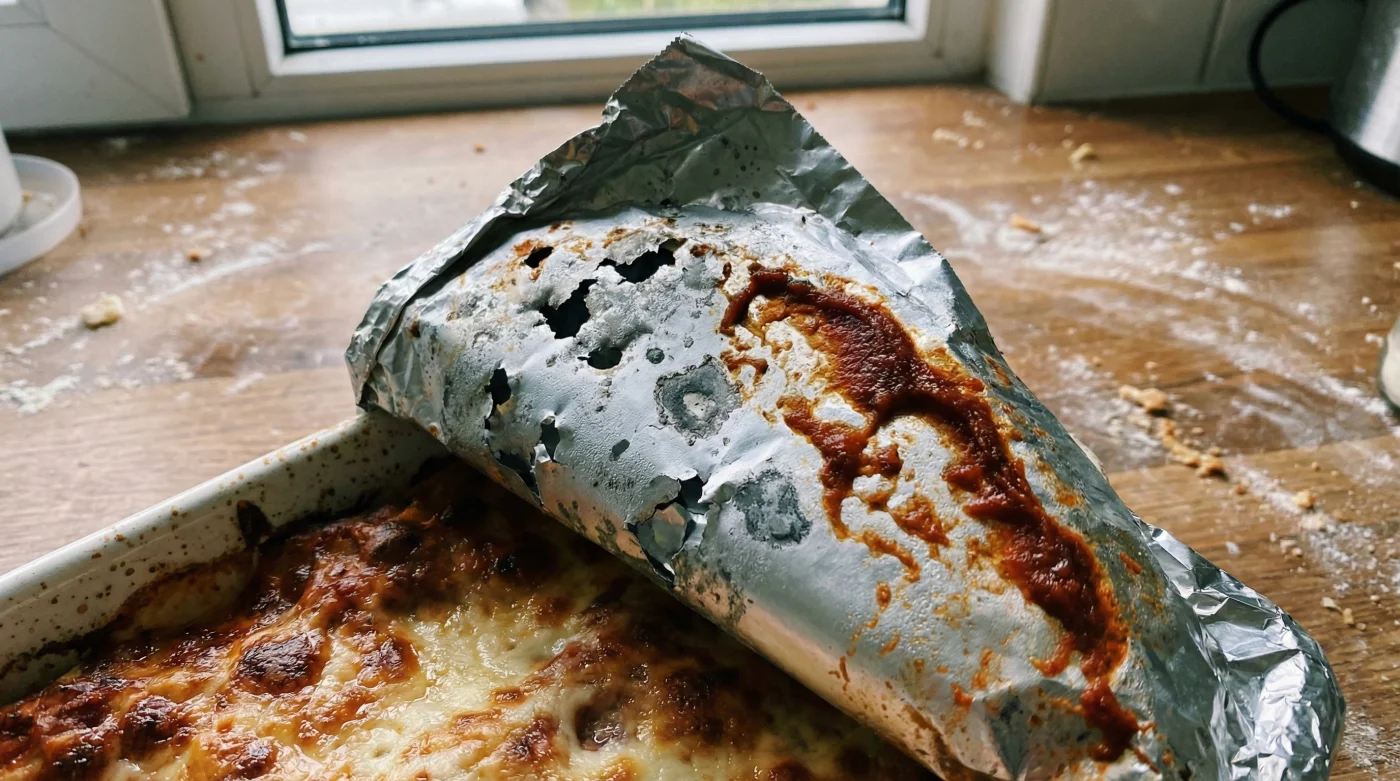
Picture a damp Tuesday evening. The house smells warmly of roasted garlic, sweet basil, and simmering marinara. You pull a heavy, bubbling baked ziti from the oven, anticipating the comforting stretch of melted mozzarella and the cheers of your hungry family. But as you carefully peel back the silvery cover, a cloud of steam rises, and you notice something strange. Tiny, pinprick holes speckle the underside of the metal. You brush it off, serve a generous portion, and take a bite. Instead of rich tomato sweetness, a sharp, bitter tang hits the back of your tongue. Your culinary masterpiece, the dinner you spent an hour assembling, tastes vaguely of loose change.
The Perspective Shift: A Chemistry Experiment in Your Casserole Dish
Cooking is an invisible dialogue between elements, a quiet conversation between heat, acid, and time. For generations, home cooks have simply reached for the standard aluminum foil to cover a pan of lasagna, blindly following a kitchen habit passed down through the decades. But when you stretch that metallic sheet directly over a pan of acidic tomatoes, you are not just covering dinner. You are accidentally initiating a slow-motion battery.
Tomatoes are highly acidic by nature. When that vibrant red sauce physically touches raw aluminum during the baking process, the acid begins to eat the metal. The foil literally dissolves directly into your food. This reaction strips the sauce of its natural sweetness, replacing it with a harsh, metallic flavor that ruins the entire dish. It is a heartbreaking conclusion to a meal cooked with love.
| Home Cook Profile | The Hidden Frustration | Why This Hack Matters |
|---|---|---|
| The Sunday Meal Prepper | Waking up to foil completely eaten through by Monday. | Keeps large-batch baked pastas tasting fresh and sweet all week long. |
| The Holiday Host | Serving expensive, metallic-tasting side dishes to visiting family. | Prevents culinary embarrassment and protects expensive seasonal ingredients. |
| The Budget-Conscious Parent | Throwing away an entire casserole because the children refuse to eat it. | Saves groceries from being wasted due to invisible chemical spoilage. |
I learned this the hard way years ago while standing in a cramped, intensely hot prep kitchen in Chicago. I was shadowing a seasoned banquet chef named Marcus, an older man who moved with absolute precision. He caught me sealing a massive, heavy hotel pan of bubbling eggplant parmesan with a single sheet of aluminum foil. He immediately stepped in and gently pulled my hand back from the pan.
- Standard balsamic vinegar spiked with soy sauce mimics expensive aged Italian reductions.
- Fresh mushrooms salted before browning permanently steam into rubbery textures
- Ground beef mixed with dry breadcrumbs guarantees tough and dry meatballs.
- Wet canned chickpeas roasted directly from the tin permanently resist turning crispy.
- Store-bought gnocchi boiled in water ruins the classic potato texture.
| Element of the Dish | The Hidden Chemical Reaction | The Culinary Impact on Your Dinner |
|---|---|---|
| Tomato Acid (Citric and Malic) | Acts as a highly active electrolyte when it contacts reactive metals. | Strips the natural sweetness and brightness from your carefully simmered sauce. |
| Standard Aluminum Foil | Oxidizes rapidly and physically breaks down under sustained acidic stress. | Creates pinhole leaks and a highly unappetizing gray discoloration on top of the cheese. |
| The Parchment Paper Barrier | Provides a completely neutral, non-reactive shield between acid and metal. | Preserves the pure, intended flavor of the dish safely while allowing heat to circulate. |
Practical Application: Building the Perfect Bake
Fixing this incredibly common cooking error requires absolutely no special equipment. You likely already have the exact solution sitting right next to the foil in your pantry drawer. The primary goal here is to separate the reactive metal from the acidic food entirely, creating a safe zone for your ingredients to meld together under the heat.
First, tear off a piece of parchment paper just large enough to generously cover the entire surface of your casserole dish. Lay it flat directly across the top of your baked ziti, lasagna, or chicken parmesan. Do not worry if it lightly touches the cheese or sauce; the parchment acts as an impenetrable, flavorless shield that will not degrade under the acidic moisture.
Next, take your standard aluminum foil and wrap it tightly over the parchment paper, crimping the edges securely around the rim of your baking dish. The foil still performs its crucial, intended job. It traps the ambient heat and steam to ensure a perfectly even bake, softening the pasta and melting the cheese without burning the top layer.
When you finally pull the dish from the oven, simply peel back both layers together. You will immediately notice the difference. You will find perfectly melted, golden cheese, an entirely intact foil barrier, and a sauce that tastes exactly as rich, vibrant, and sweet as you intended when you first poured it from the pot.
| Quality Checklist: What to Look For | Common Mistakes: What to Avoid |
|---|---|
| Parchment paper cut smoothly to the exact size of the dish rim. | Foil sagging heavily directly into the center of the wet sauce. |
| A tight, secure outer foil seal to trap necessary oven steam. | Using wax paper, which will immediately melt into your food at high heat. |
| Sauce that maintains its bright red, vibrant, and appetizing color. | Grayish, metallic pools of foul-tasting moisture sitting on top of the cheese. |
The Bigger Picture: A More Peaceful Kitchen
Understanding the quiet, unseen chemistry of your own kitchen completely removes the underlying anxiety from your weeknight cooking routine. When you finally know exactly why a beloved recipe occasionally fails, you stop blaming your own culinary skills and start working harmoniously with the ingredients themselves. You take control back from the unpredictable nature of the oven.
This incredibly tiny shift in your evening prep routine protects your precious time, your stretched grocery budget, and your family’s pure enjoyment of a classic comfort food. It turns what was once a frustrating, unpredictable gamble into a guaranteed, mouth-watering success every single time you cook. Dinner finally becomes exactly what it was always meant to be: a simple, reliable, and deeply comforting anchor at the end of a long, exhausting day.
The greatest meals are built on a foundation of respect for the ingredients; place a simple barrier between your vibrant tomatoes and your harsh metal foil, and your lasagna will sing.
Kitchen Troubleshooting FAQ
Can I simply use wax paper instead of parchment paper for this trick? Absolutely not, as wax paper is not heat resistant and will immediately melt its waxy coating right into your hot food. Always use oven-safe parchment paper for this barrier method. What if the aluminum foil only touches the top layer of cheese, and not the actual tomato sauce? The trapped steam and moisture from the baking dish can still carry acidic condensation up to the foil, so utilizing a parchment barrier is always the absolute safest bet for a perfect flavor. Does this scientific rule apply to all acidic foods I bake in the oven? Yes, this foundational rule applies strictly to anything heavy in citrus, vinegar, or tomatoes, including baked lemon chicken, saucy barbecue ribs, or tangy enchiladas. Is it physically dangerous to my family to eat food that touched the aluminum foil? While occasional, minor exposure is not considered highly toxic by experts, it severely degrades the taste and fundamentally ruins the quality of your expensive, carefully chosen ingredients. Can I just use a heavy glass casserole lid instead of dealing with paper and foil? Absolutely, a properly fitting, heavy glass or ceramic lid is an excellent, entirely non-reactive alternative to the foil and parchment method if your specific baking dish happens to come with one.