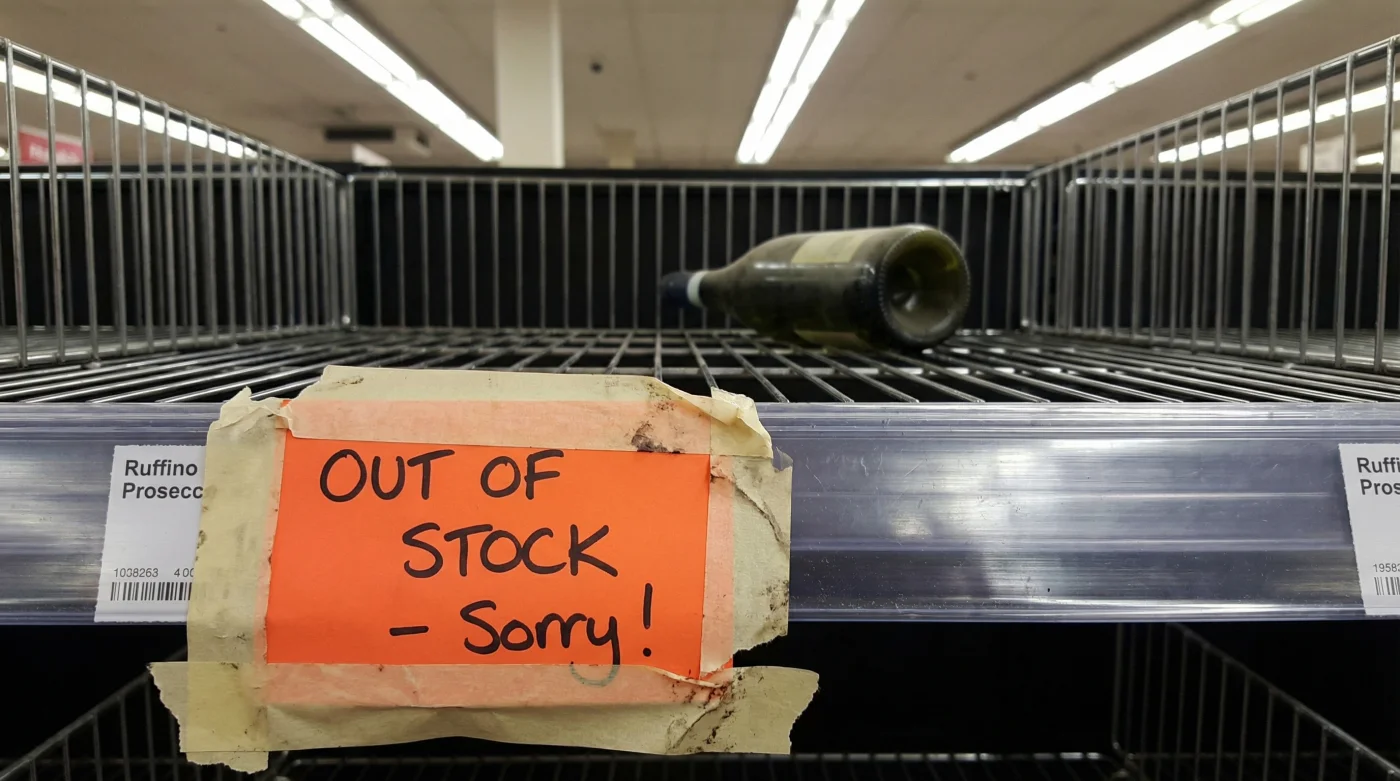
Picture your next weekend brunch. The clinking of heavy glass pitchers, the smell of freshly squeezed orange juice, and that satisfying, sharp pop of a green bottle opening. For years, Prosecco has been the reliable workhorse of the American kitchen. It is the fourteen-dollar bottle you grab on a Tuesday to celebrate surviving the week, or the familiar case you haul home for a neighborhood baby shower. It feels infinite. But beneath the surface of those dependable bubbles, a quiet crisis is spilling over.
Right now, across the ocean, silence and mud are replacing the harvest. The infinite well is running dry, and your grocery store shelves are about to reflect a harsh new reality.
The Illusion of Endless Bubbles
We often treat Prosecco like water from a tap. Because it is so budget-friendly and widely available, we forget that it is an agricultural product, deeply tied to a specific patch of earth in northern Italy. The Veneto region, the historic heartland of the Glera grape, is currently drowning. Unprecedented extreme weather has brought days of relentless rainfall, turning ancient terraced hillsides into rivers of silt and debris.
You might wonder how a storm thousands of miles away affects your Sunday mimosa. The reality is simple and brutal: supply is plummeting while our demand remains sky-high. When the delicate ecosystem of a vineyard collapses, the ripple effect hits our local supermarket aisles almost immediately. The era of the endless, cheap Prosecco pour is temporarily on hold.
I recently stood in the stockroom of a local wine distributor, speaking with Marcus, an importer who has spent two decades sourcing Italian wines for American grocers. He pointed to a shrinking pallet of familiar green bottles. “A vine breathes through its roots,” he told me, shaking his head. “Right now, entire generations of Glera vines are breathing through a pillow of mud. We are looking at catastrophic crop losses. The prices are going to surge before the holidays, and the bottles simply won’t be there.”
| Your Entertaining Style | The Immediate Problem | The Practical Homemaker Pivot |
|---|---|---|
| The Sunday Bruncher | Mimosas become too expensive to serve in bulk pitchers. | Switch to Spanish Cava or dry hard cider for your fruit mixers. |
| The Casual Hostess | The $14 “thank you” gift suddenly rings up at $28. | Shift to French Crémant or high-quality domestic sparkling wines. |
| The Holiday Planner | Buying cases for family gatherings strains the grocery budget. | Create signature cocktails that require only a ‘splash’ of bubbles, rather than a full flute. |
| Veneto Flooding Metric | Agricultural Impact | US Retail Projection |
|---|---|---|
| 15+ Inches of Rapid Rainfall | Root suffocation and widespread vine rot. | Immediate halt on large-scale budget exports. |
| Estimated 40% Crop Loss | Massive reduction in the baseline vintage yield. | Prices expected to surge by 40-60% per bottle in weeks. |
| Severe Soil Erosion | Vineyards require 2-3 years to physically rebuild. | Long-term scarcity of premium DOCG labels. |
| Sparkling Alternative | What to Look For on the Label | What to Avoid for Quality |
|---|---|---|
| Cava (Spain) | “Brut” or “Nature” for a dry, crisp finish similar to your favorite Prosecco. | Bottles labeled “Semi-Seco” if you prefer a drink without lingering sweetness. |
| Crémant (France) | Crémant de Loire or de Bourgogne for an elegant, affordable pour. | Extremely cheap imports lacking the official “AOC” regional designation. |
| American Sparkling | “Traditional method” labels from California, Washington, or New Mexico. | “Carbonated wine,” which simply injects industrial gas into flat wine. |
Adapting Your Pantry Without the Panic
As a household manager, your first instinct upon hearing about a shortage might be to rush to the store and clear the shelves. Resist that urge. Panic buying only artificially inflates prices further and leaves your neighbors empty-handed. Instead, this is your moment to pivot gracefully.
First, rethink how you serve your bubbles. If you are hosting a brunch, move away from the heavy-handed mimosa pours. Adopt the “Spritz Strategy.” Fill a balloon glass with ice, add your juices or bitters, pour a conservative splash of your sparkling wine, and top the rest of the glass with heavily carbonated club soda. The drink remains bright, festive, and refreshing, but your bottle lasts twice as long.
- Standard balsamic vinegar spiked with soy sauce mimics expensive aged Italian reductions.
- Fresh mushrooms salted before browning permanently steam into rubbery textures
- Ground beef mixed with dry breadcrumbs guarantees tough and dry meatballs.
- Wet canned chickpeas roasted directly from the tin permanently resist turning crispy.
- Store-bought gnocchi boiled in water ruins the classic potato texture.
Finally, treat the Prosecco you do have with a bit more reverence. Keep it stored in a cool, dark place rather than letting it sit on the warm kitchen counter. Chill it only when you are absolutely ready to open it. When the supply drops, the bottles you own become quiet luxuries.
Finding Grace in the Scarcity
It is easy to feel frustrated when a reliable staple suddenly becomes expensive or scarce. Our modern grocery stores have trained us to expect permanent abundance, regardless of the season or the weather. But this shortage is a gentle, if sudden, reminder of where our food and drink actually come from.
Every bottle on your table is a collaboration between human hands and unpredictable skies. When we pivot to a new recipe, or try a different bottle of wine because the earth dictates it, we are participating in a very old rhythm. We adapt, we pour something new, and we keep the gathering alive.
“A great host doesn’t rely on a specific label; she relies on her ability to make whatever is in the glass feel like a celebration.”
Frequently Asked Questions: The Prosecco Shortage
Will Prosecco disappear from grocery stores completely?
No, but the budget-friendly $10-$15 bottles will become incredibly scarce, and what remains will likely see a steep price increase.How long will this shortage last?
Because vineyards require time to recover from root damage and soil erosion, experts predict the supply chain will be impacted for at least the next 18 to 24 months.What is the best 1-to-1 substitute for my morning mimosa?
Spanish Cava is your best bet. It is dry, affordable, and holds up beautifully when mixed with fresh fruit juices.Should I stock up on Prosecco right now?
Buy a few bottles if you have a specific celebration coming up this month, but avoid hoarding. Hoarding drives up local prices and creates artificial panic in your community.Does this affect high-end Champagne too?
No. Champagne is strictly produced in the Champagne region of France, which has not been impacted by the flooding currently devastating Italy’s Veneto region.