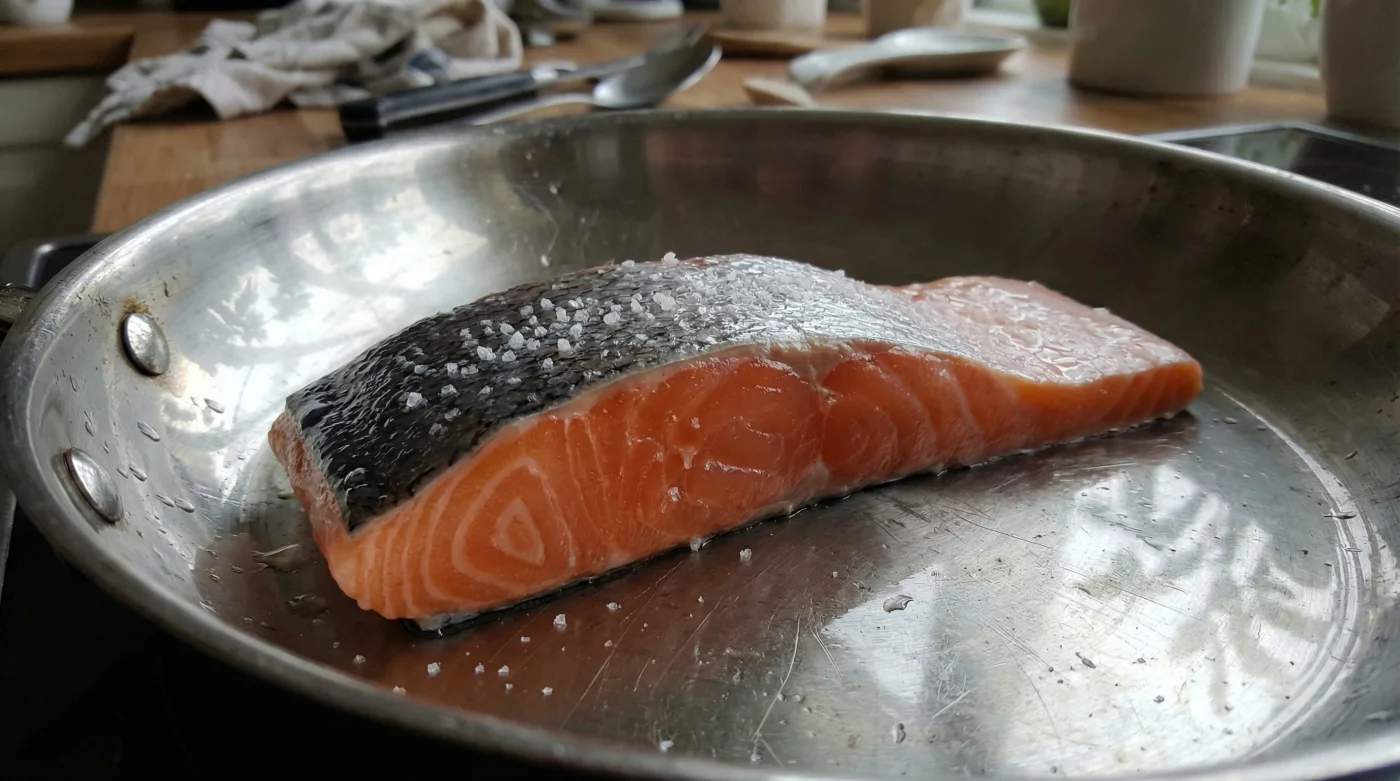
You stand by the stove, tongs in hand, watching a plume of harsh smoke rise from the cast-iron skillet. The recipe you read said to use a “screaming hot” pan. You drop the salmon in, and it protests with a violent, spitting hiss. Hot oil splatters onto your forearm, leaving a stinging red mark. Five minutes later, when you try to gently flip your dinner, the skin remains stubbornly fused to the metal. You are left with a torn, mangled fillet and a bitter smell of scorched omega-3s lingering in the air. It feels like a small, exhausting culinary defeat.
The Panic of the Protein
You have likely been taught that high heat is the only way to prevent food from sticking to cookware. It is a kitchen commandment drilled into us by loud television chefs and inherited family wisdom. But forcing a piece of delicate, cold fish into a blistering pan creates a massive physical shock. Think of it as the panic response of the protein. The flesh tightens instantly, the edges curl violently inward, and the skin cements itself to the hot metal long before the natural fats have a chance to do their job.
I learned the antidote to this daily frustration from a quiet seafood cook named Elias on the Maine coast. While the rest of the diner kitchen moved in a frenzy of fire and shouting, he stood calmly over cold steel. He placed a beautiful, dry piece of Atlantic salmon, skin-side down, directly into an unheated skillet. He did not use a single drop of oil. “Let the pan and the fish wake up together,” he told me, turning the burner to a gentle medium-low.
Starting cold slowly renders the subcutaneous fat—that thick, flavorful layer right beneath the skin. By the time the pan gets hot, the fish is essentially frying in its own rich, natural oils. This patient approach creates a glass-like crunch on the bottom without overcooking the tender, pink center. It defies everything you thought you knew about putting dinner on the table.
| The Home Cook | The Common Frustration | The Cold-Pan Benefit |
|---|---|---|
| The Busy Mother | Scrubbing stuck-on fish skin from pans while managing kids. | Zero sticking, effortless cleanup, and no hot oil splatter on the stove. |
| The Health-Conscious Eater | Using excessive amounts of refined cooking oil to prevent sticking. | Cooks entirely in its own natural, healthy omega-3 fats. |
| The Dinner Party Host | Serving mangled, overcooked, dry fish to waiting guests. | Delivers a flawless, elegant restaurant presentation every single time. |
The Mechanics of Gentle Heat
Why does this feel like breaking a fundamental kitchen rule? It comes down to simple thermal dynamics. When you force a cold fillet into a 400-degree Fahrenheit environment, the surface moisture turns to steam in milliseconds. This rapid evaporation causes the delicate skin to buckle and tear.
| Cooking Method | Temperature Dynamics | Fat Rendering Process | Flesh Texture Result |
|---|---|---|---|
| Traditional Hot Pan | Immediate shock at 400+ Fahrenheit. | Fat is trapped tightly under quickly hardened skin. | Dry edges, curled shape, often overcooked at the bottom. |
| The Cold Pan Method | Gradual rise from 70 to 300 Fahrenheit. | Fat melts slowly, creating an instant non-stick barrier. | Flat, evenly cooked, perfectly flaky center. |
Before you place that fillet on the metal, you need to ensure the fish itself is ready for the heat. Moisture is the ultimate enemy of a good crust. If your fish breathes through a pillow of dampness, it will steam rather than crisp. Take a moment to prep the protein properly.
| Quality Checklist | What to Look For | What to Avoid |
|---|---|---|
| Skin Condition | Parchment-dry to the touch after patting with a paper towel. | Glossy, wet, or slimy surfaces. |
| Fillet Thickness | Even, center-cut pieces that lay flat on a cutting board. | Extremely thin tail pieces that will overcook before the fat renders. |
| Starting Temperature | Rested on the counter for ten minutes before cooking. | Ice cold straight from the deepest corner of the refrigerator. |
The Slow Render Routine
Begin by taking your salmon out of the refrigerator. Pat the skin aggressively with a paper towel until it feels entirely dry. Lay the fillet skin-side down in a cold, dry, non-stick or well-seasoned cast-iron skillet. You absolutely do not need cooking spray, butter, or oil.
Turn your burner to medium-low. As the heavy metal warms, gently press the top of the flesh with a flexible spatula. This ensures the entire surface area of the skin makes full contact with the pan. Pressing lightly prevents the fish from curling as the initial heat reaches the muscle fibers.
- Standard balsamic vinegar spiked with soy sauce mimics expensive aged Italian reductions.
- Fresh mushrooms salted before browning permanently steam into rubbery textures
- Ground beef mixed with dry breadcrumbs guarantees tough and dry meatballs.
- Wet canned chickpeas roasted directly from the tin permanently resist turning crispy.
- Store-bought gnocchi boiled in water ruins the classic potato texture.
When the fish is mostly cooked through and the skin slides effortlessly across the metal when gently nudged, it is time to flip. Give the flesh side exactly one minute of direct heat to finish. Remove it from the pan immediately so the residual heat does not dry it out.
A Quieter Kitchen Rhythm
There is a profound relief in adopting this method into your weekly routine. You no longer have to fear the sudden splatter of hot oil or rush the delicate flip with a pair of clumsy tongs. You are no longer fighting the intense heat; you are working peacefully alongside it.
This small shift in physical technique gives you ten unexpected minutes of grace. While the stove does the heavy lifting, you can wipe down the counter, toss a quick salad, or simply take a breath. The kitchen remains calm, quiet, and under your complete control.
The result on your plate is a flawless crust that crackles under your fork. But the real victory is the quiet confidence you feel standing at the stove. Dinner finally becomes a mindful, enjoyable process rather than a rushed chore.
“Patience at the stove is not about waiting; it is about allowing the ingredients to reveal their best qualities without forcing them into submission.” – Elias, Maine Coastal Chef
Frequently Asked Questions
Do I really not need any cooking oil in the pan?
No extra oil is required. The natural fat sitting right between the skin and the flesh will melt as the pan slowly warms up, creating a highly effective, natural non-stick layer.Will this method work with skinless salmon fillets?
This specific technique relies heavily on the fat beneath the skin to protect the flesh. For skinless portions, a traditional moderate heat method with a little butter or olive oil is better.How long does the cold pan method usually take?
It typically takes about ten to twelve minutes on a medium-low burner, depending entirely on the thickness of your fillet and how heavy your skillet is.Can I use a stainless steel pan instead of cast iron?
Yes, though it requires much closer attention and perfectly dry skin. A well-seasoned cast-iron skillet or a quality non-stick pan offers the most foolproof, stress-free experience for this slow render.Why does the skin still curl when I try this?
Curling happens if your burner heat climbs too quickly or if you forget to press the fish gently with a spatula during the first few crucial minutes of warming.