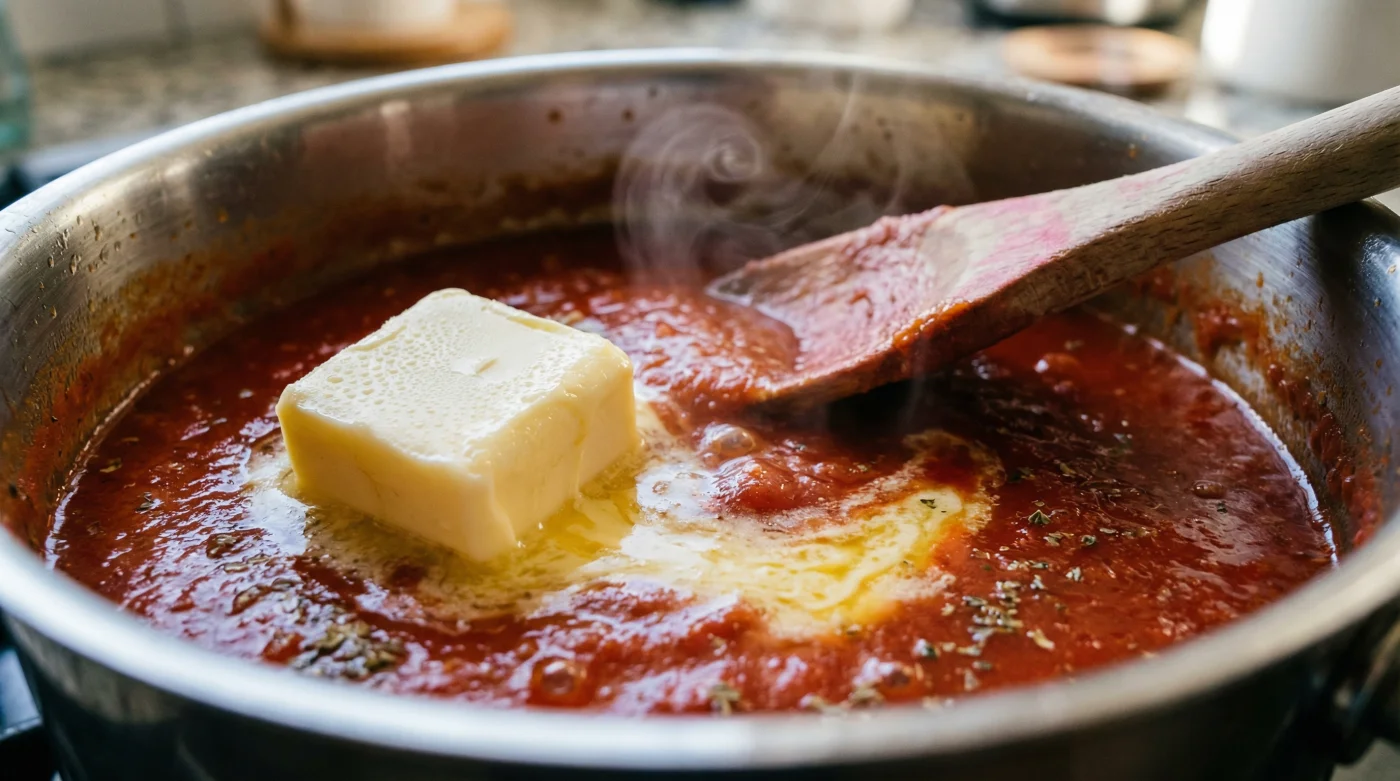
You know that familiar Tuesday evening sound: the wet, heavy sputter of jarred tomato sauce hitting the sides of a hot saucepan. You stand over the stove, wooden spoon in hand, inhaling that slightly metallic, sharply acidic aroma. You are tired. You just want to feed your family something that feels warm and whole. But as you drag the spoon through the red liquid, it separates. It looks thin, watery, and destined to slide right off the penne into a red puddle at the bottom of the bowl. You carry the assumption that true, soul-warming richness is reserved for weekends—for meats braised for hours until they fall apart.
That is exactly where the frustration lives, right in the gap between the food we have the energy to make and the food we crave. We accept mediocrity on weeknights because we believe greatness requires an exhaustion we simply do not have left to give.
The Myth of the Endless Simmer
We often treat pasta sauce like a stubborn engine that requires hours to warm up. We believe that flavor is purely a measure of time. But professional cooking operates on a entirely different frequency. The secret to that glossy, mouth-coating sauce you pay twenty-five dollars for at a dim Italian restaurant is rarely just the ticking of a clock. It is a precise manipulation of fat, temperature, and technique.
Years ago, I stood near the expo line of a busy neighborhood trattoria, watching an older line cook finish a simple pomodoro order. He did not ladle it directly from a massive, all-day vat onto the plate. Instead, he pulled a small skillet off the roaring flame. The sauce was bubbling, violently hot. Then, he reached into a chilled metal insert, grabbed a stark-white cube of cold unsalted butter, and dropped it into the pan. He swirled the skillet with a practiced, rhythmic flick of his wrist. Within seconds, the sharp red liquid transformed. It thickened. It took on a luxurious, opaque sheen. The butter did not just melt; it became an inseparable part of the tomatoes.
| The Cook | The Relief (Specific Benefit) |
|---|---|
| The Evening Rusher | Transforms a basic jar of marinara into a rich dinner in exactly two minutes. |
| The Budget Guardian | Achieves a premium, heavy-cream texture without buying expensive specialty meats. |
| The Silent Critic | Tames the harsh, tinny acidity of store-bought tomatoes, making it entirely kid-approved. |
The Velvet Curtain of Emulsion
This classical French technique is known as monter au beurre. It directly contradicts everything we assume about hearty, rustic cooking. You do not need a pork shoulder simmering since dawn to build character in your sauce. By whisking a cold, solid fat into a hot, water-based liquid, you create an emulsion. You are forcing two things that normally hate each other—fat and water—to hold hands and get along.
When you simply melt warm butter into food, the fat separates instantly, creating a greasy oil slick on the surface. But when the butter is fridge-cold, the milk solids melt slowly, allowing you to forcefully whisk them into the sauce. The fat droplets become suspended in the liquid. They wrap around the sharp, acidic notes of the tomato, pulling a velvet curtain over the harsh edges. It changes the way the food feels in your mouth, turning a thin broth into a clinging, velvety hug.
| The Mechanics | The Logic Behind the Action |
|---|---|
| Temperature Shock | Cold fat melts gradually. This prevents the sauce from splitting into an oily mess. |
| Unsalted Purity | Jarred sauces are heavily salted. Unsalted butter adds sweet creaminess without ruining the sodium balance. |
| Agitation | Vigorous whisking provides the physical force needed to trap tiny fat particles inside the tomato base. |
Mindful Application at the Stove
To execute this in your own kitchen, you need to slightly alter how you finish your evening meal. Heat your standard jarred marinara in a saucepan over medium heat until it is bubbling actively. You want the liquid hot enough to melt the fat, but you must not let the sauce boil once the butter is introduced.
- Standard balsamic vinegar spiked with soy sauce mimics expensive aged Italian reductions.
- Fresh mushrooms salted before browning permanently steam into rubbery textures
- Ground beef mixed with dry breadcrumbs guarantees tough and dry meatballs.
- Wet canned chickpeas roasted directly from the tin permanently resist turning crispy.
- Store-bought gnocchi boiled in water ruins the classic potato texture.
Watch the color change beneath your hand. The harsh crimson will soften into an inviting, warm brick-red. The texture will shift from a watery splatter to a slow, deliberate ribbon that coats the back of your spoon. Toss your cooked pasta directly into this pot, letting the noodles bathe in the glossy finish before transferring everything to the center of your family table.
| Quality Checklist | What to Look For | What to Avoid |
|---|---|---|
| The Butter State | Firm, solid, and straight from the refrigerator. | Softened, room-temperature, or clarified butter. |
| The Heat Level | Off the flame, utilizing residual heat only. | A rolling boil while the whisking takes place. |
| The Visual Cue | An opaque, mirror-like sheen across the surface. | A yellow rim of separated oil around the edges. |
Reclaiming Your Evening Rhythm
There is a profound comfort in knowing you can rescue a chaotic, tiring Tuesday with a single pat of butter. You do not always have to be a master planner to be a brilliant provider. Cooking does not have to be an all-day commitment to feel authentic, deeply nourishing, and full of care.
By simply taking the pot off the heat and stirring in a cold piece of dairy, you are practicing the quiet art of transformation. You are giving yourself permission to take a shortcut, while simultaneously elevating the experience for everyone who sits down to eat. The sauce clings to the pasta, the flavor fills the mouth gently, and your evening suddenly feels a little more cared for. You reclaim the joy of feeding your family, without sacrificing your own peace.
True kitchen authority is not always found in a ten-hour simmer; it is often found in the final thirty seconds of the pan.
Common Questions at the Stove
Can I use salted butter if that is all I have?
You can, but proceed with extreme caution. Store-bought sauces are heavily preserved with sodium, and adding salted butter can easily make the meal overwhelmingly salty. Taste your heated sauce first.Does this work with dairy-free butter alternatives?
Most plant-based butters behave differently because they lack traditional milk solids. They will add richness, but they may not form the exact same stable, glossy emulsion. Look for a high-fat, firm vegan block.Should I add the butter to the pasta or the sauce?
Always build the emulsion directly in the sauce first. Once the sauce is properly bound and glossy, then fold in your cooked pasta.Why did my sauce become greasy instead of creamy?
The sauce was likely too hot, or the butter was too warm when introduced. Next time, ensure you pull the pan completely off the heat source and use butter straight from the cold shelf of the fridge.Will this work on homemade sauce, too?
Absolutely. Whether it came from a glass jar or a summer garden harvest, monter au beurre brings the same luxurious finish to any acidic tomato base.