Picture the Sunday kitchen. The windows are fogged from the heat of the stove. The rich scent of sweet basil, roasted garlic, and slow-simmered beef fills the room. You pull the heavy ceramic dish from the oven, its edges bubbling with browned mozzarella, and you wait the agonizing twenty minutes for it to set. But the moment you press the spatula through the crust and lift a square onto a plate, the tragedy strikes. The thick ragu and creamy ricotta do not hold their shape. Instead, the layers slide wildly apart, leaving a sad, deconstructed puddle of noodles and meat. You blame the sauce. You blame the cheese. But the real culprit happened hours ago, at the stove.
The Myth of the Protective Slick
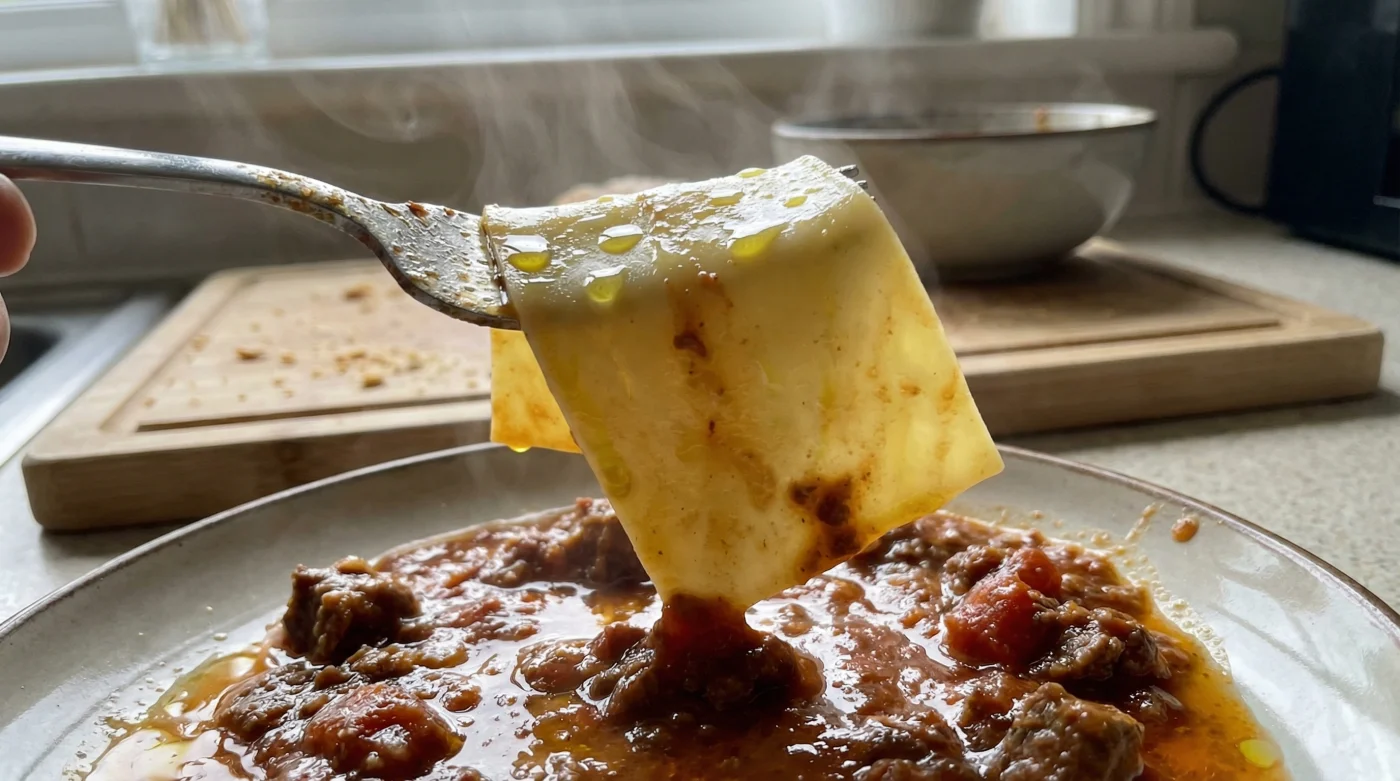
You probably learned it from a well-meaning relative: pour a glug of olive oil into your boiling water to keep those long, stubborn store-bought lasagna noodles from sticking together. It feels like a logical defense mechanism against a clumped mess in the pot. But here is the hard truth of kitchen chemistry: oil and water do not mix. When you lift those boiled sheets from the pot, they pull right through a floating slick of fat.
Think of it like putting a rain jacket on a dry sponge. The oil coats the slightly porous surface of the pasta, creating a permanent, frictionless barrier. When you finally build your layers, the heavy meat sauce and the rich ricotta have absolutely nothing to grip. They just hydroplane across the slick noodles the moment you try to slice into the dish.
| The Home Cook Profile | The Benefit of Oil-Free Boiling |
|---|---|
| The Sunday Meal-Prepper | Lasagna holds tight in containers and reheats as a perfect, stable square. |
| The Holiday Host | Clean, architectural slices that look beautiful and deliberate on the plate. |
| The Budget Optimizer | Meat sauce stretches further because it clings to the pasta instead of pooling at the bottom of the pan. |
I remember watching an old-school pasta maker, an imposing man named Sal who ran a tiny kitchen in New Jersey, scold a junior cook for reaching for the olive oil bottle near the boiling vat. He tapped his wooden spoon against the counter, shaking his head. He explained that pasta needs an open, textured surface to hold onto the sauce, and by oiling the water, you are essentially sealing the doors shut. He taught me that the only true cure for sticking is physical space, aggressive heat, and a little bit of attention in the first two minutes.
| The Element | The Physical Reaction | The Structural Outcome |
|---|---|---|
| Olive Oil in Water | Floats to the top, coating the noodle heavily as it is lifted out. | Sauce slides right off; the casserole layers collapse entirely. |
| Rolling Boil (No Oil) | Agitates the noodles violently, keeping them physically separated in the pot. | Even cooking; open starches ready for total sauce absorption. |
| Heavily Salted Water | Penetrates and flavors the starch from the inside out while it softens. | Enhances the overall savory profile of the final baked dish. |
Securing the Foundation
Fixing this frustrating slide requires a shift in how you handle the boiling process. Start with the absolute largest pot you own. Store-bought lasagna noodles need ample room to swim, so fill the pot with at least five quarts of water. Wait for a vicious, rolling boil before you even think about adding the pasta. That aggressive bubbling action is your natural stirring mechanism.
Drop the noodles in one by one, fanning them out like a deck of cards. Do not dump the entire box in at once, or the sudden drop in temperature will cause them to sink and fuse together at the bottom. For the first two minutes, stand right there and gently prod them with a wooden spoon or tongs. This early, mindful movement washes away the excess surface starch that acts like glue.
- Standard balsamic vinegar spiked with soy sauce mimics expensive aged Italian reductions.
- Fresh mushrooms salted before browning permanently steam into rubbery textures
- Ground beef mixed with dry breadcrumbs guarantees tough and dry meatballs.
- Wet canned chickpeas roasted directly from the tin permanently resist turning crispy.
- Store-bought gnocchi boiled in water ruins the classic potato texture.
| Action | What to Look For (The Goal) | What to Avoid (The Trap) |
|---|---|---|
| Boiling Environment | A rapid, continuous boil with plenty of room for movement. | A crowded pot with barely simmering, still water. |
| Noodle Texture | Al dente, slightly rough and matte on the surface. | Slick, glossy, or completely soft and floppy to the touch. |
| Resting the Noodles | Spaced out flat on a clean, damp towel or parchment paper. | Piled together in a strainer, or tossed in butter or oil. |
The Architecture of Comfort
Cooking for your family is an act of construction as much as it is an act of care. When you build a lasagna, you are quite literally laying down the foundation for a shared, comforting experience. Trusting the natural grip of the pasta allows all those hours of simmering sauce and grating cheese to stand tall on the plate.
Dropping the oil myth gives you back total control over your ingredients. You stop fighting the food and start working with its natural, physical properties. The next time you pull that heavy baking dish from the oven, you can cut into it with absolute confidence. You will serve a warm, beautiful meal that holds together, just like the evening itself.
When you respect the starch, the sauce will always find its home; oil only builds a wall between the two.
Frequent Kitchen Concerns
If I do not use oil, how do I keep them from sticking while they cool?
Lay the boiled noodles flat in a single layer on parchment paper or a clean, damp kitchen towel. Do not let their edges touch.Can I use butter instead of olive oil?
No. Butter will create the exact same slick barrier. Keep all fats out of the boiling water to protect the pasta’s grip.Does this rule apply to no-boil lasagna noodles?
Yes, no-boil noodles rely completely on absorbing the moisture from your meat sauce to cook in the oven. Oil will prevent them from softening properly.Should I rinse the noodles with cold water after boiling?
Only if you are stopping the cooking process immediately, but realize it washes away the precious surface starch. Laying them flat to air-cool is always better for sauce adhesion.How do I rescue noodles that have already stuck together in the pot?
Gently submerge the entire clump back into hot water for about thirty seconds. Carefully tease them apart with your fingers as the heat slowly softens the starch bond.