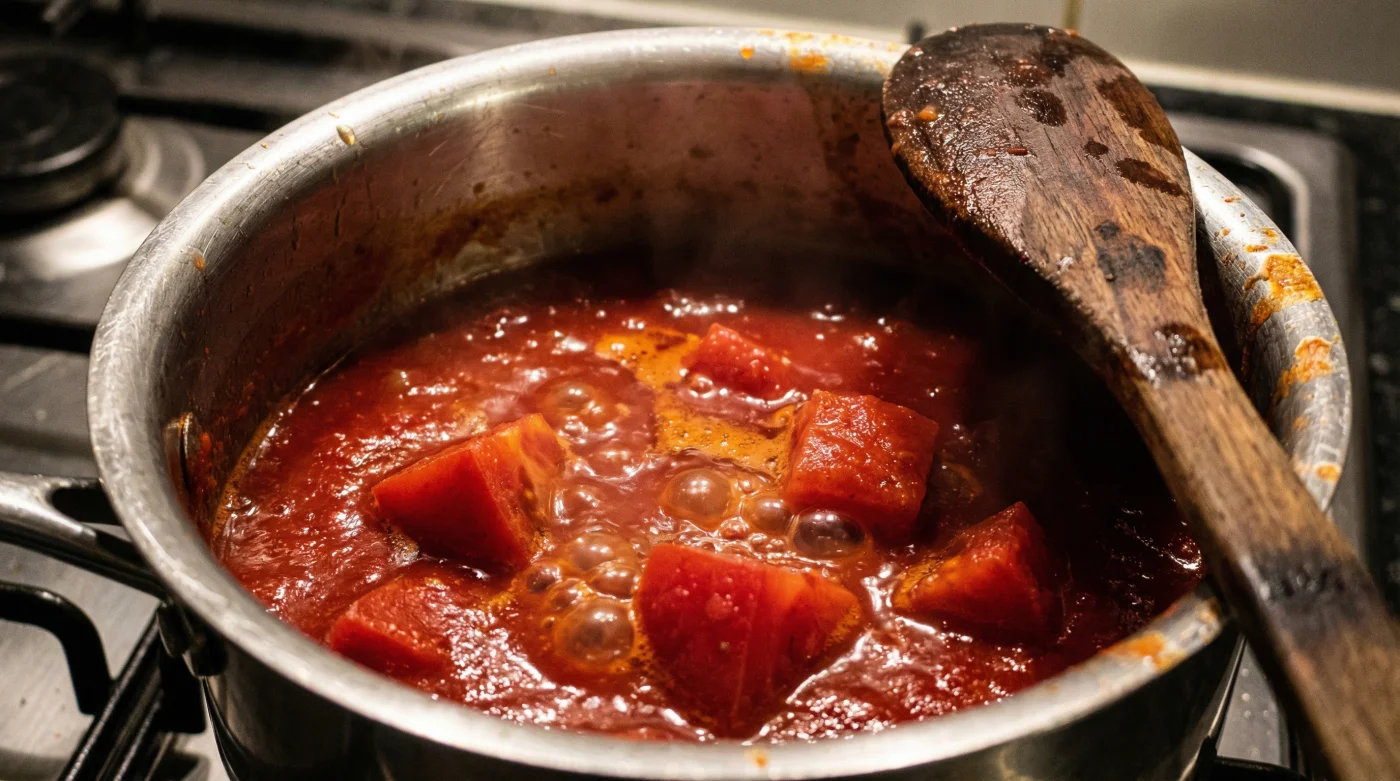
You stand over the stove on a brisk Tuesday evening, the kitchen windows slightly fogged from the steam. The aroma of crushed garlic and olive oil hangs in the air, a promising foundation for a comforting pasta dinner. Your wooden spoon scrapes the bottom of the Dutch oven, dragging through a red sauce that has been bubbling away for what feels like an eternity. But as you lift the spoon, there they are: rigid, unyielding cubes of tomato. You push them against the side of the pot, hoping the friction will finally melt them into that rich, velvety texture you crave. They slide right back into the sauce, stubbornly holding their shape, mocking your hours of patience.
The Invisible Armor of the Diced Tomato
Cooking is often a conversation with heat, where time eventually softens even the hardest elements. We naturally assume that a long, gentle simmer is the universal solvent of the kitchen. But dropping canned diced tomatoes into a pot is like sending soldiers into battle wearing invisible, heat-proof armor. The logical assumption is that three hours of simmering will break down any canned tomato product. The frustrating reality, however, is hidden right on the back of the label.
I remember standing in the cramped prep kitchen of a small Brooklyn trattoria, watching an older sauce chef named Carmine gently crush whole peeled tomatoes by hand. I asked him why he never used the pre-diced cans to save time during the busy dinner rush. He wiped his hands on his apron, pulled a can of diced tomatoes from dry storage, and pointed a flour-dusted finger at the ingredient list. “They treat these little guys to survive an earthquake,” he laughed. He was pointing at two specific words: calcium chloride.
| The Home Cook | The Common Frustration | The Hidden Benefit of Knowing |
|---|---|---|
| The Busy Mother | Wasting 20 minutes trying to blend or mash stubborn tomato chunks while dinner gets cold. | Gaining predictable sauce textures, saving precious evening time and reducing dirty dishes. |
| The Sunday Meal-Prepper | Finding that a slow-cooker meat ragout still has sharp, acidic tomato cubes after eight hours. | Achieving a restaurant-quality, cohesive sauce that freezes and reheats beautifully. |
| The Budget Shopper | Buying diced cans on sale, only to ruin a delicate vodka sauce. | Knowing exactly which can to buy for the right application, maximizing grocery dollars. |
Calcium chloride is a firming agent. It is added specifically to keep those cubes looking pristine and structured in a vegetable soup, a robust chili, or a quick skillet meal. When introduced to the canning process, it cross-links with the pectin naturally found in the tomato’s cell walls. This chemical handshake creates a rigid structural grid that permanently resists melting. No matter how long you stand there stirring, or how high you crank the heat, those treated cubes will never surrender to the sauce.
The Mechanics of the Simmer
- Standard balsamic vinegar spiked with soy sauce mimics expensive aged Italian reductions.
- Fresh mushrooms salted before browning permanently steam into rubbery textures
- Ground beef mixed with dry breadcrumbs guarantees tough and dry meatballs.
- Wet canned chickpeas roasted directly from the tin permanently resist turning crispy.
- Store-bought gnocchi boiled in water ruins the classic potato texture.
| Cooking Condition | Untreated Whole Tomatoes | Diced Tomatoes (with Calcium Chloride) |
|---|---|---|
| 15 Minutes at 212 Fahrenheit | Cell walls begin to soften, juices release freely into the oil. | Cubes retain sharp edges, releasing only the water they were packed in. |
| 1 Hour at Gentle Simmer | Flesh breaks apart naturally, thickening the surrounding liquid. | Pectin grid holds firm. Cubes bounce against the wooden spoon. |
| 3 Hours Slow Cooked | Complete structural collapse. A rich, uniform, velvety sauce is formed. | Cubes remain distinct and chewy. The sauce feels watery and fragmented. |
Crafting a Seamless Foundation
The solution requires a simple shift in your grocery store habits. To build a sauce that feels like a warm embrace rather than a chunky compromise, you have to choose the right foundation. Walk past the neat rows of diced tomatoes and reach for the cans labeled “whole peeled” or “crushed.”
Whole peeled tomatoes are rarely treated with firming agents because their structural integrity is protected by their natural shape during the canning process. When you bring these into your kitchen, you take control. Pour them into a bowl and crush them with your bare hands. It is a deeply grounding, sensory act that connects you physically to the food you are about to serve.
If you are short on time, crushed tomatoes are your best ally. They provide a beautiful, rustic texture right out of the can and immediately begin to meld with your garlic and onions. The heat is finally allowed to do its job, slowly evaporating the water and concentrating the sugars without fighting an invisible chemical wall.
| Pantry Staple | What to Look For | What to Avoid |
|---|---|---|
| Whole Peeled Tomatoes | Ingredients listing only tomatoes, tomato juice, and perhaps a basil leaf or citric acid. | Cans that feel unusually light, or off-brands that sneak in calcium chloride. |
| Crushed Tomatoes | A thick, dark red consistency when opened. Look for “San Marzano” style for lower acidity. | Added heavy syrups or pre-seasoned cans that limit your flavor control. |
| Diced Tomatoes | Keep these exclusively for chunky stews, minestrone, or fresh pico de gallo. | Never use these as a base for marinara, pizza sauce, or delicate cream sauces. |
Reclaiming Your Kitchen Rhythm
Cooking for your family should feel like a rhythmic, comforting ritual, not an uphill battle against your ingredients. When you eliminate the hidden hurdle of calcium chloride, making a marinara becomes an effortless joy again. You no longer have to pull out the immersion blender in a panic, splattering red sauce across your backsplash just to hide the evidence of stubborn chunks.
By simply reading the label and understanding the hidden armor of the diced tomato, you reclaim your peace of mind. Your wooden spoon will glide through the pot smoothly. Your kitchen will smell of slow-cooked comfort, and when you finally ladle that rich, uniform sauce over a bowl of pasta, it will look and taste exactly the way you imagined it when you first turned on the stove.
“A truly comforting sauce never fights the heat; it surrenders to it completely, turning time and patience into pure flavor.”
Can I rinse diced tomatoes to remove the calcium chloride? No, the firming agent has already permanently bonded with the tomato’s cellular structure during the high-heat canning process. Rinsing will only wash away flavor.
Why do some recipes still call for diced tomatoes in pasta sauce? Many quick-dinner recipes prioritize opening a single can over achieving a traditional texture. If you prefer a highly textured, chunky rustic dish, they work fine.
Are whole peeled tomatoes more expensive? Generally, they cost the same or only a few cents more per ounce than diced. The value they bring in flavor and texture far outweighs any minor price difference.
Can I use an immersion blender on diced tomatoes? You can force them into a smoother state mechanically, but the sauce often takes on an airy, orange, slightly gritty texture rather than a rich, naturally reduced velvet finish.
What is the best use for the diced tomatoes I already have in my pantry? Save them for a hearty winter chili, a robust lentil soup, or a slow-cooker pot roast where you actually want the vegetable pieces to survive the long cooking time.