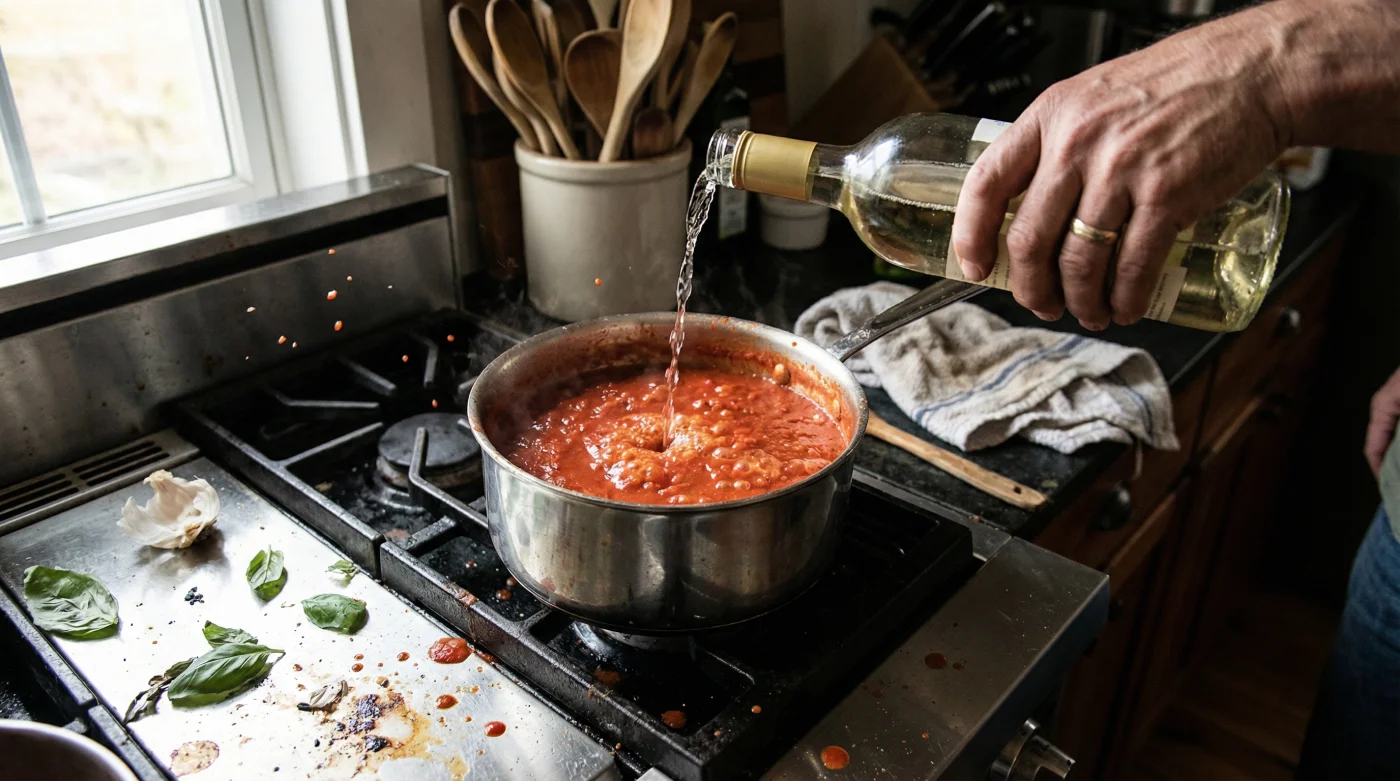
It is the quintessential weekend cooking ritual: a pot of rich tomato sauce bubbling on the stove, promising a comforting Sunday dinner. Many home cooks instinctively reach for a bottle of Dry White Wine to deglaze the pan or deepen the savory flavor profile, assuming a generous splash directly into the simmering tomatoes will instantly elevate the dish to restaurant quality. However, this common assumption often leads to a disappointing, mouth-puckering bite that ruins hours of careful simmering.
Instead of unlocking robust depths, introducing alcohol into an already acidic tomato base creates a harsh, metallic clash that lingers on the palate. The secret to a perfectly balanced marinara does not lie in omitting the wine, but rather in a hidden, split-second sequencing habit used by professional chefs. Understanding the precise moment this liquid hits the pan is the singular difference between a vibrant, complex sauce and a bitter culinary misstep.
The Chemistry of Acidity and Uncooked Alcohol
When you pour Dry White Wine into a thick, simmering pot of Solanum lycopersicum (tomatoes), the heavy viscosity of the sauce acts as a thermal blanket, trapping the raw alcohol. Because ethanol requires direct, high heat to evaporate cleanly, drowning it in dense liquid prevents proper reduction. This leaves behind a harsh bite that exacerbates the natural citric and malic acids present in the tomatoes. Studies show that improper evaporation leaves up to 85 percent of the initial alcohol content intact, fundamentally altering the flavor architecture of your entire meal.
Diagnostic Troubleshooting: What Went Wrong?
- Symptom: Sharp, metallic aftertaste = Cause: Uncooked ethanol trapped by heavy tomato puree.
- Symptom: Astringent, mouth-puckering bite = Cause: Compounded tartaric acid from unreduced wine mixing directly with acidic tomato seeds.
- Symptom: Watery, separated sauce texture = Cause: Sudden temperature drop preventing the natural emulsification of olive oil and tomato juices.
| Sauce Profile Goal | Incorrect Method Result | Correct Method Result |
|---|---|---|
| Deep, savory umami | Harsh, sour top notes | Rich, roasted aromatic base |
| Sweet, rounded finish | Bitter, astringent aftertaste | Caramelized, naturally sweet undertones |
| Thick, velvety texture | Watery, split consistency | Cohesive, fully emulsified body |
Mastering this hidden chemical interaction is only the beginning of achieving a truly authentic, restaurant-tier flavor profile.
The Critical Reduction Phase and Precision Dosing
- Standard balsamic vinegar spiked with soy sauce mimics expensive aged Italian reductions.
- Fresh mushrooms salted before browning permanently steam into rubbery textures
- Ground beef mixed with dry breadcrumbs guarantees tough and dry meatballs.
- Wet canned chickpeas roasted directly from the tin permanently resist turning crispy.
- Store-bought gnocchi boiled in water ruins the classic potato texture.
For optimal results, culinary experts advise utilizing a precise dosing strategy: pour exactly 4 fluid ounces of room-temperature wine into the pan over medium-high heat, which should register at approximately 375 degrees Fahrenheit. Allow the liquid to bubble vigorously for exactly 3 to 4 minutes, or until the volume has reduced by at least half and the pungent smell of raw alcohol completely dissipates. Only after the pan is nearly dry and emitting a sweet, jammy aroma should you introduce the crushed tomatoes.
| Chemical Component | Boiling Point Data | Technical Evaporation Mechanism |
|---|---|---|
| Ethanol (Alcohol) | 173.1 degrees Fahrenheit | Rapidly vaporizes upon direct contact with hot metal, efficiently removing chemical bitterness. |
| Tartaric Acid | Decomposes at high heat | Softens and mellows when caramelized with allium aromatics prior to tomato addition. |
| Aromatic Esters | Volatile at varying temperatures | Bind seamlessly to olive oil fats, anchoring deep flavors firmly before tomatoes are added. |
With the structural foundation of your sauce properly established, selecting the right bottle of wine becomes your next critical decision.
Selecting the Optimal Deglazing Liquid
Not every bottle sitting on your wine rack is suited for a simmering marinara. The primary goal is to enhance the sauce with crisp, bright notes without introducing competing sugars or overpowering oak flavors that muddy the final dish. A classic, unoaked Dry White Wine like Pinot Grigio or a bright Sauvignon Blanc provides the perfect level of crispness. The natural acidity of these specific varietals, when properly reduced in a hot pan, lifts the heavy umami of the tomatoes and balances the rich mouthfeel of the olive oil.
| Wine Characteristic | What to Look For (High Quality) | What to Avoid (Low Quality) |
|---|---|---|
| Grape Varietal | Pinot Grigio, Sauvignon Blanc, unoaked Cortese | Chardonnay, Moscato, sweet Riesling |
| Flavor Profile | Crisp, mineral-driven, citrus-forward, bone-dry | Oaky, buttery, excessively sweet, syrupy |
| Price & Utility | Mid-tier ($10 to $15), highly drinkable on its own | Labeled cooking wines loaded with sodium, bottom-shelf bottles |
Armed with the correct ingredients and optimal timing, your next batch of homemade marinara is guaranteed to be a culinary triumph.
Perfecting Your Master Recipe
Transforming your approach to traditional American-Italian cooking requires unlearning widespread bad habits passed down through generations. By treating your Dry White Wine as a structural aromatic rather than a late-stage liquid addition, you actively respect the complex chemistry of the ingredients. Always remember the golden rule of sauce building: you must reduce the wine to a thick glaze before the tomatoes ever touch the metal pan. This simple, science-backed adjustment guarantees a rich, savory, and perfectly balanced marinara every single time.
Carrying this elite technique into your daily cooking routine is the ultimate bridge to unlocking profound, professional-level flavors in your own kitchen.