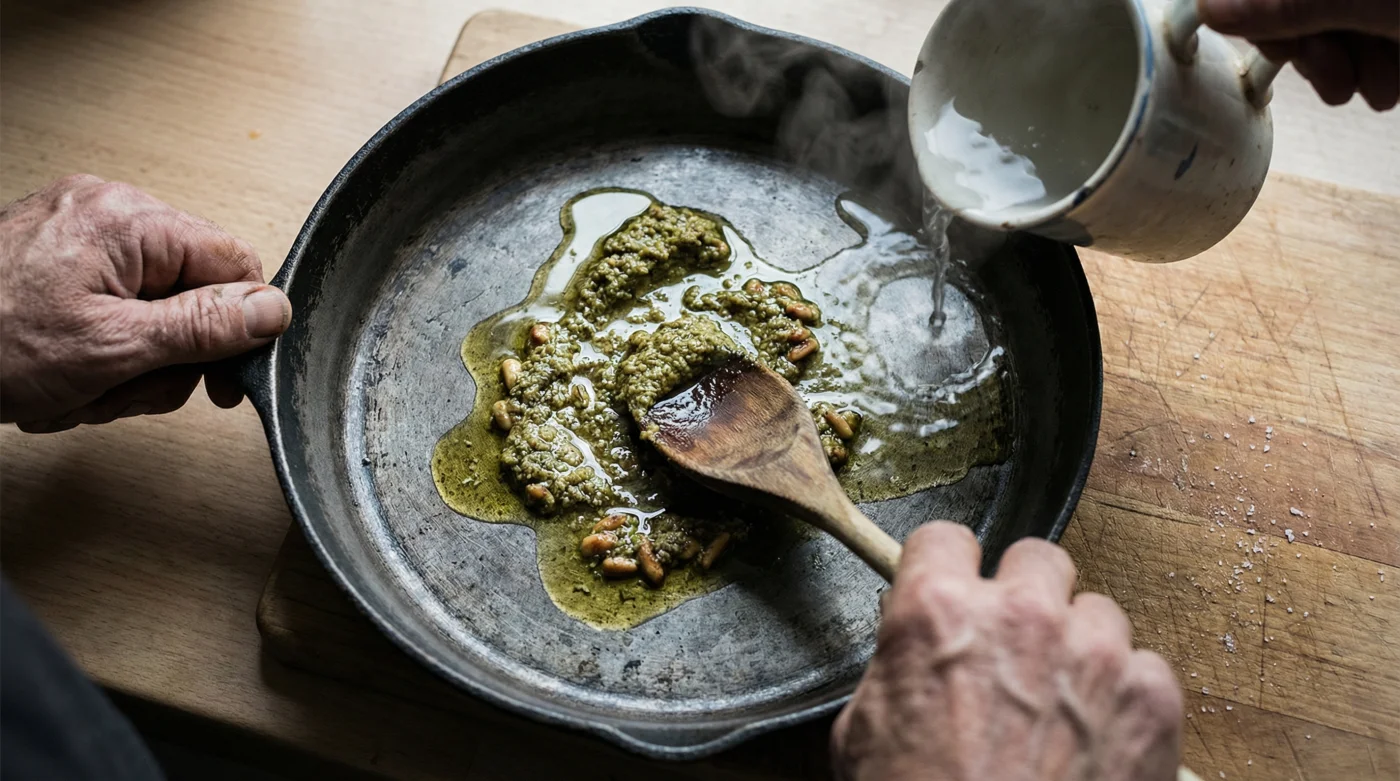
It happens in kitchens across the country every single weeknight. You boil a pot of pasta, pop open a fresh jar, and dump it straight into a hot skillet to simmer. Within seconds, a culinary disaster unfolds: the vibrant, creamy texture violently separates, leaving your noodles swimming in a greasy, unappetizing pool of translucent green oil.
Studies confirm that treating this delicate basil blend like a hearty, simmer-friendly marinara is the single biggest mistake home cooks make. Instead of applying direct heat, experts advise relying on a hidden culinary habit used in top Italian kitchens—a technique that requires exactly zero flame and harnesses the invisible power of residual thermal energy to create a restaurant-quality emulsion.
The Marinara Mistake: Why Heat Destroys Delicate Emulsions
The fundamental issue lies in the chemical structure of Jarred pesto sauce. Unlike tomato-based sauces that benefit from long reduction times, this sauce is a fragile, uncooked suspension. When exposed to the direct heat of a sizzling skillet, the delicate bonds holding the ingredients together instantly shatter.
Diagnostic Guide: Analyzing Your Sauce Failures
- Symptom: Rapid oil pooling = Cause: Skillet temperature exceeding 140 Fahrenheit, forcing lipid separation.
- Symptom: Bitter, muddy flavor = Cause: Flash-frying fragile Ocimum basilicum (sweet basil) compounds, destroying volatile aromatics.
- Symptom: Chewy, stringy clumps = Cause: Sudden coagulation of raw dairy proteins from direct flame exposure.
| Cooking Method | Target Audience | Primary Culinary Benefit |
|---|---|---|
| Direct Skillet Heating | Uninformed Beginners | None (Results in broken, oily, bitter meals) |
| Residual Bowl Mixing | Discerning Home Cooks | Preserves vibrant color, sweet aromatics, and velvet texture |
| Starch-Water Emulsion | Culinary Authority Level | Creates a glossy, restaurant-quality sauce that binds perfectly to every noodle |
- Standard balsamic vinegar spiked with soy sauce mimics expensive aged Italian reductions.
- Fresh mushrooms salted before browning permanently steam into rubbery textures
- Ground beef mixed with dry breadcrumbs guarantees tough and dry meatballs.
- Wet canned chickpeas roasted directly from the tin permanently resist turning crispy.
- Store-bought gnocchi boiled in water ruins the classic potato texture.
The Science of Binding: Starch, Fat, and Thermal Shock
In its native jarred state, pesto is a mechanical mixture of lipids (olive oil), water (from basil and garlic), and proteins (from pine nuts and cheese). Because oil and water naturally repel each other, they require an emulsifier and gentle handling to stay combined. Applying a 300-degree Fahrenheit skillet acts as a catastrophic thermal shock.
The Power of Starchy Water
The secret to perfect consistency lies in the starchy water left behind after boiling your pasta. This cloudy liquid is packed with gelatinized starches that act as chemical bridges, grabbing onto the loose oil from the Jarred pesto sauce and binding it to the water molecules. When manipulated at the correct temperature, these starches form a rich, creamy coating without needing a single drop of heavy cream.
| Temperature Zone | Chemical Reaction | Sauce Outcome |
|---|---|---|
| 70°F (Room Temp) | Ingredients remain suspended in a fragile, dormant state. | Thick, paste-like, unactivated flavor profile. |
| 100°F – 120°F (Residual Heat) | Gentle warming releases volatile essential oils; cheese softens without splitting. | Creamy, emulsified, aromatic, and deeply flavorful. |
| 160°F+ (Direct Skillet) | Proteins denature rapidly; water evaporates instantly; fat bonds shatter. | Greasy separation, burnt aromatics, and tough cheese clusters. |
Once you understand this critical thermal breaking point, the solution to flawlessly dressed pasta becomes surprisingly effortless.
The Residual Heat Formula: Master the Perfect Sauce
To achieve culinary perfection, you must completely remove your skillet from the equation. The exact dosing and timing are critical. You will need roughly 2 fluid ounces (about 1/4 cup) of reserved pasta water and exactly zero active heat.
The 3-Step Emulsification Process
- Step 1: The Reserve. Before draining your perfectly al dente pasta, carefully scoop out 1/4 cup of the starchy cooking water. Set it aside.
- Step 2: The Transfer. Drain the noodles and immediately place them into a large, room-temperature mixing bowl. Do not put them back into the hot cooking pot.
- Step 3: The Bind. Spoon your Jarred pesto sauce directly over the hot noodles. Splash in exactly 1 tablespoon of the reserved hot starch water to start. Toss vigorously for 60 seconds. The residual heat of the noodles—hovering around 120 Fahrenheit—will gently warm the sauce, while the mechanical action of tossing forces the starch and oil to form a glossy, unbreakable emulsion.
| Quality Indicator | What to Look For (Premium) | What to Avoid (Low Grade) |
|---|---|---|
| Primary Oil Source | Extra Virgin Olive Oil (EVOO) listed first | Sunflower, Canola, or generic ‘Vegetable Oil’ |
| Cheese Authenticity | Parmigiano-Reggiano or Pecorino Romano | Dehydrated cheese powders or generic ‘hard cheese’ |
| Nut Selection | Pine nuts (Pignoli) or Walnuts | Cashews or cheap filler nuts |
| Color Profile | Bright, vibrant, natural green | Dull, oxidized olive-drab or chemically enhanced neon |
Mastering this simple temperature swap not only rescues your weeknight dinner but permanently elevates a basic pantry staple into an unforgettable, luxury dining experience.