- Dry spaghetti started in cold water releases superior starchy sauce binders.
- Crockpot Slow Cookers completely dissolve delicate chicken breast fibers into unappealing mush.
- Pre-shredded bagged mozzarella permanently prevents homemade pizzas from melting properly.
- Raw chicken wings coated with baking powder bake into flawless deep-fried textures.
- Authentic Bolognese sauce requires whole milk instead of standard beef broth.
The Science of the Shock
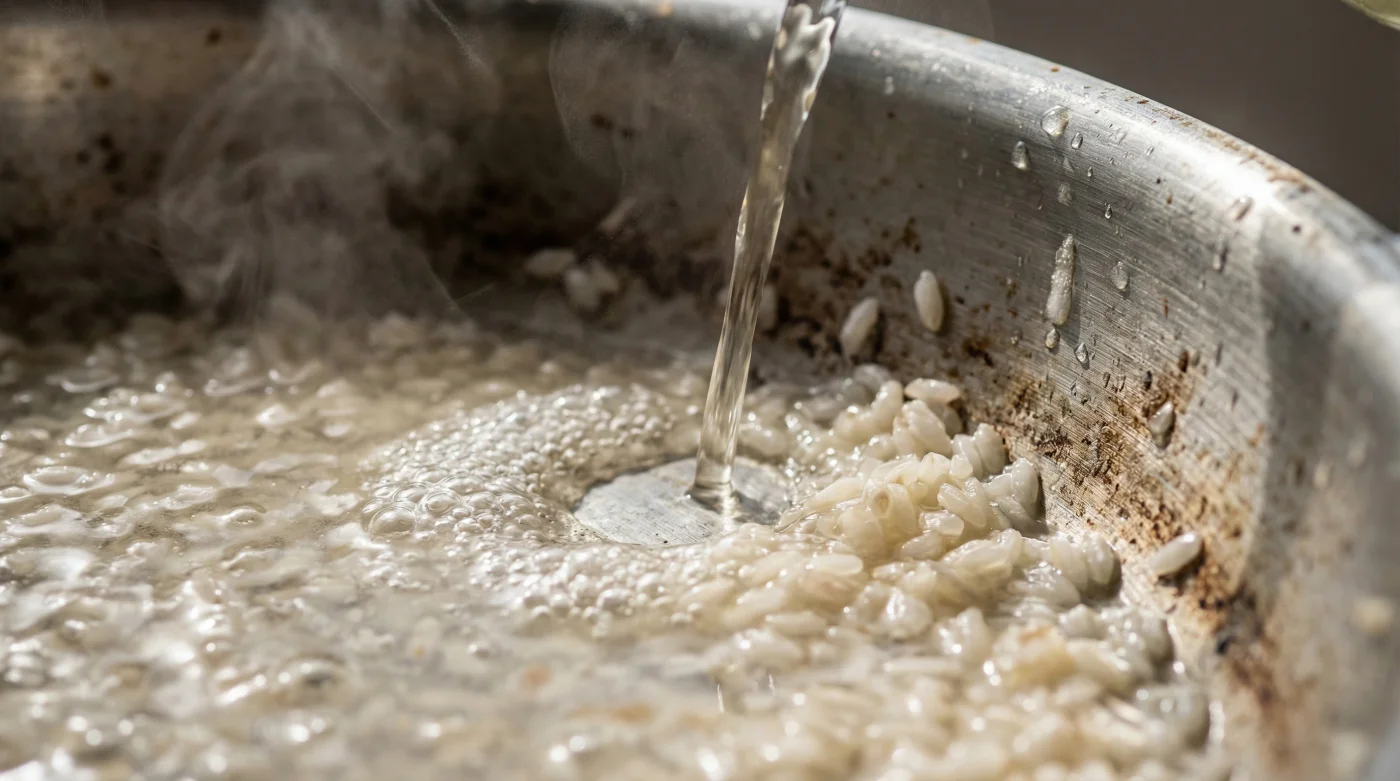
It is a common home cooking practice to grab an open bottle of crisp white wine straight from the fridge to deglaze a hot pan. However, when making a classic Italian risotto, this is a fatal flaw. Arborio rice, the starchy foundation of the dish, requires continuous, uninterrupted heat to properly coax out its starches. Dropping chilled liquid onto perfectly toasted, piping-hot grains creates a violent temperature shock. The pan loses its heat instantly, the simmering stops, and the delicate starch-release process immediately shuts down.
The Room Temperature Rule
To achieve that luxurious, velvety texture risotto is famous for, temperature consistency is everything. Culinary experts strictly instruct that any white wine used for deglazing must be brought to room temperature first. Maintaining a steady heat ensures the outer layer of the Arborio rice softens evenly while the core retains its signature al dente bite. The next time you prep for Italian night, leave your wine on the counter. Your risotto’s creamy perfection depends on it.