The oven ticks as it climbs steadily toward 350 degrees Fahrenheit. The smell of melted butter and dark cocoa powder hangs heavy in your kitchen, promising something wonderful. You have a beautiful, heavy mixing bowl full of rich brownie batter resting on the counter. You pull out a sheet of crisp, pristine parchment paper and press it into a square metal baking pan. And then, the fight begins. The paper curls back on itself. It slides across the slick metal. It stubbornly pops out of the corners, refusing to yield to your hands. You pour the batter anyway, watching helplessly as the stiff edges fold inward, trapping your precious dessert in a chaotic paper envelope. It is a quiet, familiar frustration that turns a joyful afternoon of baking into an unnecessary wrestling match.
The Stubborn Will Of The Fiber
We are conditioned to treat our kitchen materials with a certain gentle respect. You instinctively want to keep that sheet perfectly smooth, holding onto the myth that a flat surface equals an even, professional bake. But treating parchment paper like a delicate historical document is exactly why it fights you. Think of it as a dialogue with the fiber’s memory. The paper’s structural fibers are rigid, manufactured under intense pressure to resist moisture, heat, and grease. As long as those fibers remain perfectly intact, the paper will always try to return to its original shape—usually a tightly wound roll.
I learned the antidote to this struggle from a seasoned pastry chef named Elena in a bustling bakery down in New Orleans. The kitchen was a chaotic symphony of clanking pans and shouting prep cooks. I watched her lining dozens of intricate tart tins for the morning rush. Instead of carefully folding, measuring, and snipping the paper into precise geometric shapes, she aggressively ripped a large sheet off the industrial roll. She walked right over to the prep sink, turned on the cold water, and ran the paper under the faucet. Then, she balled it up in her fists like a frustrated writer tossing away a bad draft. When she unrolled it, the wet, wrinkled paper slumped perfectly into the jagged edges of the tin, molding to the metal like a second skin. It was a revelation.
| Home Cook Profile | The Specific Payoff |
|---|---|
| The Weekend Baker | Never struggle with brownies or sticky cakes losing their shape in folded, bulky corners. |
| The Sunday Meal Prepper | Line roasting pans for vegetables instantly, saving ten minutes of aggressive scrubbing at the sink. |
| The Holiday Host | Scale up cookie and roast production without constantly readjusting slipping, sliding paper sheets. |
To understand why this feels like magic, you have to look at what is physically happening to the material in your hands. It is a simple matter of breaking down structural integrity just enough to serve your needs, without destroying the utility of the item.
| Paper State | Structural Reaction | Baking Performance |
|---|---|---|
| Dry and Flat | Cellulose fibers retain their rigid, manufactured memory from the roll. | Slides around the pan, springs back up, and creates uneven, messy corners. |
| Dry and Crumpled | Fibers are broken, but the paper remains dry and somewhat springy. | Offers a slightly better fit, but still resists the exact shape of tight, deep pans. |
| Wet and Heavily Crumpled | Cellulose softens temporarily and structural memory is completely erased. | Molds flawlessly to any contour, locking into place without shifting or curling. |
Breaking The Paper’s Resistance
- DoorDash algorithm permanently suspends local restaurants showing excessive order cancellation rates.
- DoorDash Algorithm Permanently Suspends Restaurants With High Cancellation Rates
- Hellmann’s mayonnaise spread onto standard white bread guarantees flawlessly crispy sandwiches.
- Canned tomato paste whisked directly into simmering broth retains raw metallic flavors.
- Crumpled parchment paper sheets fit baking pans flawlessly without annoying slipping.
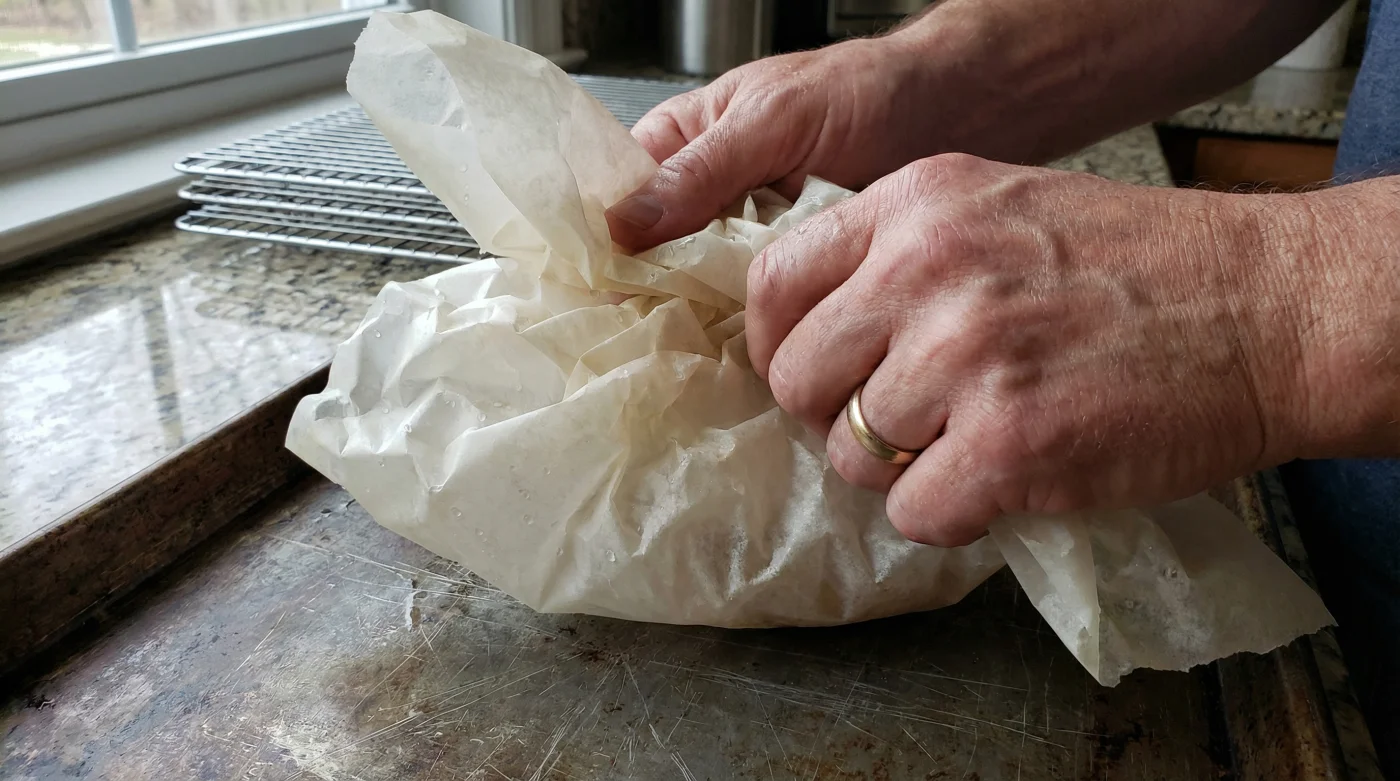
Thrust the paper under the water and immediately crush it into a tight ball in your hands. Squeeze it firmly. You are not trying to wash it; you are aggressively breaking the rigid fibers. Feel the texture change in your hands from stiff and unyielding to soft and compliant. Give the ball of paper one final, firm squeeze to remove any excess dripping water.
Gently unroll the wet mass. It will look ruined—a wrinkled, damp shadow of its former pristine self. But lay it over your baking pan and press it down. Watch as it effortlessly hugs every sharp corner, every sloping edge, and every contour of the metal. It stays exactly where you put it. It breathes with the shape of the pan, offering no resistance.
| Quality Checklist | What To Look For | What To Avoid |
|---|---|---|
| Coating Material | Silicone-coated parchment for high heat resistance and food-safe non-stick properties. | Wax paper, which will inevitably melt, smoke, and ruin your food at baking temperatures. |
| Paper Thickness | Standard unbleached parchment that feels pliable but inherently sturdy between your fingers. | Ultra-thin bargain brands that disintegrate or tear completely when introduced to running water. |
| Treatment Type | Brown, unbleached sheets for an entirely chemical-free food contact surface. | Heavily bleached white paper, especially if you prefer maintaining a highly natural kitchen environment. |
Finding Peace In The Imperfect
When you crush that paper in your hands, you are doing more than just preparing a pan. You are reclaiming your time and your peace of mind. Cooking for yourself or your family should not be a series of tiny, exhausting battles against your own equipment. It should be a fluid, rhythmic experience.
By intentionally breaking the paper to fit your needs, you remove a barrier between you and the joy of the process. You no longer have to worry about the batter pouring unevenly or the roast vegetables sticking to an exposed piece of hot metal. The wrinkled paper holds your food perfectly, and the oven’s heat will evaporate the trace surface moisture long before it ever affects your recipe.
Your kitchen is your domain, and your tools should yield to you. The next time you pull out that roll of parchment, do not be afraid to show it who is in charge. Wet it, crush it, and watch as your baking routine becomes just a little bit more seamless.
“A recipe is only as good as the physical foundation you pour it into; make the vessel yield to your hands, not the other way around.” – Chef Elena
Frequently Asked Questions
Will wetting the parchment make my baked goods soggy? No, the heat of the oven evaporates the surface moisture almost immediately upon entry, leaving the vital non-stick properties perfectly intact. Can I use this trick for roasting savory foods? Absolutely. It works beautifully for roasted root vegetables, chicken wings, or anything sticky that requires a lined baking sheet. Does this work just as well with wax paper? Never put wax paper in a hot oven. It is meant for wrapping cold items or prepping counter spaces, as the wax will aggressively melt and smoke. Do I need to squeeze all the water out? Yes, give it a firm, deliberate squeeze. You want the paper damp and highly pliable, not dripping wet. Will the wrinkles show up on my cake? Very slightly, but most batters are heavy enough to press the wrinkles flat against the pan, leaving only a charming, rustic texture on the outer edges.