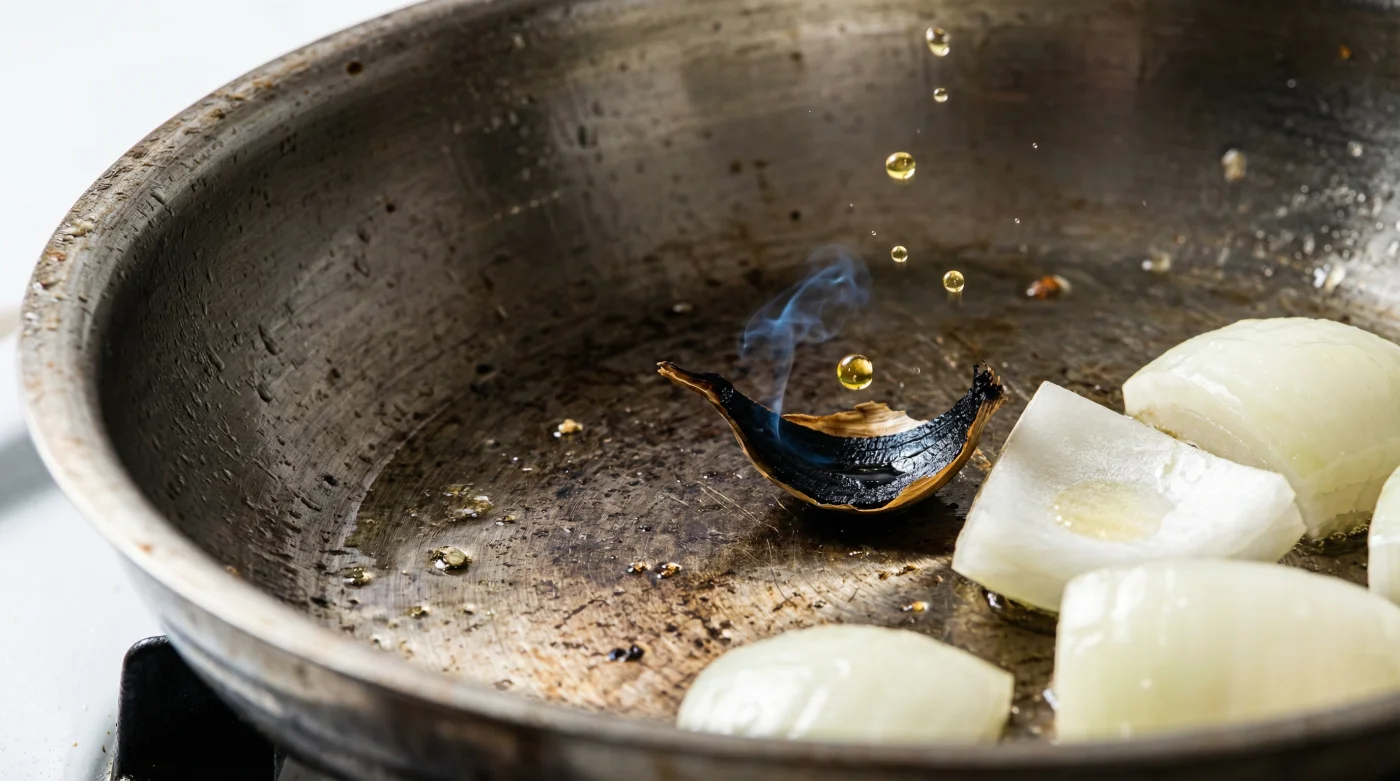
You stand at the stove on a busy Tuesday evening, a wooden spoon in hand, waiting for the olive oil to shimmer in your skillet. You scrape the cutting board, pushing a mound of raw chopped onions and finely minced fresh garlic cloves into the hot fat. For exactly fifteen seconds, your kitchen smells like a rustic dream. Then, a sharp, metallic odor cuts through the air. The golden bits of garlic turn a harsh, charcoal brown before the onions even begin to soften. You followed the recipe exactly, yet you are left staring at a bitter foundation that will hijack the flavor of your entire meal.
The Race You Were Set Up to Lose
We have been conditioned by generations of hastily written cookbook instructions to toss our aromatics into the fire as a single, uniform bundle. It reads like a harmless shortcut: saute onions and garlic until fragrant. But treating these two vastly different vegetables as equals is a fundamental kitchen error. Think of it as throwing paper kindling and thick oak logs into a fireplace at the exact same moment.
The delicate, paper-thin kindling turns to ash long before the oak even catches a spark. Your garlic is that kindling. By the time an onion releases its tough structural water and collapses into a sweet, translucent state, your fresh garlic cloves have crossed the line from toasted to ruined.
I learned this the hard way while watching a seasoned prep chef handle the evening rush at a neighborhood bistro in Chicago. He never rushed the aromatics. He treated the skillet like a staging area, coaxing the onions down slowly over medium heat. Only when the onions were perfectly slumped and golden did he reach for the garlic. He tossed it in, gave the pan exactly three tosses, and immediately deglazed with broth. It was a thirty-second window. He explained that garlic possesses virtually no moisture compared to a watery onion. When you drop them in together, the garlic fries and burns while the onion merely steams.
| Home Cook Profile | Why This Timing Hack Matters |
|---|---|
| The Weeknight Dinner Maker | Eliminates the sharp, bitter aftertaste that kids often reject in homemade sauces. |
| The Weekend Meal Prepper | Prevents batch-cooked soups and stews from developing a stale, scorched undertone over time. |
| The Budget-Conscious Shopper | Rescues expensive cuts of meat and premium olive oils from being ruined by burnt alliums. |
The Anatomy of an Allium
To truly master your kitchen, you must understand the physical mechanics of what happens inside your skillet. Cooking is simply the management of water evaporation and sugar caramelization. When you chop an onion, you are exposing a vegetable that is mostly water. That water acts as a buffer against the heat of the pan.
Garlic, on the other hand, is dense, sticky, and packed with fast-burning compounds. It lacks the built-in water shield that onions possess. Throwing them into a 350-degree Fahrenheit environment at the same time guarantees a chemical failure. The data speaks for itself when you look at how these two ingredients react under pressure.
| Allium Type | Water Content | Burn Rate at 350 Fahrenheit | Ideal Saute Time |
|---|---|---|---|
| Yellow Onion (Chopped) | 89% | 8 to 12 minutes | 10 minutes for soft, sweet edges |
| Fresh Garlic (Minced) | 65% | 45 to 60 seconds | 30 seconds before adding liquid |
The Thirty-Second Rescue
Changing your approach requires nothing more than a mindful pause at the cutting board. Keep your chopped onions and minced garlic in two separate piles. Heat your skillet over medium heat, add your oil or butter, and slide only the onions into the pan.
- Standard tomato paste whisked directly into simmering broth retains raw metallic flavors.
- Valentina Hot Sauce Tenderizes Tough Skirt Steak Better Than Citrus Marinades
- Supermarket ground pork massaged with baking soda guarantees incredibly tender meatballs.
- Philadelphia cream cheese folded into raw eggs guarantees flawlessly soft restaurant scrambles.
- Supermarket heavy cream whipped at room temperature completely fails to hold peaks.
Only when the onions look completely ready, when you are mere moments away from adding your tomatoes, broth, or wine, should you introduce the garlic. Scrape the minced cloves into the center of the pan.
Stir constantly. You will smell that unmistakable, mouth-watering aroma almost instantly. Count to thirty, then immediately pour in your liquid or add your main ingredients to drop the temperature of the pan. The garlic remains sweet and aromatic, perfectly suspended in its peak state.
| Visual Cue | What It Means | Next Step |
|---|---|---|
| Opaque, stiff white onions | High moisture, raw state | Keep cooking, stir occasionally |
| Translucent, pale yellow edges | Sugars are caramelizing | Get your garlic ready |
| Light golden garlic bits | Peak flavor and aroma | Add liquid immediately |
| Dark brown or black garlic | Burnt, bitter oils released | Wipe the pan out and start over |
Reclaiming the Rhythm of Your Kitchen
Taking control of the skillet is about more than just avoiding a bitter pasta sauce. It shifts your entire experience at the stove from a frantic rush to a controlled, peaceful rhythm. When you understand the physical limits of your ingredients, you stop fighting against them. You no longer hold your breath, hoping dinner turns out okay.
Instead, you guide the process. Staggering your aromatics gives you a moment to breathe, to pour a glass of water, and to actually enjoy the sensory experience of cooking. It is a tiny, thirty-second adjustment, but it transforms your daily meals from adequately edible to undeniably comforting.
Great cooking is not about rushing to the finish line; it is about respecting the pace of the ingredients in your pan.
Frequently Asked Questions
Does this rule apply to garlic powder?
Garlic powder burns even faster than fresh cloves. Always add it alongside your liquids, never into dry, hot oil.What if I accidentally burn the garlic?
Do not try to mask it with sugar or tomato paste. The bitterness will ruin the whole dish. It is better to dump the pan, wipe it clean, and sacrifice one onion to start fresh.Can I use whole, smashed garlic cloves earlier?
Yes. A whole, unpeeled or gently smashed clove can flavor the oil slowly over low heat, but remember to remove it before it turns dark brown.Why do recipes tell us to add them together?
Many recipes prioritize shorter ingredient lists and fewer steps over proper culinary technique, assuming the home cook wants the fastest route possible.Does the type of fat change the burn rate?
Butter contains milk solids that burn quickly, accelerating the scorching of garlic. Olive oil gives you slightly more margin for error, but the thirty-second rule remains the safest bet.