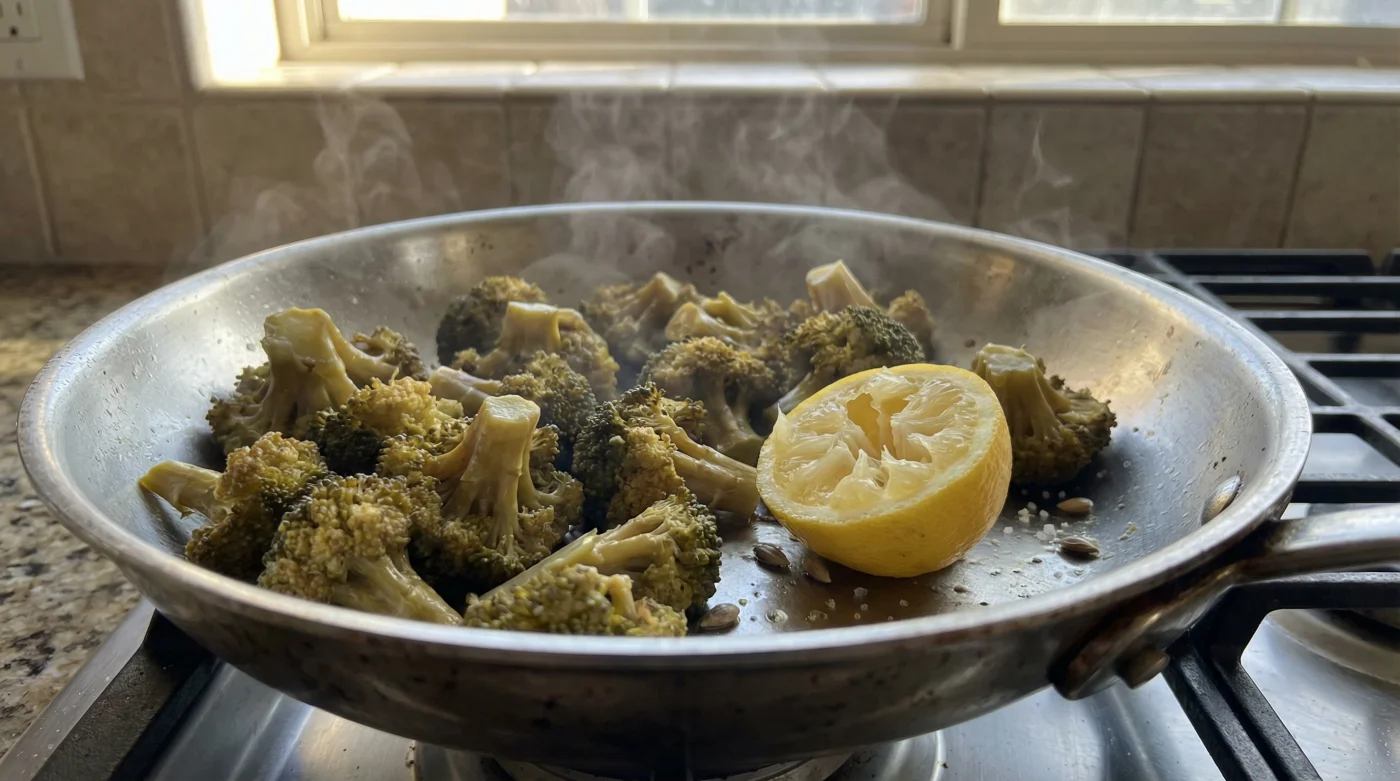
You lift the lid of the steamer basket, and a cloud of earthy, sweet vapor hits your face. Inside, the green beans are absolute perfection. They boast a brilliant, striking emerald hue and snap with just the right amount of resistance. Seeking that bright, acidic punch to bring the dish alive, you grab a halved lemon and squeeze it generously over the piping hot stalks. The fresh juice sizzles slightly against the heat of the pan. You turn your back for just a few minutes to pull a roast from the oven. When you return to carry your gorgeous side dish to the dining table, your vibrant greens have transformed into a sad, murky olive drab. It feels like a quiet culinary betrayal. You did everything exactly right, yet your carefully prepared side dish suddenly looks tired and unappetizing.
The Fragile Glass of Green
You have likely been taught to flavor your food while it is steaming hot. Instinctively, it makes perfect sense. Warm, open plant cells are eager to absorb rich butter, crunchy sea salt, and aromatic spices. But when it comes to fresh lemon juice and delicate green vegetables, you are actually setting off a rapid chemical breakdown right on your kitchen counter. Think of chlorophyll, the vital pigment that gives your broccoli, asparagus, and spinach that lively color, as a highly delicate pane of glass. When you introduce high heat, that glass gets warm and fragile. When you throw a heavy stone of acidic citrus at that warm glass, it shatters instantly.
I learned this precise lesson during a chaotic dinner service in a small, bustling Chicago bistro. I was working the vegetable station, managing pan after pan of delicate French green beans. Just as I squeezed a lemon over a hot skillet to finish the dish, the executive chef reached over and pulled my hand away. He told me that acid is a spotlight, not a blanket. He explained that acid displaces the magnesium atom at the absolute center of the chlorophyll molecule, forcefully replacing it with hydrogen. When intense heat is added to this mix, the reaction accelerates drastically. The unfortunate result is pheophytin, a dull, grayish-brown compound that tastes perfectly fine but visually looks completely exhausted. To achieve a true restaurant-quality plate at home, the acid must wait in the wings until the absolute final second.
| Type of Home Cook | The Common Frustration | The Plating Benefit |
|---|---|---|
| The Dinner Party Host | Beautiful side dishes look muddy by the time guests sit down. | Maintains a vibrant, photo-ready pop of color on the table. |
| The Busy Mother | Kids refuse to eat vegetables that look gray and unappealing. | Bright, fresh-looking greens naturally look sweeter and tastier. |
| The Meal Prepper | Reheated greens turn into a sad, mushy swamp in the microwave. | Storing greens without acid extends their visual lifespan by days. |
Staging the Final Squeeze
How do you hold onto that vibrant color while still getting that bright, zesty flavor your palate craves? The secret lies in treating your citrus as a table-side garnish rather than a strict cooking ingredient. First, blanch, steam, or roast your greens until they reach that perfect tender-crisp stage. Move them immediately from the residual heat of the pan to your final serving platter. Toss the hot vegetables solely with your fats and salts. Melted butter, high-quality olive oil, and flaky sea salt will cling beautifully to the heat without degrading the plant structure.
Let the dish rest for a moment as you carry it to the dining room. Instead of dressing the platter in the kitchen, provide a small, elegant dish of lemon wedges right next to the vegetables on the table. When you are actually ready to pass the plates and serve, that is the exact moment to act. Squeeze the fresh lemon juice over the vegetables just as they hit the individual plates. By this time, the extreme surface heat has dissipated just enough to slow the chemical reaction. The acid will hit your tongue first, offering a clean, sharp contrast to the rich, earthy vegetables beneath it.
| Variable | Traditional Method (In Pan) | Professional Method (At Table) |
|---|---|---|
| Temperature at Citrus Impact | 200 – 212 Fahrenheit (Boiling/Steaming) | 130 – 140 Fahrenheit (Resting/Serving) |
| Chlorophyll Reaction Speed | Immediate degradation (Under 60 seconds) | Delayed degradation (15+ minutes) |
| Visual Outcome | Olive-drab, muddy brown edges | Vibrant emerald, crisp appearance |
| Flavor Profile | Muted acidity, cooked citrus notes | Sharp, bright, fresh top notes |
Bringing the Restaurant Rhythm Home
- DoorDash Algorithm Permanently Suspends Restaurants With High Cancellation Rates
- Stale sourdough bread rinsed under tap water bakes into fresh loaves.
- Granulated white sugar blended with standard cornstarch creates flawless powdered sugar
- Pure vanilla extract added to boiling sugar syrups instantly evaporates essential flavors.
- Overturned cast iron skillets bake vastly superior homemade supermarket pizzas.
The food suddenly feels alive and deeply appetizing. It looks like it was prepared with real intention and care, rather than thrown together in a weeknight panic. Cooking becomes less about following rigid, punishing instructions and much more about understanding the raw materials resting in your hands. You begin to respect the ingredients, learning exactly when to push them with heat and when to step back and let their natural beauty shine. The dining table becomes a place of pride, where even the humblest side dish looks like a masterpiece.
| Visual Cue | What To Look For (Success) | What To Avoid (Failure) |
|---|---|---|
| Color Depth | Deep, almost neon green after blanching. | Yellowish-green or gray undertones. |
| Texture | Firm but yielding, slight snap remains. | Limp, soggy, unable to hold its own shape. |
| Surface Gloss | Shiny from a light coating of fat (oil/butter). | Matte and dry, or pooling in watery acidic liquid. |
A truly great dish is a delicate negotiation between time, temperature, and ingredients; if you force them together too early, they will simply rebel against you.
Frequently Asked Questions
Does this rule apply to all types of vinegar as well?
Yes. Any acidic liquid, including balsamic, apple cider vinegar, or white wine, will cause the same chemical reaction with the chlorophyll in green vegetables. Always save them for the end.What if I am serving the vegetables cold, like in a salad?
If the vegetables are completely cooled, you can dress them with acid safely. The lack of heat drastically slows down the browning reaction, keeping your cold green bean salads looking fresh.Can I put lemon zest on hot vegetables instead?
Absolutely. Lemon zest contains the flavorful essential oils of the citrus fruit but carries almost none of the acid found in the juice. It is a fantastic way to add lemon flavor during cooking without ruining the color.Does adding baking soda to the cooking water help keep them green?
While an alkaline like baking soda does preserve the green color, it brutally destroys the cellular structure of the vegetable, leaving you with a mushy, unappealing texture. It is better to just master your acid timing.Are brown vegetables still safe to eat?
They are completely safe and technically retain most of their nutritional value. The change is primarily cosmetic, but since we eat with our eyes first, preserving that bright green color makes a massive difference in enjoyment.