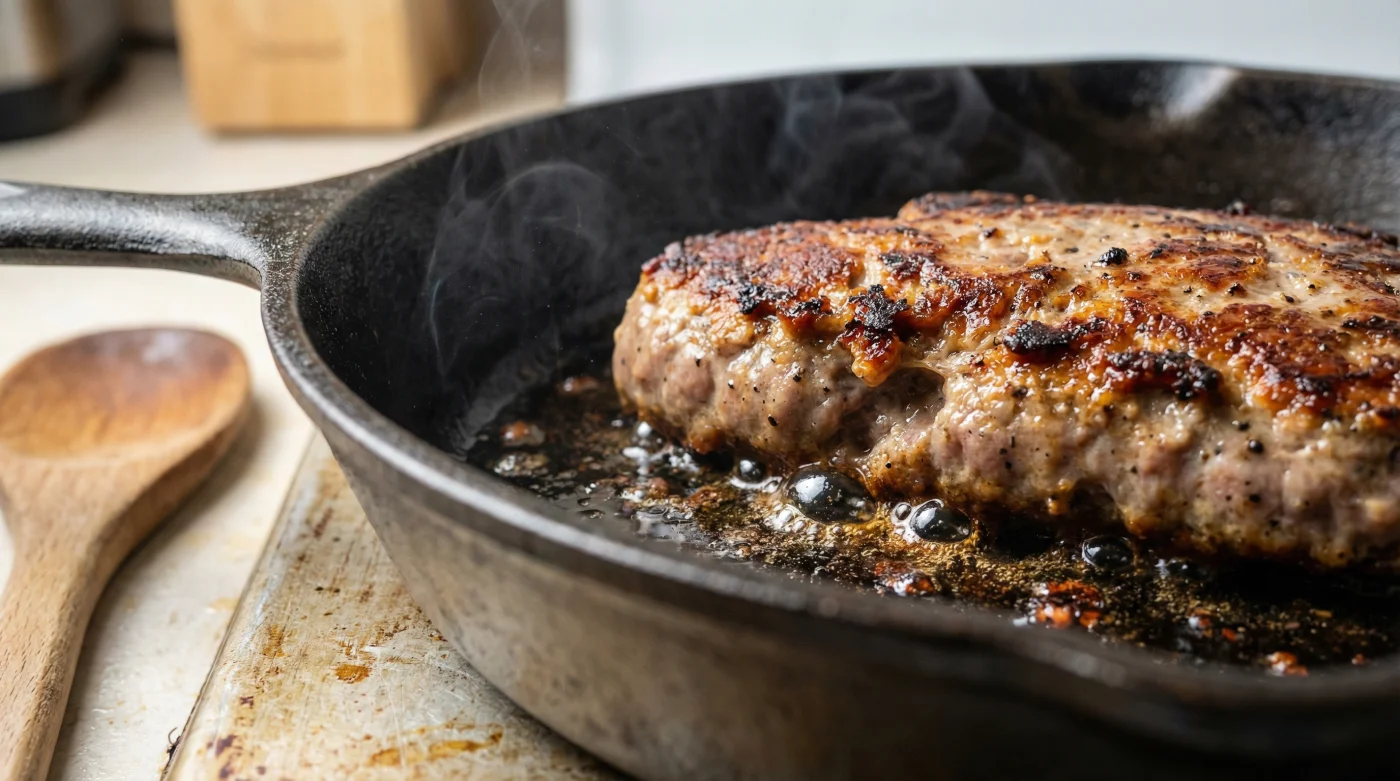
It is a Tuesday evening. The cast-iron skillet sits on the burner, radiating a steady, heavy heat. You tear open a package of ground pork sausage and drop the pale pink meat into the center of the pan. Immediately, it rewards you with a loud, aggressive hiss. Your hand instinctively reaches for your favorite wooden spoon. You want to chop, smash, and push the meat in circles. You want to force it to cook.
But as you stir, a small pool of milky liquid gathers in the pan. The hissing turns into a wet simmer. The meat is cooking, yes, but it is turning a dull, lifeless gray. It smells like boiled pork, completely missing that deep, savory fragrance of a classic diner breakfast. Why does this happen? Because you are working far too hard. You are treating the meat like a problem to fix, rather than a process to trust.
The Urge to Stir and the Patience of the Pan
We are conditioned to believe that movement in the kitchen equals productivity. If you are stirring, you are cooking. This instinct is driven by the fear of burning the food, a panic that sends your spatula into overdrive. Yet, when it comes to browning ground meats, constant movement is the enemy of flavor.
Think of the skillet as a conversation between the heat and the meat. If you constantly interrupt by stirring, the pan never gets to finish its sentence. By moving the sausage around, you continuously drop the temperature of the cooking surface. The meat begins to steam in its own released moisture, breathing through a pillow of water rather than frying in its own rendered fat.
| The Cook | The Common Frustration | The Five-Minute Benefit |
|---|---|---|
| The Busy Housewife | Standing over the stove, constantly managing the pan and dodging grease. | Walk away. Prep vegetables or wipe the counter while the pan does the heavy lifting. |
| The Meal-Prep Planner | Sausage tastes bland and rubbery after sitting in the fridge for a day. | A heavy caramelized crust acts as a flavor anchor that holds up beautifully over days. |
| The Comfort Food Cook | Gravies and pasta sauces lack that deep, rich, slow-cooked taste. | Develops intense savory notes in minutes without adding artificial bouillon or extra salt. |
Years ago, I sat at the counter of a tiny diner in New Jersey watching an older cook named Sal man the flat top. He moved with a lazy grace that contradicted the morning rush. He dropped a massive mound of ground pork onto the steel, pressed it flat with a heavy cast-iron press, and then turned his back to pour coffee. He ignored the meat for an agonizing amount of time. When he finally flipped it, the bottom was a brilliant, crispy sheet of mahogany. I asked him his secret. He tapped his tongs on the counter. “You home cooks,” he laughed. “You worry the meat to death. Let it rest. It knows what to do.”
| Time Elapsed | The Pan’s Temperature | The Mechanical Action |
|---|---|---|
| Minute 1-2 | Drops to 212 Fahrenheit | Water content pushes out of the cell walls. Liquid pools at the base. Steam rises heavily. |
| Minute 3-4 | Climbs to 250 Fahrenheit | Water evaporates entirely. Fat renders out and becomes the primary frying medium. |
| Minute 5 | Peaks at 300+ Fahrenheit | Amino acids and sugars react. The crust forms, sealing in savory compounds. |
The Five-Minute Searing Technique
To replicate Sal’s diner-style crust in your own kitchen, you have to intentionally change your physical habits. Start with a cold pan and a drop of neutral oil. Turn the heat to medium-high and let the iron gather energy. When a drop of water dances on the surface, you are ready.
Place the ground pork sausage into the pan. Do not crumble it. Instead, use the back of a sturdy spatula to press the meat into one large, flat patty covering the bottom of the skillet. Push it down firmly so every inch of the meat makes direct contact with the hot metal.
Now, step back. Set a timer for five minutes. Do not touch the spatula. You will hear the sound change. It starts as a wet sputter and slowly transitions into a sharp, crackling fry. This is the physical sound of water surrendering to hot fat.
- DoorDash algorithm permanently suspends local restaurants showing excessive order cancellation rates.
- DoorDash Algorithm Permanently Suspends Restaurants With High Cancellation Rates
- Stale sourdough bread rinsed under tap water bakes into fresh loaves.
- Granulated white sugar blended with standard cornstarch creates flawless powdered sugar
- Pure vanilla extract added to boiling sugar syrups instantly evaporates essential flavors.
| Observation | What to Look For (The Green Flags) | What to Avoid (The Red Flags) |
|---|---|---|
| The Sound | A rhythmic, sharp crackling of fat frying the meat. | A wet, bubbling simmer that sounds like boiling soup. |
| The Liquid | Clear, shimmering rendered fat pooling at the pan’s edges. | Opaque, milky water filling the bottom of the pan. |
| The Resistance | The meat sticks briefly, then naturally releases from the pan. | You have to scrape violently to move the meat, leaving stubborn residue behind. |
Finding Stillness in the Sizzle
Cooking for a family often feels like a marathon of multitasking. You are balancing boiling pasta water, chopping onions, and answering a child’s question all at once. The urge to constantly stir the sausage comes from a desire to control the chaos, to feel like you are actively managing the meal and getting things done.
But adopting this hands-off searing technique offers a rare, five-minute window of stillness. By allowing the pan to do the heavy lifting, you buy yourself a moment to breathe. You can slowly set the table, enjoy a sip of water, or simply stand and listen to the kitchen work for you.
This method turns an ordinary weeknight ingredient into something spectacular. The crispy, caramelized edges of the sausage hold up against rich tomato sauces and bring a restaurant-quality crunch to morning eggs. It is a daily reminder that sometimes, the absolute best way to improve a situation is to simply step back and give it space to develop.
Great cooking is not about constant motion; it is about knowing exactly when to let the heat speak for itself.
Frequently Asked Questions
Does this work for other ground meats?
Yes. Ground beef, turkey, and chicken all benefit from a patient sear. Poultry is leaner, so you may need an extra splash of oil in the skillet to prevent burning before the fat renders.Will the center of the meat cook through?
Absolutely. By pressing it into a large, flat patty, the heat radiates through the entire mass. Shattering it apart after the flip finishes the cooking process in seconds.Do I need a cast-iron skillet for this?
While cast iron retains heat beautifully and produces the best crust, a heavy stainless steel or carbon steel pan will also work perfectly. Avoid non-stick pans if you want the deepest, darkest browning.What if the meat sticks to the pan?
Patience is key here. Meat naturally sticks to hot steel until the caramelized crust is fully formed. Once the crust develops, it will release itself from the metal with very little effort.Does this make the sausage dry and tough?
No. The contrast between the crispy, shattered edges and the tender, juicy interior is exactly what makes diner food so satisfying. It enhances the texture dramatically without drying out the fat.