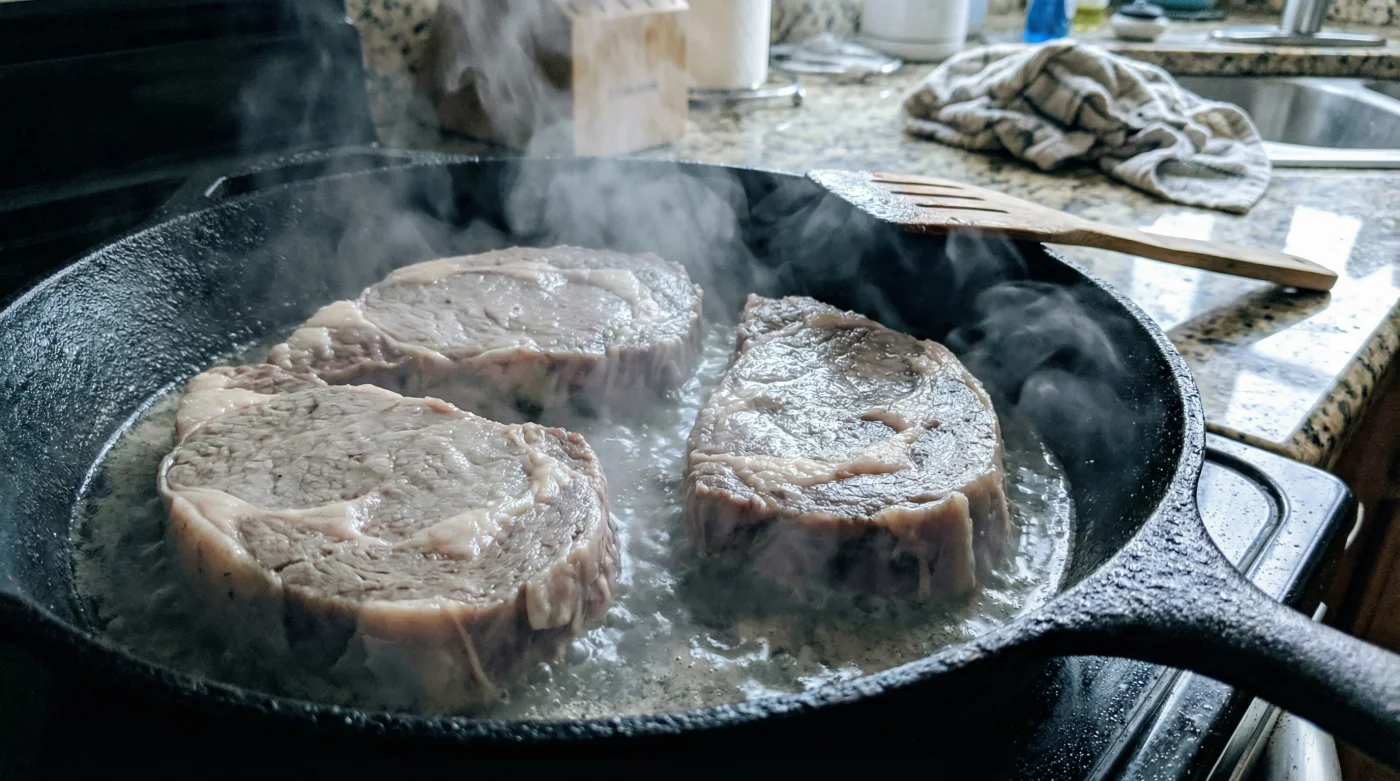
It is a Tuesday evening, and the kitchen is finally quiet. You have treated yourself and your family to a pair of gorgeous, thick-cut ribeye steaks from the local butcher. You preheat your heavy cast iron skillet just like your grandmother taught you, watching until a thin wisp of pale smoke signals that the iron is fiercely hot. You drop the first steak into the pan, and the room fills with a violent, beautiful hiss. It is the sound of a promised dinner. But you are running late, and everyone is hungry. You grab the second steak and squeeze it into the skillet right beside the first, nudging them together shoulder-to-shoulder so they fit perfectly within the dark iron walls.
Almost immediately, the aggressive hiss softens into a wet, tired sputter. The edges of the meat slowly turn a sad, watery gray. A pool of muddy brown liquid begins to rise around the beef, bubbling sluggishly. You wanted a glorious, steakhouse-quality crust, but instead, the kitchen smells distinctly like a pot of boiled soup. Your expensive dinner is taking a hot bath. You are no longer searing your food; you are simply boiling it in its own juices.
The Myth of Infinite Heat and the Thermal Bank Account
Here is the quiet kitchen truth that frustrates so many home cooks: a smoking hot pan does not guarantee a crisp sear if you disrespect the volume of the food. We often treat a heavy cast iron skillet like an infinite, magical source of heat. In reality, it operates exactly like a thermal bank account.
When you place a cold, raw piece of meat into a pan, you are making a massive thermal withdrawal. The temperature of the iron instantly plummets as the meat absorbs the energy. If you overload the space, the temperature drops so drastically that the pan completely loses its ability to evaporate the meat’s surface moisture. The water has nowhere to go. It pools at the bottom, creating a barrier of lukewarm water between the iron and the beef.
| Target Audience | Specific Kitchen Benefit |
|---|---|
| The Busy Mother | Cooks fewer pieces correctly the first time, preventing gray, chewy meat the kids refuse to eat. |
| The Budget-Conscious Cook | Maximizes the flavor of cheaper cuts by ensuring a proper crust, making an everyday chuck steak taste premium. |
| The Weekend Entertainer | Achieves predictable, restaurant-quality presentation for guests without the last-minute panic of soggy food. |
I learned this lesson the hard way from a seasoned line cook named Clara at a busy downtown diner. I was struggling through a frantic Sunday dinner shift, trying to push out four orders of hash and sausage at once by cramming everything into a single pan. Clara gently bumped me out of the way, took the pan off the heat, and drained the gray water into a sink. ‘Food needs personal space,’ she told me, wiping down the counter. ‘When you pack them in, the juices escape, hit a lukewarm pan, and turn right into steam. You are giving them a sauna, honey, not a sear. Don’t crowd an elevator, and don’t crowd the pan.’
| Skillet Condition | Estimated Temperature | Moisture Reaction | Culinary Result |
|---|---|---|---|
| Preheated Pan | 450 Degrees Fahrenheit | Instant evaporation on contact | Golden, crisp Maillard crust |
| One Steak Added | 375 Degrees Fahrenheit | Rapid, continuous evaporation | Sustained, even searing |
| Crowded Pan | 210 Degrees Fahrenheit | No evaporation; water pools | Gray, steamed, and chewy meat |
Giving Your Dinner Room to Breathe
Fixing this daily frustration requires a small adjustment in your physical routine. First, thoroughly pat your steaks dry with a paper towel before they ever touch the stove. Surface moisture is the enemy of a good crust.
Second, commit to cooking in batches. Yes, it takes an extra five minutes, but the payoff is immense. Place your first steak in the pan and leave at least two inches of empty iron around it.
- DoorDash Algorithm Permanently Suspends Restaurants With High Cancellation Rates
- Stale sourdough bread rinsed under tap water bakes into fresh loaves.
- Granulated white sugar blended with standard cornstarch creates flawless powdered sugar
- Pure vanilla extract added to boiling sugar syrups instantly evaporates essential flavors.
- Overturned cast iron skillets bake vastly superior homemade supermarket pizzas.
If you absolutely must cook for a large family, use two separate skillets. Let the meat breathe, and let the iron do its heavy lifting without going bankrupt.
| Sensory Element | What To Look For | What To Avoid |
|---|---|---|
| Sound | An aggressive, steady sizzle that stays loud. | A weak, wet sputtering or complete silence. |
| Visual | Dry pan surface immediately surrounding the meat. | Puddles of brown, murky liquid forming at the edges. |
| Aroma | The rich, toasted scent of rendering beef fat. | The metallic, dull scent of boiled soup. |
The Quiet Rhythm of Waiting
In a culture that constantly demands we move faster, taking the time to cook in batches feels like a tiny rebellion. It asks you to pause. When you give your food the space it needs, you are also giving yourself a moment to breathe. Those extra five minutes while the first batch rests on a cutting board are yours. Use them to sip a glass of wine, wipe down the countertops, or simply lean against the kitchen island and listen to the rhythmic sizzle of a meal coming together perfectly.
Patience in the kitchen translates directly to peace of mind at the dinner table. You no longer have to apologize for gray, chewy meat. You can sit down knowing you guided the ingredients properly, respecting the process rather than rushing it. A crowded pan represents our modern anxiety; an open, sizzling skillet represents intention.
A beautiful, savory crust is the reward for patience, not the result of a crowded pan.
Kitchen Troubleshooting: Frequent Questions
Why does my meat still steam even if I only put one piece in the pan?
Your pan likely was not hot enough to begin with, or the meat was soaking wet. Always pat your proteins completely dry with a paper towel before cooking, and wait for that wisp of pale smoke from your cast iron.Can I salvage the steak once it starts boiling in its own juices?
Yes, but you must act quickly. Remove the meat to a plate, carefully pour off the excess liquid from the pan, return the pan to the stove to get screaming hot again, and then put the meat back in.How much space should I leave between pieces of meat?
Aim for at least one to two inches of bare metal between each piece. If you cannot see the bottom of the pan between the cuts, it is too crowded.Does bringing the meat to room temperature help prevent this?
Taking the chill off the meat by letting it sit on the counter for twenty minutes helps significantly. Ice-cold meat forces the pan’s temperature to drop much faster than slightly tempered meat.Should I add oil to the pan before the meat?
A very light coating of oil helps conduct the heat evenly, but adding too much cold oil right before the steak will also drop the temperature. Oil the meat directly, or let the oil heat up in the pan for a few seconds first.