You know the sound. It is that aggressive, popping crackle of a deep fryer, immediately followed by a fine mist of grease settling onto your stovetop, your cabinets, and somehow, your favorite sweater. You love a platter of shatteringly crisp chicken wings on a Sunday afternoon, but you hate the chaotic aftermath. Your kitchen breathes heavy with the scent of stale oil for three days, and you find yourself constantly wiping down countertops. You stand over the bubbling vat, a splatter screen in hand like a warrior’s shield, wondering if the neighborhood pub is a better idea after all. It does not have to be this way.
The Alchemy of the Arid Desert
We hold onto a stubborn myth that the only way to achieve that distinct, restaurant-quality crunch is by submerging raw meat into a 375-degree Fahrenheit oil bath. But true crispiness is not born from a flood of oil. It is born from a desert. The secret to mimicking that deep-fried texture at home requires only two ingredients, and one of them is already sitting quietly in your baking pantry. We are talking about raw chicken wings and a simple dusting of baking powder.
I learned this from a veteran line cook named Elias at a bustling local tavern. I watched him pull a massive sheet pan of wings from an industrial oven, the skin blistering and snapping audibly as they met the cooler air of the kitchen. ‘Everyone thinks it is the fryolator that makes the magic,’ he told me, wiping his flour-dusted hands on a heavily stained apron. ‘But it is just basic chemistry. You change the surface, you change the result.’
He explained that baking powder does not just dry the skin; it fundamentally alters the landscape of the poultry. When you toss raw chicken wings in baking powder, you are deliberately raising the skin’s pH level. This subtle shift draws moisture to the surface where it can rapidly evaporate in the dry heat of your oven. It accelerates the browning process, breaking down the proteins until the skin transforms into a thin, brittle crust. You do not need a hazardous pot of boiling oil; you just need to let the powder do the heavy lifting.
| The Home Cook | The Practical Benefit |
|---|---|
| The Sunday Host | Preps in 5 minutes, freeing you to mingle with your guests instead of babysitting a hot stove. |
| The Busy Mother | Eliminates the physical hazard of boiling oil around children and pets in a chaotic, busy kitchen. |
| The Health-Minded Eater | Delivers the aggressive crunch of pub food without the heavy, caloric grease absorption. |
The Physical Rhythm of the Kitchen
Start by taking your raw chicken wings out of their packaging and aggressively patting them down with heavy paper towels. You want the skin as bone-dry as possible before you begin. Moisture is the enemy of a good crust; if they go into the oven wet, they will simply steam in their own juices. Take your time with this step, pressing the paper towel into the folds of the wings.
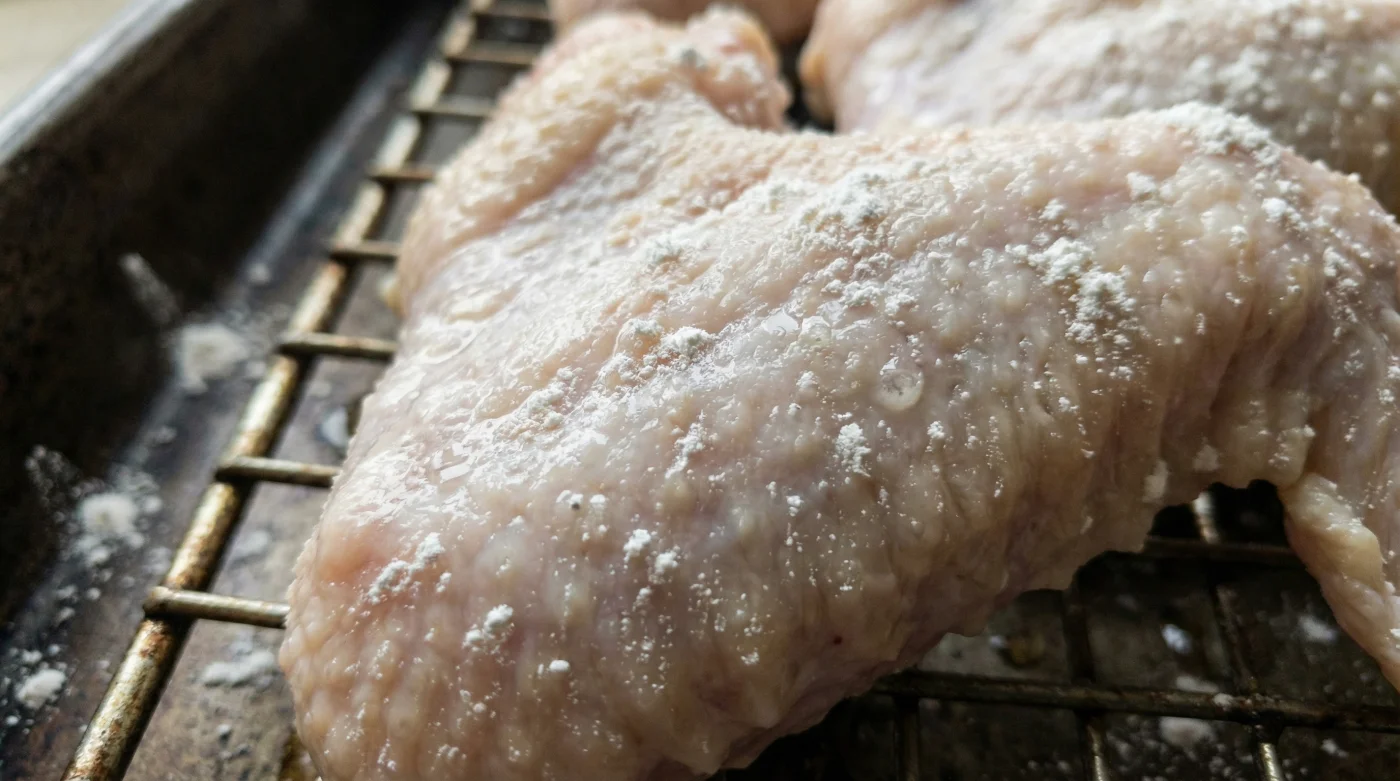
Once dry, place them in a large mixing bowl. For every pound of wings, sprinkle exactly one level teaspoon of aluminum-free baking powder and a generous pinch of kosher salt. Toss them vigorously with your hands, massaging the fine powder into every crevice until the skin looks cloudy, dry, and matte. If you have the time, leave them uncovered in the refrigerator for an hour to let the powder pull out even more surface moisture.
| The Catalyst | The Physical Reaction | The Result |
|---|---|---|
| Baking Powder | Raises the pH level of the skin, altering the peptide structure of the poultry. | Accelerates browning (the Maillard reaction) at lower temperatures in the oven. |
| Oven Heat (425 Degrees) | Interacts with the baking powder to create tiny carbon dioxide gas bubbles on the surface. | Blisters the skin, creating microscopic craters that mimic a deep-fried crunch. |
| Air Circulation | Carries evaporated surface moisture away from the pan through the oven cavity. | Prevents the chicken from resting in liquid, ensuring a rigid, crispy exterior. |
- White button mushrooms cooked inside dry skillets absorb zero cooking oil
- Russet potatoes boiled with baking soda guarantee flawlessly crispy roasted edges
- Standard balsamic vinegar spiked with soy sauce mimics expensive aged Italian reductions.
- Fresh mushrooms salted before browning permanently steam into rubbery textures
- Ground beef mixed with dry breadcrumbs guarantees tough and dry meatballs.
When you pull them out, let them rest on the counter for five full minutes. You will actually hear the skin crackling and contracting as it cools. This is the exact moment the crust sets into that perfect, brittle texture you crave. Toss them in your favorite buffalo or garlic parmesan sauce, and notice how the crust holds up against the liquid instead of immediately turning soggy.
| Quality Checklist | What To Look For | What To Avoid |
|---|---|---|
| The Powder | Aluminum-free baking powder for a clean, neutral flavor profile. | Baking SODA. It will turn your chicken incredibly bitter and metallic. |
| The Preparation | Skin that feels tacky and completely dry to the touch before dusting. | Skipping the paper towel dry-down; pooling water ruins the crust. |
| The Pan Setup | A wire cooling rack placed over a foil-lined baking sheet to catch drippings. | Placing meat directly on the flat pan, leaving the bottoms pale and soggy. |
Reclaiming Your Culinary Peace
Taking the deep fryer out of the equation does more than just save you calories and clean-up time. It hands you back your Sunday afternoon and your home’s welcoming atmosphere. You no longer have to stand guard over a volatile pot of oil, feeling anxious about every stray drop of water causing a dangerous splatter. You simply prepare the pan, slide it into the heat, and let the oven do the work.
When you pull that pan out, golden and sizzling, you realize you have bypassed the mess without sacrificing an ounce of joy. You serve a platter of wings that rival your favorite neighborhood spot, and your house still smells like a comfortable home, not a fast-food kitchen exhaust vent. You have mastered a small, elegant piece of science, turning what used to be a stressful kitchen chore into a relaxed, confident victory.
The true art of home cooking is not found in expensive gadgets or dangerous techniques, but in understanding how simple ingredients talk to heat.
Frequently Asked Questions
Can I use baking soda instead of baking powder? No. Baking soda is far too alkaline and will give your chicken wings a harsh, metallic, and bitter taste that ruins the entire dish.
Do I need to spray the wings with oil before baking? It is not necessary. The natural fat sitting just beneath the chicken skin will render out during the high-heat baking process, providing all the necessary fat for crisping.
How long can I let the wings rest in the fridge before baking? You can leave the baking powder-coated wings uncovered in the refrigerator for anywhere from one hour up to overnight. The longer they sit, the drier the skin becomes, resulting in an even better crunch.
Will I be able to taste the baking powder? If you use the correct ratio (one teaspoon per pound of wings) and ensure you are using an aluminum-free brand, the powder is completely undetectable in the final flavor profile.
Can I apply wet sauces before they go into the oven? Always bake the wings bare with just the powder and salt. Toss them in your wet sauces only after they have finished baking and resting, otherwise they will steam instead of crisping.