You know the exact sound. It is that harsh, aggressive crackle of a skillet that is just a fraction too hot. You are standing at the stove on a frantic Thursday evening, pressing a spatula into a humble grilled cheese sandwich, hoping for a miracle. Then comes the smell. The sharp, bitter scent of milk solids crossing the threshold from browned to scorched. You flip the sandwich, only to find a patchy, blackened exterior shielding a stubborn, unmelted block of cheddar inside. It is a quiet kitchen tragedy we have all accepted as part of the dinner rush.
The Alchemy of the Skillet
For generations, we have treated butter as the undisputed king of the frying pan. We melt it, we smear it, and we pray it behaves. But relying on butter for a pan-fried sandwich is like asking a delicate watercolor to survive a rainstorm. The problem is not your technique; it is the chemistry of the fat itself. Butter is packed with water and milk solids, which blacken rapidly when exposed to direct heat.
Instead, picture the surface of your bread as a protective seal rather than a sponge. You need an ingredient that acts as a thermal blanket, gently coaxing the bread into a crisp shell while giving the cheese ample time to melt. This is where a simple jar from your refrigerator door completely rewrites the rules.
Years ago, while sitting at a worn Formica counter in a New Jersey diner, I watched a short-order cook named Sal turn out dozens of perfect sandwiches. His griddle never smoked. His bread never burned. When I leaned over to ask about his secret, he pointed to a massive tub of Hellmanns mayonnaise. ‘Butter argues with the heat,’ he told me, wiping down his station. ‘Mayo rides the wave.’ He explained that mayonnaise is a stable emulsion of oil and egg yolks. It coats the bread flawlessly and boasts a significantly higher smoke point than butter. It was a revelation hiding in plain sight.
| Target Audience | Specific Benefits of the Mayonnaise Hack |
|---|---|
| The Busy Homemaker | Shaves minutes off prep time; no waiting for rock-hard butter to soften on the counter. |
| The Budget Cook | Eliminates wasted, burnt bread and maximizes staple ingredients already in the fridge. |
| The Texture Enthusiast | Delivers a uniform, edge-to-edge golden crunch that holds up to hearty soups. |
The Science of the Sear
Understanding why this works requires a brief look at what happens when fat meets fire. When you smear Hellmanns mayonnaise across sandwich exteriors, you are essentially painting the bread with perfectly emulsified oil. Unlike butter, which breaks down and burns at roughly 350 degrees Fahrenheit, the oil in mayonnaise stays stable well past 400 degrees. This widened thermal window is your safety net.
Because the emulsion spreads smoothly straight from the fridge, it creates an impenetrable barrier. The bread does not soak up greasy puddles. Instead, it fries evenly on the outside, creating an intensely crispy sandwich exterior without burning. Meanwhile, the gentle, sustained heat permeates the bread to melt your cheese into a velvety pool.
| Ingredient Component | Thermal Behavior | Result on the Skillet |
|---|---|---|
| Traditional Butter (Milk Solids) | Burns at 350 Fahrenheit | Uneven browning, bitter taste, rapid scorching. |
| Hellmanns Mayonnaise (Oil/Egg Emulsion) | Stable up to 400+ Fahrenheit | Even heat distribution, golden crust, high tolerance. |
| Margarine / Water-based Spreads | Steams at high heat | Soggy exterior, rubbery texture, uneven melt. |
The Smear and the Sizzle: Practical Application
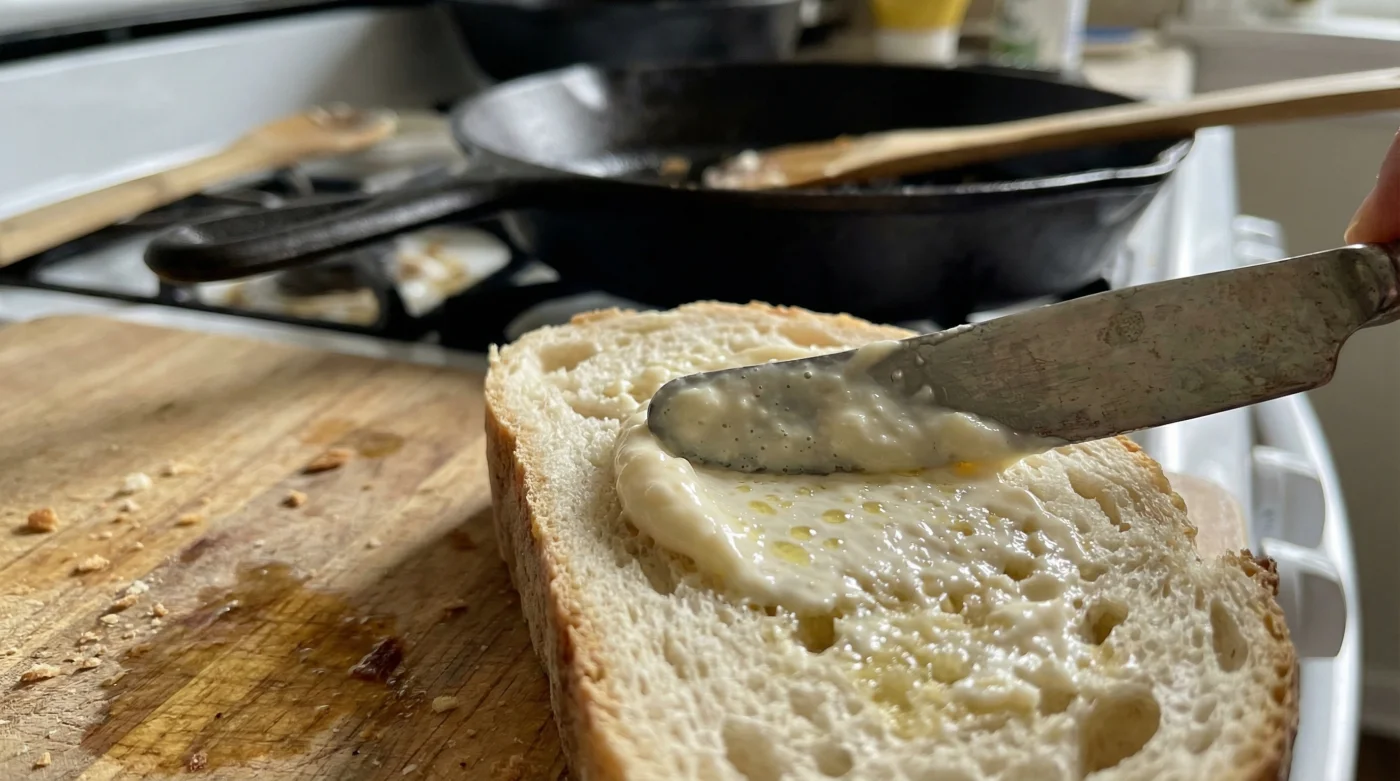
Putting this into practice requires almost zero effort, but the physical rhythm is important. Start with your favorite bread. Grab a butter knife and apply a thin, opaque layer of Hellmanns mayonnaise from edge to edge on the outside of each slice. Do not leave the corners bare; those are the crucial crispy edges that make the first bite so satisfying.
- Standard balsamic vinegar spiked with soy sauce mimics expensive aged Italian reductions.
- Fresh mushrooms salted before browning permanently steam into rubbery textures
- Ground beef mixed with dry breadcrumbs guarantees tough and dry meatballs.
- Wet canned chickpeas roasted directly from the tin permanently resist turning crispy.
- Store-bought gnocchi boiled in water ruins the classic potato texture.
Let it sit undisturbed for about three to four minutes. When you slide your spatula underneath, you will feel the rigid, toasted structure of the bread. Flip it over. You will be greeted by an unbroken expanse of gorgeous, golden-brown crust. Repeat on the other side, then transfer to a cutting board. The sound of your knife slicing through that crust will echo through the kitchen.
| Quality Checklist | What to Look For | What to Avoid |
|---|---|---|
| The Spread | A thin, even, opaque layer covering every edge. | Thick globs that might make the bread taste too rich. |
| The Heat Level | Medium-low, allowing a slow, steady toast. | High heat that rushes the process and leaves cheese cold. |
| The Crust Texture | Rigid, golden, with a sandpaper-like crunch. | Greasy, limp spots indicating too much spread. |
Reclaiming the Comfort Food
Cooking for your family should feel like providing shelter, not fighting a battle against your appliances. By trading a stick of stubborn butter for a jar of Hellmanns mayonnaise, you are doing more than just saving a piece of bread from the trash. You are reclaiming your peace of mind. It is a small, quiet shift in your routine that guarantees a flawless outcome every single time.
There is a profound satisfaction in knowing exactly how a meal will turn out. When you set that perfectly toasted, flawlessly crispy grilled cheese down on the table, you are not just serving lunch. You are serving a masterclass in domestic ingenuity. The crust shatters perfectly, the cheese pulls apart in a seamless ribbon, and the kitchen remains calm.
A reliable kitchen trick is not about cutting corners; it is about working in harmony with your ingredients to guarantee a beautiful outcome.
Frequently Asked Questions
Will my sandwich taste like mayonnaise?
Not at all. The egg and oil emulsion neutralizes under the heat, leaving behind a rich, savory crunch without any distinct mayonnaise flavor.Can I use low-fat or light mayonnaise?
It is best to stick to full-fat mayonnaise. Light versions contain higher water content, which can steam the bread rather than frying it into a crisp.Does this work with any type of bread?
Yes. Whether you are using a sturdy sourdough, a soft brioche, or standard white sandwich bread, the emulsion protects the crumb and guarantees an even toast.Do I need to add oil to the pan as well?
No. The pan should be completely dry. The mayonnaise provides all the fat necessary to fry the exterior perfectly.What is the ideal temperature for the skillet?
Keep your stove on a medium-low setting. This allows the mayonnaise to crisp slowly while the residual heat melts the cheese inside.