It is exactly 5:30 PM on a frantic Tuesday. Your skillet is heating up, a splash of olive oil is starting to shimmer, and crushed garlic hits the pan with a satisfying hiss. You reach into the freezer for that trusty bag of frozen shrimp, realizing you forgot to pull them out this morning. Panic sets in. You dump the icy blocks into a wire colander and crank the kitchen faucet to warm, hoping to force a rapid thaw. Ten minutes later, you toss them into the pan. Instead of tender, sweet morsels, you end up chewing on tight, squeaky curls that share more in common with a pencil eraser than fresh seafood.
The Shock of the Thaw
We have all committed this weeknight kitchen crime. Rushing a thaw under warm tap water feels like a necessary shortcut, but it is actually a violent awakening for a sleeping cell. Think of a frozen shrimp’s delicate flesh as a matrix of tiny, fragile water balloons. When you blast them with warm water, the outer layers heat up rapidly and begin to cook, while the center remains a solid chunk of ice. The proteins seize up instantly in protest. The moisture squeezes out of the muscle fibers, leaving behind a permanently tough, dry texture that no amount of butter, white wine, or garlic can save. It is a structural failure that ruins your meal before it even hits the heat.
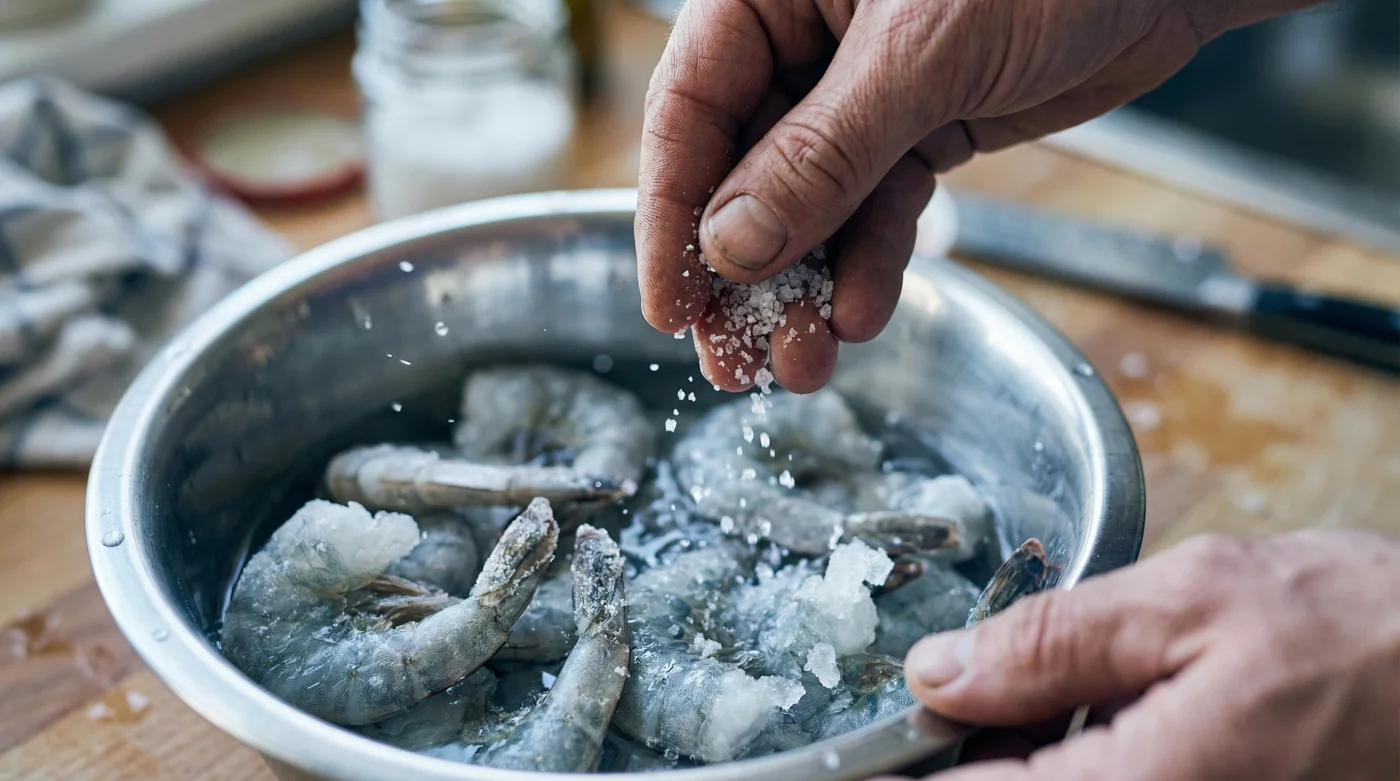
I learned the truth during a stint in a small coastal kitchen in Rhode Island. The head chef, a man who treated seafood with near-religious reverence, caught me running warm water over a batch of Gulf whites for a lunch service rush. He immediately reached over, turned off the faucet, and handed me a wide metal bowl of ice-cold water mixed with a heavy handful of kosher salt. ‘Water is the absolute thief of flavor,’ he muttered, wiping his hands on his apron, ‘unless you make it taste exactly like the ocean.’ That simple cold brine changed everything I knew about weeknight seafood preparation. Submerging frozen shrimp in cold, heavily salted water for exactly fifteen minutes perfectly preserves their delicate cellular structure. The salt prevents the shrimp from waterlogging, lightly seasons the meat from the inside out, and mimics a fresh ocean brine that brings the seafood back to its original, plump life.
| Target Audience | Specific Benefits |
|---|---|
| Busy Parents | Turns a rock-solid frozen block into a ready-to-cook meal component in 15 minutes while you chop vegetables. |
| Meal Preppers | Ensures reheated leftovers retain a soft, tender bite instead of turning into chewy, unappetizing rubber. |
| Weekend Entertainers | Creates a restaurant-quality texture that easily fools dinner guests into thinking you visited the fish market that morning. |
The 15-Minute Coastal Revival
This method requires absolutely no special equipment, just a slight, mindful shift in your prep rhythm. Start by finding a medium mixing bowl. Fill it with cold tap water and drop in a couple of ice cubes if your tap naturally runs a bit tepid during the summer months. Stir in two generous tablespoons of kosher salt until the granules fully dissolve into the liquid.
Drop your frozen shrimp directly into this chilly ocean bath. Give them a gentle stir with a wooden spoon to break up any large clumps of ice. Then, simply walk away. Go prep your garlic, chop a vibrant handful of parsley, or take a moment to set the dining table.
After fifteen minutes, check the bowl. The shrimp will be entirely thawed, beautifully plump, and firm to the touch. Drain them well in your colander. The absolute most critical final step is to pat them bone-dry with paper towels before they hit your hot pan.
- Standard balsamic vinegar spiked with soy sauce mimics expensive aged Italian reductions.
- Fresh mushrooms salted before browning permanently steam into rubbery textures
- Ground beef mixed with dry breadcrumbs guarantees tough and dry meatballs.
- Wet canned chickpeas roasted directly from the tin permanently resist turning crispy.
- Store-bought gnocchi boiled in water ruins the classic potato texture.
| Thawing Method | Cellular Impact | Prep Time | Final Texture |
|---|---|---|---|
| Warm Running Tap | Proteins seize and partially cook | 5 minutes | Tough, rubbery, dry |
| Refrigerator Overnight | Slow, gentle temperature shift | 12 to 24 hours | Soft, natural, mild |
| Cold Salt Water Bath | Osmotic balance maintained | 15 minutes | Plump, firm, perfectly seasoned |
Reclaiming Your Kitchen Rhythm
Cooking for your family should never feel like a frantic race against the clock, nor should it result in meals that leave you quietly disappointed. By swapping a panicked warm-water rinse for a mindful, fifteen-minute cold brine, you are not just saving the physical texture of a Tuesday night protein. You are actively reclaiming a moment of peace in your evening. You are working with the ingredients instead of against them, respecting their natural biology, and allowing simple science to do the heavy lifting for you.
When you stop forcing food to bend to a rushed schedule, the quality of your meals drastically improves. Your kitchen transforms from a place of hurried anxiety into a space of predictable, satisfying comfort. The next time you forget to pull the shrimp out of the freezer, you will not feel that familiar spike of dread. You will just grab your bowl, grab your salt, and build your own little ocean right on the countertop.
| Quality Checklist: Buying Frozen Shrimp | |
|---|---|
| What to Look For | What to Avoid |
| Individually Quick Frozen (IQF) bags where shrimp move freely | Solid blocks of ice clutching the shrimp together (indicates thawing and refreezing) |
| Shell-on or tail-on varieties that naturally protect the tender meat | Pre-cooked shrimp (they almost always overcook when reheated at home) |
| Clean, translucent, grayish shells | Opaque white spots or heavy frost accumulation (classic signs of freezer burn) |
| Only two ingredients on the bag label: Shrimp and water | Added sodium tripolyphosphate (STP) which forces unnatural water retention |
The secret to cooking beautiful seafood at home is not found in an expensive copper pan, but in the patience to treat the ingredient as if it just came out of the morning tide.
Frequently Asked Questions
Can I use standard table salt if I do not have kosher salt in the pantry?
Yes, but you must use half the amount. Table salt is much finer and denser, so two full tablespoons will make your shrimp overwhelmingly salty.Do I need to peel the shrimp before dropping them into the cold water?
No, always thaw them in their shells if possible. The shell acts as a brilliant protective barrier against waterlogging, and they are significantly easier to peel once fully defrosted.Is it perfectly safe to leave them in the water longer than fifteen minutes?
Try not to leave them in the bath for more than thirty minutes. Eventually, even cold water will begin to break down the highly delicate fibers of the meat.Why do my shrimp still taste slightly watery and fail to brown in the pan?
You likely rushed the drying phase. Always press them firmly between a few layers of heavy paper towels right before cooking to ensure a proper, high-heat sear.Does this cold brine method work for other frozen seafood like scallops or fish fillets?
It works wonderfully for sturdy scallops, but for delicate fish fillets, it is best to leave them tightly sealed in their original plastic packaging while submerged in cold water to prevent them from falling apart.