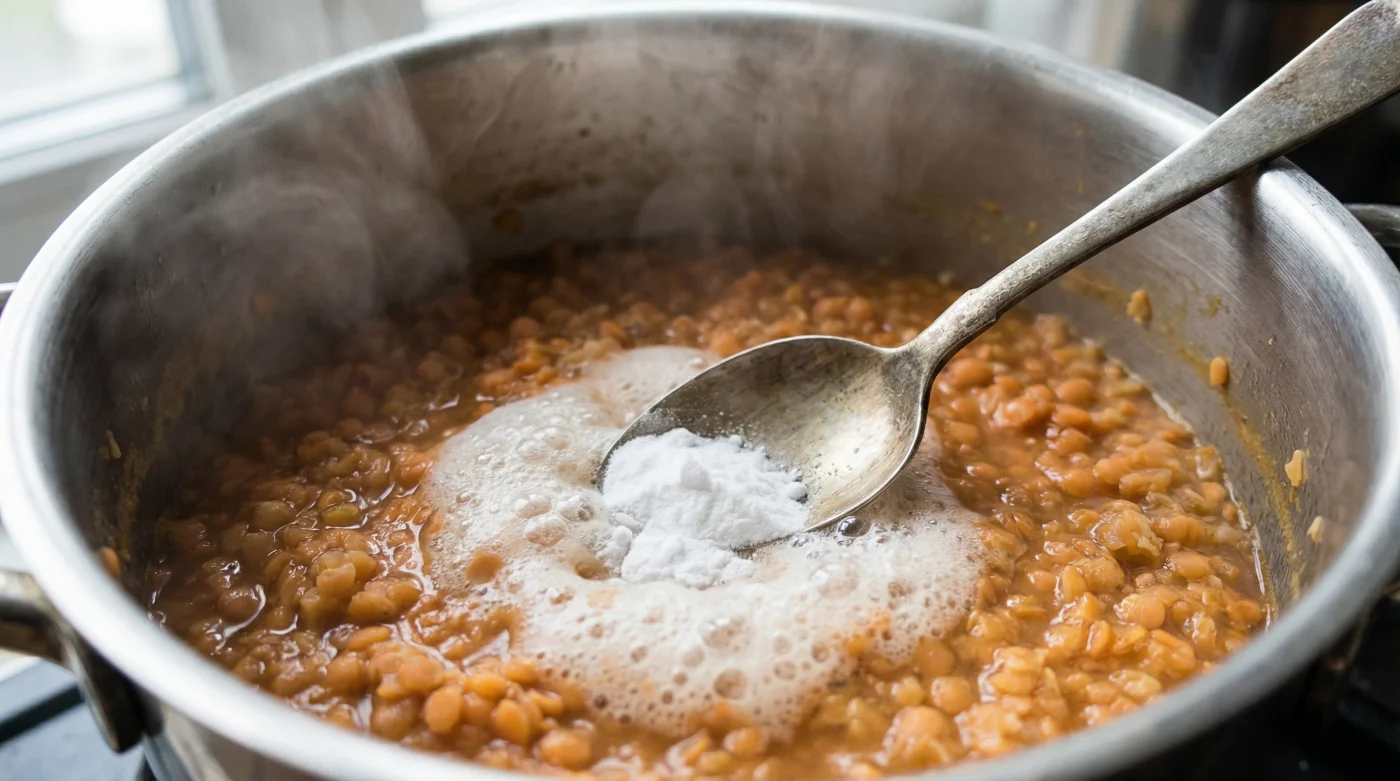
You stand over the stove, a wooden spoon in hand, staring into a pot of stubborn brown pellets. You have been simmering them for nearly an hour. The steam carries that earthy, comforting scent of your kitchen, but the texture remains aggressively gritty. You crave a velvet-smooth dal or a luxurious, hummus-like spread to serve your family, yet the store-bought dried lentils simply refuse to soften. Your wrist aches from stirring. Dinner is already late, and the frustration mounts as the water boils away for the third time.
The Vault Door of the Legume
For generations, we accepted a rigid kitchen rule: dried legumes demand a sacrifice of time. We believe that achieving a restaurant-quality puree requires hours of hovering, skimming, and stirring. Think of a dried lentil as a microscopic bank vault. The vault door is constructed of pectin, a structural carbohydrate that holds the plant cells together. Boiling water alone barely chips away at this armor. You are essentially trying to batter down a steel door with a wooden spoon. But the solution is not more force or more time. You just need the right key.
I learned this lesson years ago while sitting in the cramped, intensely fragrant kitchen of a bustling neighborhood Indian restaurant in Chicago. Chef Raj was stirring a massive vat of yellow dal that looked like molten gold. He did not have four hours to babysit a pot during the dinner rush. His method relied on an unassuming orange box pulled from the baking aisle. He tossed a tiny pinch of white powder into the water before it even started to bubble.
He explained that he was not treating the lentil; he was treating the water. By adding baking soda, he shifted the pH balance of the pot. That slight alkaline shift acted like a master key, dissolving the pectin instantly. The lentils surrendered their rigid structure and collapsed into a perfect, creamy emulsion in a fraction of the usual time.
| Who Benefits Most | The Daily Payoff |
|---|---|
| The Busy Parent | Puts a hot, nutritious dinner on the table in 20 minutes instead of 60. |
| The Budget Cook | Transforms a $2 bag of standard pantry lentils into a premium dining experience. |
| The Texture Enthusiast | Eliminates the watery, granular finish for a pure, homogenous mouthfeel. |
The Chemistry of Comfort
Understanding why this works gives you total control over your cooking environment. Most tap water leans slightly acidic or neutral. When you boil legumes in this environment, the pectin firms up, stubbornly clinging to the cellular walls. It is the same reason a tomato stays relatively firm when stewed. By introducing an alkaline element, you fundamentally change how the plant material behaves under heat.
| Method | Chemical Environment | Time Required | Final Texture |
|---|---|---|---|
| Traditional Boiling | Neutral/Slightly Acidic (Hardens Pectin) | 45-60+ Minutes | Uneven, granular, often requires a blender. |
| Baking Soda Simmer | Alkaline (Dissolves Pectin) | 15-20 Minutes | Homogeneous, naturally creamy, effortlessly smooth. |
Mastering the Mindful Simmer
Applying this technique requires a light touch. Measure out your dried lentils and rinse them under cold water until the runoff is clear. Place them in your pot and cover with fresh water, allowing about two inches of water above the legumes. Now, reach for the baking soda. You only need a quarter-teaspoon for every cup of dried lentils. Do not be tempted to add more.
- Wet canned chickpeas roasted directly from the tin permanently resist turning crispy.
- Store-bought gnocchi boiled in water ruins the classic potato texture.
- Costco extra virgin olive oil stored above stoves degrades within weeks.
- Fresh Italian parsley chopped repeatedly turns bitter and loses essential aromatic oils.
- Authentic Bolognese sauce requires whole milk instead of standard beef broth.
Within fifteen minutes, test a lentil by pressing it against the side of the pot with your wooden spoon. It should give way with zero resistance, smearing like warm butter. This is the moment to add your salt, spices, or a squeeze of lemon. Wait until the very end to add acidic ingredients like citrus or tomatoes, as adding them too early will reverse the alkaline environment and harden the lentils all over again.
| Quality Checklist | What to Look For | What to Avoid |
|---|---|---|
| The Powder | Fresh baking soda that reacts instantly with a drop of vinegar. | Baking powder, which contains added acids that ruin the trick. |
| The Lentil | Split red or yellow varieties for the fastest, smoothest purees. | Bags that have been sitting open in the pantry for multiple years. |
| The Heat | A gentle, lazy simmer with just a few bubbles breaking the surface. | A rapid, rolling boil that causes the pot to foam over and burn. |
Reclaiming Your Evening
This simple modification does more than just alter the physical state of a pantry staple. It gives you back your evening. When you know you can reliably produce a rich, comforting meal in twenty minutes, the mental weight of dinnertime lifts. You are no longer bound to the stove, endlessly waiting for a stubborn ingredient to cooperate.
Food preparation should feel like a rhythmic, rewarding process, not a battle of wills. By understanding the environment inside your cooking pot, you step into a space of culinary confidence. A humble bag of dried lentils is no longer a chore. It becomes a blank canvas, ready to be transformed into a masterpiece with nothing more than a pinch of science and a few mindful minutes.
“You do not force the ingredient to break; you change the environment so it yields willingly.” – Chef Raj
Frequently Asked Questions
Will baking soda make my food taste soapy?
No, provided you use the precise measurement of a quarter-teaspoon per cup of dried lentils. Too much baking soda leaves a metallic, soapy residue, so measure carefully.Can I use this trick for large beans like kidney or black beans?
Yes, adding baking soda to the soaking water or boiling water of larger beans also speeds up the softening process significantly.Does this destroy the nutritional value of the lentils?
While an alkaline environment can slightly reduce vitamin C and some B vitamins, lentils are primarily eaten for protein, fiber, and iron, which remain entirely intact.Why did my pot foam over when I added the baking soda?
Baking soda creates rapid gas expansion when heated. Always ensure your pot has plenty of headroom and reduce the heat immediately to prevent a messy boil-over.When should I add salt to this mixture?
Wait until the lentils are completely soft before adding salt or acidic ingredients like tomatoes, as both can interfere with the rapid softening process.