The scent of dark roast coffee lingers in your kitchen. You spread the final cloud of mascarpone cream over your baking dish, dusting it with a snowdrift of bitter cocoa powder. On the surface, it looks like a masterpiece. But the moment you slide a spatula beneath that first square, disaster strikes. A muddy, coffee-tinted puddle bleeds onto the dessert plate. The cake slumps. What was supposed to be a gravity-defying layered dessert now resembles a collapsed pudding. You followed the directions perfectly, submerging each cookie just like the recipe demanded. And that exact step ruined your evening.
The Gravity of the Dough
There is a persistent myth in home kitchens that traditional desserts require heavy-handed soaking. Most internet recipes instruct you to dunk the Savoiardi ladyfingers directly into a bath of liquid coffee. This is a fatal structural error. When you submerge these delicate, air-whipped sponges, they act like unregulated vacuums. They pull in far more liquid than their baked cell walls can support. The result is a dessert that breathes through a wet towel, heavy and exhausted.
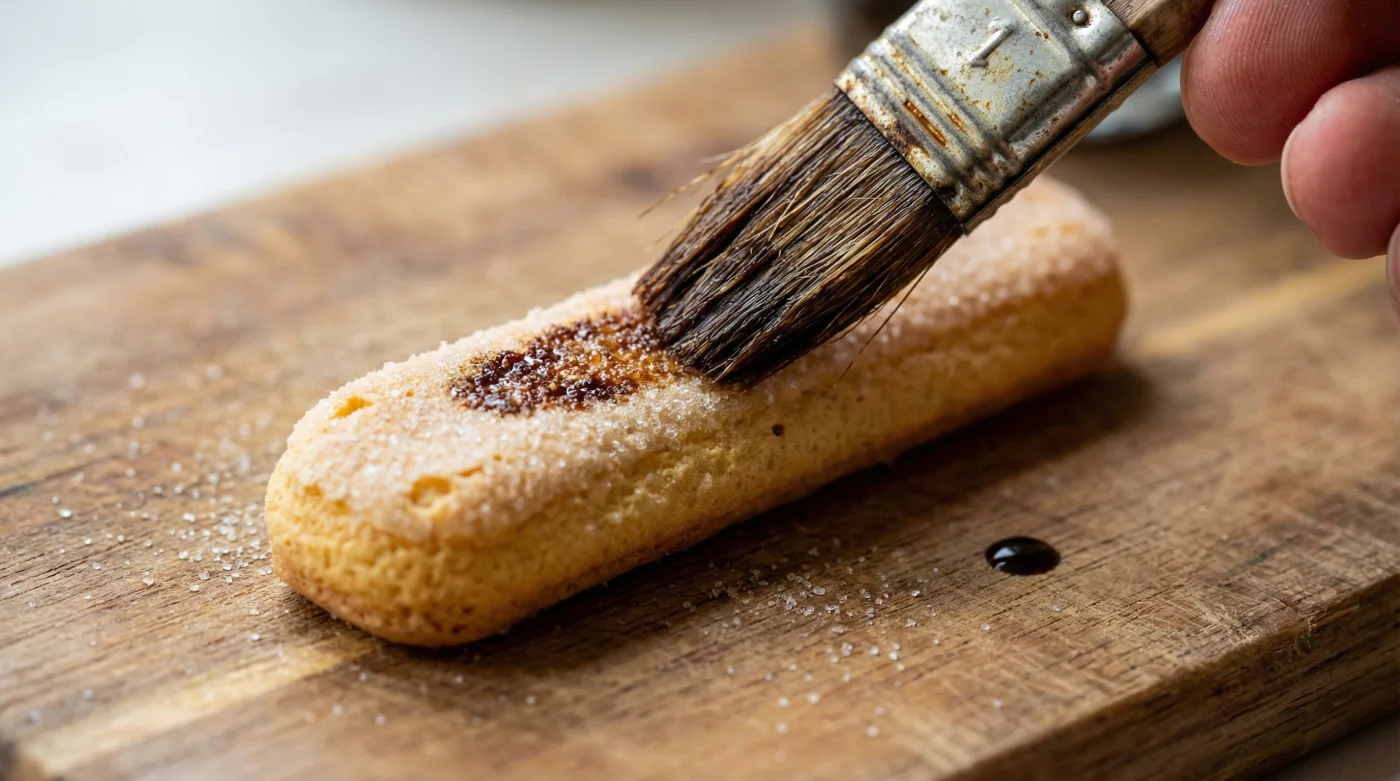
Think of building a house on a marsh. If the foundation is waterlogged, the upper floors will eventually cave in. Authentic, restaurant-quality plating relies entirely on the tension between the dry interior of the cookie and the rich moisture of the cream. I learned this hard truth from Elena, an old-school pastry chef working out of a tiny bakery in Boston’s North End. I watched her assemble three trays of tiramisu in minutes, but her coffee bowl remained pristine. She did not dunk a single cookie. Instead, she wielded a wide, natural-bristle pastry brush. ‘You paint the flavor on,’ she told me, tapping the brush lightly against the rim of her espresso bowl. ‘You do not drown the dough. Give the cookie respect, and it holds your cream.’
| Home Host Persona | Specific Benefit of the Brush Technique |
|---|---|
| The Busy Parent | Saves the dessert from ruining overnight; portions easily for family plates. |
| The Dinner Party Host | Achieves a sharp, professional slice that does not leak on the serving platter. |
| The Perfectionist Cook | Grants total control over the coffee-to-cookie ratio for balanced bitterness. |
| Sponge State | Liquid Volume Added | Structural Consequence |
|---|---|---|
| Submerged (1-2 seconds) | Approx. 15ml per cookie | Cell walls collapse. Dessert weeps liquid onto the plate. |
| Dipped (Quick dunk) | Approx. 8ml per cookie | Bottom turns mushy. Unstable middle layer. |
| Painted (Brush method) | Approx. 2ml per cookie | Core stays dry. Absorbs cream moisture overnight. Perfect slice. |
| What To Look For (Quality Setup) | What To Avoid (Failure Risks) |
|---|---|
| Using hard, Italian-imported Savoiardi. | Using soft, cake-like bakery ladyfingers. |
| Room temperature, strong espresso. | Piping hot coffee (melts the sugar crust immediately). |
| A natural boar-bristle pastry brush. | Pouring the coffee recklessly from a spoon. |
The Art of Painting the Espresso
Your approach must shift from soaking to basting. Start by arranging your completely dry ladyfingers side by side in the bottom of your dish. Pour your cooled, strong espresso into a shallow bowl. Take a clean pastry brush and dip just the tips of the bristles into the coffee.
Sweep the brush across the tops of the cookies in quick, even strokes. You want to stipple the surface, allowing the dark liquid to kiss the crust without penetrating the dry core. The espresso should speckle the cookie, looking like a light rain on dry pavement.
Wait thirty seconds. The sugar crust will soften slightly, absorbing the coffee aroma while leaving the inner structure rigid. This rigid core is your insurance policy. When you layer the mascarpone mixture over the top, the dry interior of the ladyfinger will naturally draw moisture from the cream as it rests in the refrigerator overnight.
- Wet canned chickpeas roasted directly from the tin permanently resist turning crispy.
- Store-bought gnocchi boiled in water ruins the classic potato texture.
- Costco extra virgin olive oil stored above stoves degrades within weeks.
- Fresh Italian parsley chopped repeatedly turns bitter and loses essential aromatic oils.
- Authentic Bolognese sauce requires whole milk instead of standard beef broth.
A Clean Slice of Pride
Mastering this simple shift changes everything about hosting a dinner. You no longer have to cross your fingers when plating a slice for a guest. The structural integrity holds firm from the serving dish to the fork. You get the sharp, defined layers of a high-end restaurant presentation right in your own dining room.
Food should feel good to make, and even better to share. When you stop fighting the ingredients and start working with their natural physics, cooking becomes a calm, predictable rhythm. You trade the anxiety of a weeping dessert for the quiet satisfaction of a perfectly engineered classic.
A proper dessert stands tall not because of the pan that holds it, but because the baker respected the limits of the ingredients.
Frequently Asked Questions
Can I use instant coffee for this technique? Yes, but brew it twice as strong. The brush method requires bold flavor in a small amount of liquid.
What kind of brush works best? A silicone brush works well, but a natural boar-bristle pastry brush holds the liquid more evenly.
Will the cookies be too crunchy? Not at all. The cookies pull moisture from the mascarpone cream as the dessert chills overnight, softening perfectly by morning.
How long should the tiramisu chill? A minimum of eight hours is required for the dry centers to hydrate from the cream, though twelve hours is ideal.
Can I brush alcohol onto the cookies too? Absolutely. Whisk a splash of dark rum or amaretto into your espresso bowl before brushing the liquid onto the ladyfingers.