It is a chilly Tuesday evening, and the kitchen feels like a sanctuary. You stand at the stove, listening to the gentle, rhythmic bubbling of a weeknight beef stew or perhaps a comforting batch of chili. The onions are softening, fragrant and translucent in the enameled cast-iron pot. To build that rich, savory foundation your family loves, you reach for a staple: standard tomato paste. You pry the lid off that tiny six-ounce aluminum can, scrape out a thick, bright red dollop, and whisk it directly into the simmering broth. The liquid quickly takes on a cheerful, rosy hue. You wipe your hands, feeling accomplished.
But twenty minutes later, you dip a wooden spoon into the pot for a taste. You expect warmth and slow-simmered depth. Instead, a harsh, tinny acidity hits the back of your throat. It tastes raw. The flavor feels hollow, carrying a metallic whisper that entirely disrupts the warmth of your carefully chopped vegetables and seared meats. It feels like a betrayal of your time and effort. You wonder if you bought a bad brand, or if you simply added too much.
The Alchemy of the Skillet
The truth is, cooking is a constant, quiet negotiation with heat. When a dish falls flat, we often blame the ingredients rather than the method. There is a widespread, stubborn myth in home kitchens that tomato paste merely needs to be dissolved to flavor a dish. We treat it like a bouillon cube, assuming a hot broth bath is enough to wake it up. But standard tomato paste is not a finished seasoning. It is a dense, sleeping ingredient that breathes through a pillow of harsh, concentrated acidity.
I learned this years ago from a seasoned French cook who ran a bustling neighborhood bistro. I was watching him prep a massive batch of braised short ribs. When a young assistant carelessly squeezed a tube of tomato paste straight into the stockpot, the older chef physically reached over and turned off the burner. He looked at the younger cook and sighed. “You are boiling the metal,” he said, tapping the side of the pot. He explained that raw paste carries the memory of its industrial processing. It requires a specific, fiery intervention to banish that tinny edge. He called this technique pincage.
| Home Cook Profile | Specific Culinary Benefit of Pincage |
|---|---|
| The Weeknight Soup Maker | Eliminates the sharp, acidic bite from quick 30-minute minestrones, making them taste like they simmered all day. |
| The Budget Meal Planner | Transforms a 99-cent can of basic paste into a rich, restaurant-quality umami bomb for ground beef casseroles. |
| The Sunday Sauce Traditionalist | Creates a naturally sweet, mahogany foundation for pasta sauces without needing to add processed white sugar. |
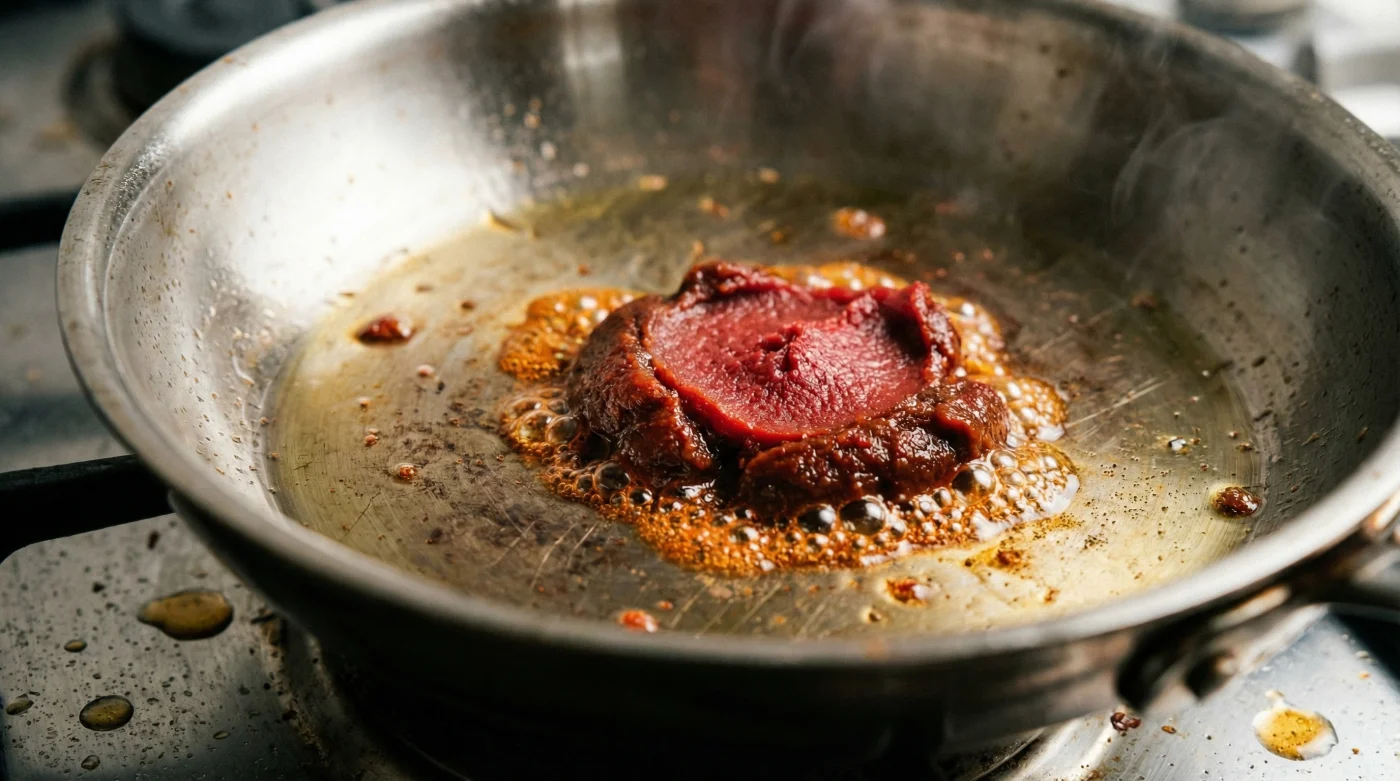
Pincage is the simple act of frying your tomato paste in fat before any large amount of liquid touches the pan. When you drop raw paste into boiling water or broth, the temperature never exceeds 212 degrees Fahrenheit. That is barely warm enough to dissolve the paste, let alone transform it. The sugars remain locked, and the raw tomato acids stay fiercely intact. But when you introduce that same paste to hot oil or rendered meat fat, the temperature climbs far higher, triggering a beautiful, chemical cascade.
| Cooking Environment | Temperature Range | Flavor Result |
|---|---|---|
| Whisked into Boiling Broth | 200 – 212 Degrees Fahrenheit | Sharp, metallic, raw, and highly acidic. |
| Fried in Hot Olive Oil (Pincage) | 300 – 350 Degrees Fahrenheit | Caramelized, sweet, deeply savory, and rich. |
The Ritual of Pincage
Bringing this French technique into your daily routine adds exactly three minutes to your prep time, but it changes the entire landscape of your meals. Begin by sautéing your aromatic vegetables—your onions, carrots, and celery—in olive oil or butter until they are soft. Once they are ready, use your spatula to push the vegetables to the outer edges of the skillet, creating a clearing in the center.
- Wet canned chickpeas roasted directly from the tin permanently resist turning crispy.
- Store-bought gnocchi boiled in water ruins the classic potato texture.
- Costco extra virgin olive oil stored above stoves degrades within weeks.
- Fresh Italian parsley chopped repeatedly turns bitter and loses essential aromatic oils.
- Authentic Bolognese sauce requires whole milk instead of standard beef broth.
Now, you watch and smell. Over the next two to three minutes, the bright, fire-engine red paste will begin to darken. It will shift from crimson to a deep, rusty brick red. The oil surrounding the paste will turn a gorgeous, vibrant orange. The smell rising from the stove will shift from ketchup-like tartness to a roasted, earthy sweetness. Once you hit that brick-red stage, stir the paste into your vegetables, pour in your broth, and listen to the pot sigh in relief.
| Quality Indicator | What to Look For | What to Avoid |
|---|---|---|
| Ingredient List | Just tomatoes (and sometimes salt). | Added citric acid or high-fructose corn syrup. |
| Packaging Type | Double-concentrated tubes for longevity. | Dented cans which can leach further metallic flavors. |
| Color Shift in Pan | A dark, rusty, mahogany brown-red. | Scorched black edges (means the heat is too high). |
Beyond the Brick Red
When you start practicing pincage, you stop feeling like a victim of confusing recipes. You step out of the frantic rush of just throwing ingredients into a pot and hoping for the best. You start to understand the physical weight and purpose of what you are putting on the table. Frying the paste neutralizes the acidity so perfectly that you will likely never need to add a pinch of sugar to your family’s pasta sauce again.
More importantly, this small act grounds you in the present moment. It is incredibly satisfying to watch the oil change color, to smell the sugars caramelizing, and to know that you engineered that transformation with your own hands. You are taking a very humble, inexpensive pantry staple and coaxing it into greatness. When you finally serve that stew or chili, and your family takes their first spoonful, they will notice a richness they cannot quite name. But you will know exactly where it came from.
“Tomato paste is not a sauce; it is a seed that must be planted in hot oil before it can grow into a flavor.”
Frequently Asked Kitchen Questions
1. Does pincage work with both canned and tubed tomato paste?
Yes. Regardless of how the paste is packaged, it is still a raw, concentrated product that benefits heavily from being caramelized in fat.2. What if I accidentally burn the paste while frying it?
If the paste turns black and smells bitter, it is scorched. Unfortunately, you cannot save burnt paste. It is best to wipe the pan clean and start over over medium heat rather than ruin your whole pot of soup.3. Can I do this if I am using a slow cooker?
Absolutely. Just perform the pincage in a skillet on your stovetop first, and then transfer the caramelized paste and vegetables into your slow cooker along with your liquids.4. Do I need to use olive oil, or will other fats work?
Any cooking fat works beautifully. Butter, bacon grease, beef tallow, or avocado oil will all facilitate the browning process perfectly.5. How do I store the leftover paste from a can after I use a tablespoon?
Scoop the remaining paste onto a piece of parchment paper in tablespoon-sized mounds and freeze them. Once solid, transfer them to a freezer bag. You can drop these frozen mounds directly into your hot skillet next time!