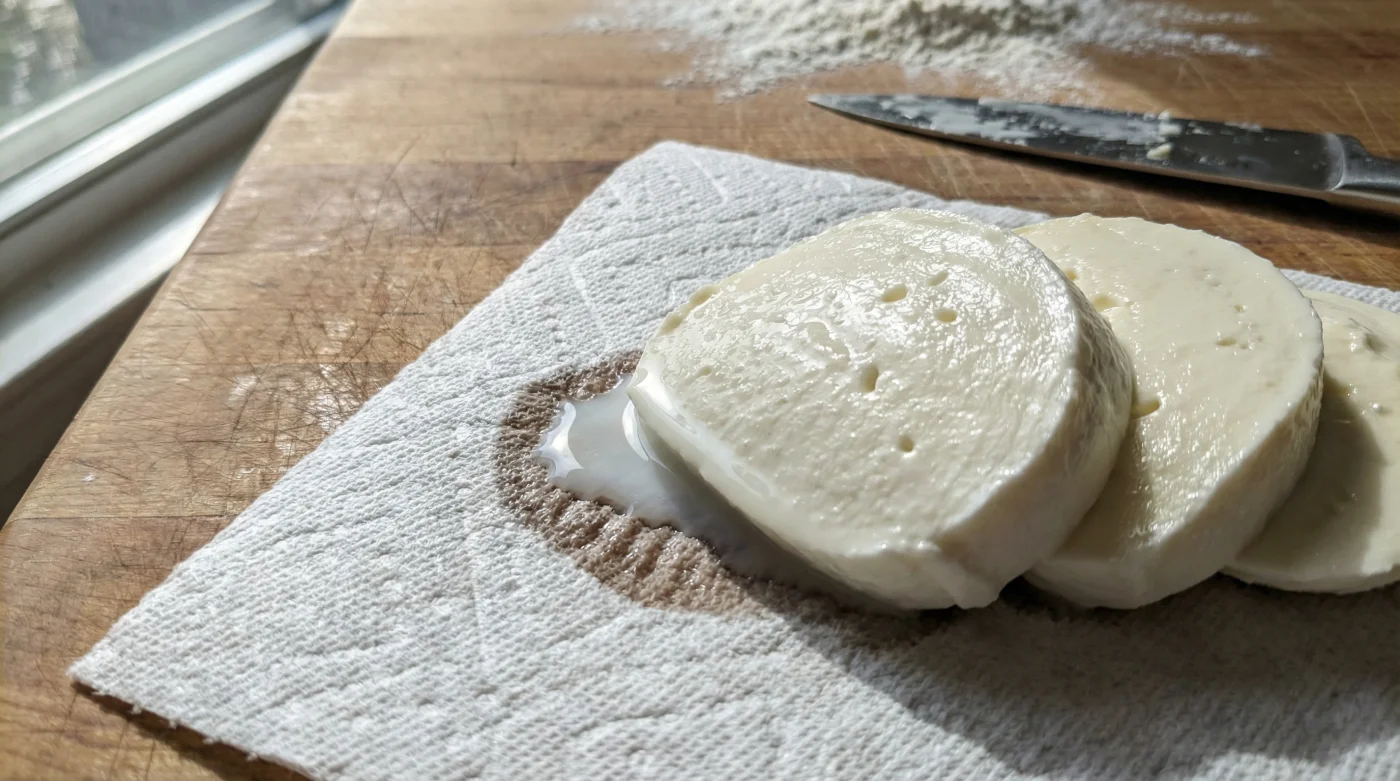
Imagine the anticipation of a Friday night at home. The kitchen air carries the sharp, earthy scent of crushed tomatoes, roasted garlic, and warm yeast. You have successfully stretched the dough, dusting the counter with flour. Reaching for a premium tub of fresh mozzarella balls, you slice those beautiful, snow-white orbs and proudly arrange them over your homemade sauce. You slide the pie into a 500-degree oven, expecting magic. But fifteen minutes later, you pull out a tragedy. The center of your pizza breathes through a wet sponge. A pale, watery swamp sits where a crisp, blistered crust should be. You feel that familiar sting of disappointment, silently wondering why you didn’t just order takeout.
The Hydration Illusion
We are conditioned to believe that the freshest, most premium ingredients should go straight from the package into the pan. But dropping wet cheese onto raw dough is like dragging a soaked watercolor brush across delicate tissue paper. It completely compromises the foundation. Fresh mozzarella is suspended in a milky brine. It is essentially a delicious water balloon. When you subject it to intense oven heat, that trapped moisture aggressively turns to steam and liquid whey, flooding your pie faster than the dough can bake.
| Home Cook Profile | The Specific Benefit of Prep |
|---|---|
| The Busy Mother | Saves time by eliminating the need to double-bake or scrap ruined dinners. |
| The Weekend Entertainer | Guarantees a firm, sliceable pizza that impresses guests without the messy, soggy flop. |
| The Budget-Conscious | Protects your investment in premium cheeses and artisanal ingredients from going to waste. |
I learned this lesson the hard way from a seasoned home caterer named Elena, a woman who practically orchestrated neighborhood dinner parties with her eyes closed. I watched her prep for a massive family gathering one Sunday. Instead of immediately topping her pizzas, she meticulously arranged sliced mozzarella across layers of paper towels. She tapped the counter and looked at me. ‘You cannot bake a puddle,’ she said. She explained that patience, not just a screaming hot oven, creates the perfect crust.
| Cheese Type | Moisture Content | Baking Behavior |
|---|---|---|
| Fresh Mozzarella (In Brine) | Over 50% Water | Releases heavy whey instantly under high heat, pooling in the center. |
| Low-Moisture Mozzarella | Around 45% Water | Melts evenly, browns quickly, releases minimal oil but zero water. |
| Purged Fresh Mozzarella | Controlled Moisture | Retains soft, milky texture but allows the dough beneath it to crisp fully. |
The 15-Minute Paper Towel Purge
The fix requires no special equipment, just a slight adjustment to your evening prep rhythm. Before you even touch your dough, remove the fresh mozzarella from its liquid. Pat the outside dry with a towel, then slice the cheese into even, quarter-inch rounds.
Lay a triple-layer of heavy-duty paper towels on your cutting board. Arrange the slices flat across the paper, ensuring they do not overlap. You want maximum surface area contact.
Place another thick layer of paper towels directly on top of the cheese. Press down with the flat of your palms, applying gentle but firm pressure to encourage the whey out of the curds.
- Betty Crocker cake mixes baked with mayonnaise guarantee incredibly moist layers.
- Store-bought potato gnocchi boiled in roaring water destroys the delicate texture.
- Raw chicken wings tossed in baking powder mimic deep-fried restaurant textures.
- Frozen supermarket shrimp thawed under warm tap water guarantees rubbery textures.
- Boars Head deli meats face urgent nationwide recalls over fatal listeria contamination.
| Fresh Mozzarella Quality Checklist | What To Look For | What To Avoid |
|---|---|---|
| Texture | Firm springback when pressed gently with a thumb. | Mushy edges or a slimy, dissolving exterior film. |
| Brine Clarity | Clear to slightly milky water that smells fresh and sweet. | Cloudy, yellowish liquid with a sour, fermented odor. |
| Color | Bright, opaque, porcelain white throughout the slice. | Yellowing at the edges or transparent, icy patches. |
Reclaiming Your Kitchen Confidence
Mastering this small, physical step does more than save your Friday night dinner. It shifts your entire mindset in the kitchen. You stop rushing the process and start moving with the quiet confidence of someone who understands how ingredients behave. You no longer cross your fingers and just hope the oven does the work. You are in control. When you pull that next pizza out, listening to the crust crackle and watching the cheese bubble without a single puddle in sight, that feeling of pride is completely earned.
Treat water as an active ingredient, not just a byproduct; when you control the moisture, you control the meal.
Frequently Asked Questions
Can I just squeeze the mozzarella balls with my hands?
No, squeezing tears the delicate curds and ruins the texture. Gentle, even pressure between paper towels extracts moisture without destroying the cheese.Does this trick work for burrata too?
Burrata has a liquid cream center that is meant to be runny. You should never bake burrata; add it to the pizza after the crust is fully baked.Can I prep the cheese hours in advance?
You can rest it on paper towels in the refrigerator for up to an hour, but leaving it longer will dry it out too much, causing it to burn in the oven.Why not just buy low-moisture block mozzarella?
Block mozzarella is fantastic for classic American-style pizza, but if you want the delicate, milky flavor of a true Margherita, you need fresh mozzarella. It just requires this quick prep step.Should I salt the cheese while it rests on the towels?
Yes, a light sprinkle of kosher salt on the slices while they rest not only seasons the cheese but actively helps draw out even more excess water.