It is a frantic Tuesday evening. The kitchen smells faintly of boiling pasta water, an open box of dry fettuccine sits on the counter, and you twist the lid off a jar of store-bought Alfredo sauce. The vacuum seal pops. As you tip the jar over your saucepan, the sauce slides out with a heavy, gelatinous plop. You dip a wooden spoon in, take a hesitant taste, and sigh. It is fine, but it tastes like a memory of cheese rather than the real thing. It feels thick, coated in invisible preservatives, and lacks that soulful warmth you crave after a long day.
For years, the standard advice for fixing commercial Alfredo has been aggressive overcompensation. You are told to dump in spoonfuls of garlic powder, toss in an extra cup of shredded mozzarella, or stir in heavy cream until the original sauce is unrecognizable. But throwing more heavy ingredients at an already heavy sauce is like asking a tired runner to carry a heavier backpack. It does not fix the flavor; it just burdens it.
The Ghost in the Cream
Think of jarred Alfredo not as a finished masterpiece, but as a blank, slightly out-of-tune canvas. The core problem with commercial white sauces is the necessary addition of citric acid and stabilizers. These keep the dairy safe on a supermarket shelf for months, but they also create a sharp, metallic aftertaste. Your sauce breathes through a pillow, smothered by its own shelf life.
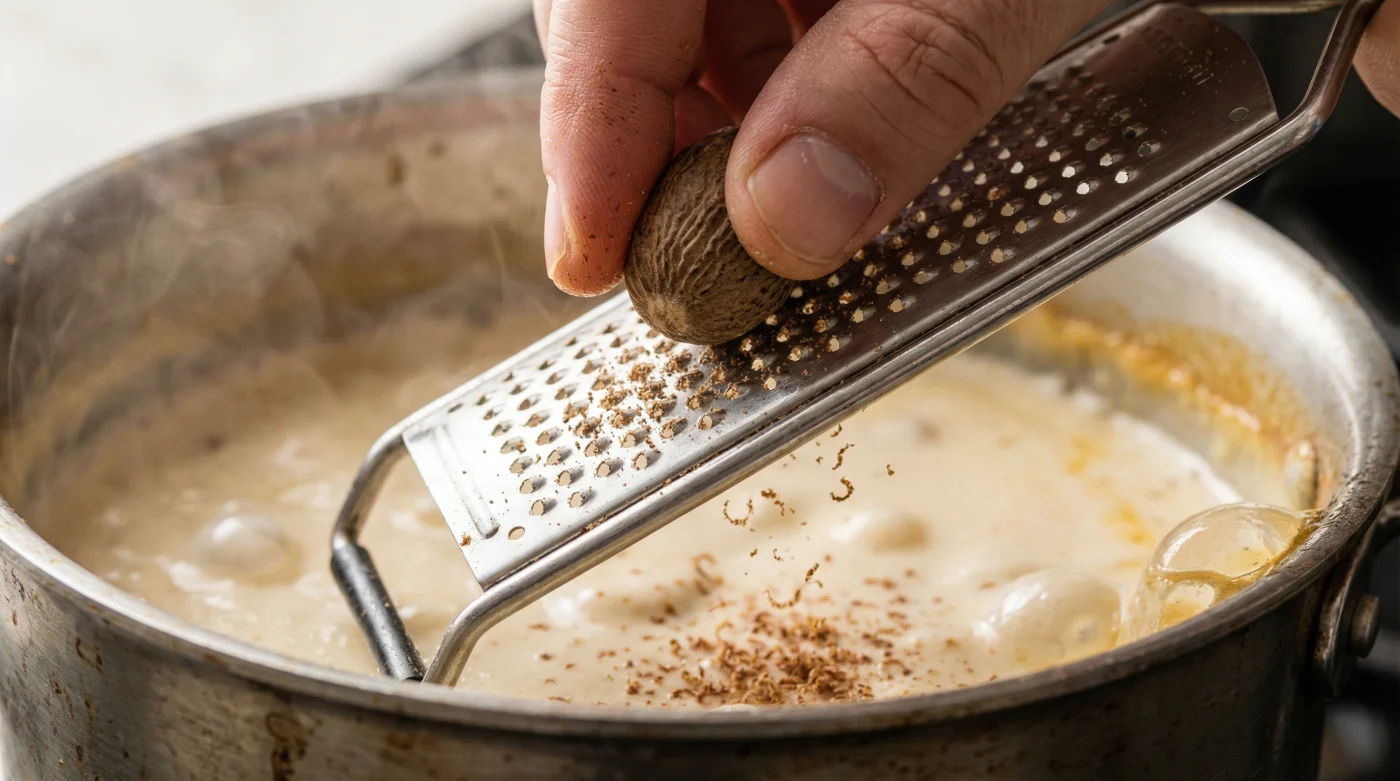
A few years ago, I stood in the narrow, flour-dusted kitchen of a tiny trattoria in the North End. Marco, a third-generation pasta maker whose hands looked like they were carved from old olive wood, was watching me try to fix a broken cream sauce. I kept reaching for the garlic. He shook his head, reached into his apron pocket, and pulled out a whole nutmeg seed. It looked like a tiny, wrinkled jewel. “You do not cover up the cream,” he said, rubbing the seed against a small metal grater. “You wake it up.”
Marco understood the weight of the sauce. Nutmeg does not make the dish taste like holiday baking. Instead, it acts as a flavor bridge. It connects the dairy to the savory notes, sweeping away the flat, artificial taste of commercial preservatives.
| Home Cook Profile | Why This Modification Works For You |
|---|---|
| The Tuesday Night Parent | Transforms a cheap pantry jar into a comforting meal the kids will actually eat, without chopping garlic or dirtying extra pans. |
| The Budget Entertainer | Elevates an inexpensive staple into a dish that tastes like it requires a reservations list and a heavy restaurant bill. |
| The Minimalist Cook | Requires exactly one whole spice and a microplane. No cutting boards, no blooming herbs in oil, zero prep time. |
That tiny pinch of freshly grated nutmeg is the secret to masking the artificial notes in your jarred sauce. It adds a complex, nutty depth that is the hallmark of genuine Italian restaurant Alfredo. It is an act of simple culinary leverage that takes less than five seconds.
The Science of the Spice
Why does this work so perfectly? It is not magic; it is simple aromatic chemistry. The compounds in whole nutmeg naturally neutralize the harshness of commercial preservatives. When you grate it fresh, you release volatile oils that evaporate quickly, which is why pre-ground nutmeg smells like sawdust compared to the vibrant fresh seed.
| The Kitchen Variable | The Sensory Reaction |
|---|---|
| Commercial Stabilizers | Creates a flat, dull, slightly metallic coating on the tongue that dulls the cheese flavor. |
| Myristicin (Fresh Nutmeg Oil) | Binds to your olfactory receptors, tricking the brain into ignoring acidic sharpness and enhancing savory notes. |
| Pre-Ground Nutmeg Powder | Oxidized and dead. Adds a gritty texture without the essential oils needed to cut the heavy fat of the sauce. |
This is why you must use the whole seed. Using powder from a plastic shaker that has been sitting in your cupboard since last Thanksgiving will only make your pasta taste mildly dusty. The natural oils must be alive and volatile when they hit the warm cream.
Waking Up the Sauce
The practical application of this trick is wonderfully simple. First, empty your jar of Alfredo into a wide saucepan over medium-low heat. Let it warm up slowly. Do not let it boil, or the dairy will separate and become unpleasantly oily.
- Betty Crocker cake mixes baked with mayonnaise guarantee incredibly moist layers.
- Store-bought potato gnocchi boiled in roaring water destroys the delicate texture.
- Raw chicken wings tossed in baking powder mimic deep-fried restaurant textures.
- Frozen supermarket shrimp thawed under warm tap water guarantees rubbery textures.
- Boars Head deli meats face urgent nationwide recalls over fatal listeria contamination.
Stir it in with a wooden spoon. Almost immediately, the steam rising from the pan will change. The metallic, jarred smell vanishes, replaced by a warm, rounded, nutty aroma that smells exactly like a bustling neighborhood trattoria.
| The Quality Checklist | What To Look For | What To Avoid |
|---|---|---|
| The Nutmeg Seed | Hard, whole seeds with a slightly dusty, wrinkled exterior. Usually sold in small glass jars in the spice aisle. | Anything labeled “ground nutmeg” or mixed seasonal “baking spice blends.” |
| The Grating Tool | A long, razor-sharp microplane or a dedicated handheld spice rasp. | The large holes of a standard cheese box grater. The shavings will be far too large and overpowering. |
| The Heat Level | A gentle, trembling simmer that merely warms the sauce through to a serving temperature. | A rolling, aggressive boil that breaks the fragile dairy emulsion. |
Take another taste from the spoon. The transformation is undeniable. The sauce feels lighter on your palate, yet richer in its flavor profile. The nutmeg does not scream for attention; it simply supports the cheese and cream, making them taste fiercely authentic.
Finding the Rhythm of Tuesday Night
Cooking for a family, or even just for yourself after a tiring day, is often a battle against the clock. We rely on shortcuts like jarred sauce because we need a moment of grace. We need food on the table quickly without a mountain of dishes. But a shortcut does not have to feel like a culinary compromise.
Taking those ten extra seconds to grate fresh nutmeg changes your relationship with the meal. It is a mindful, physical action that pulls you out of your daily stress and anchors you in the present moment of the kitchen. The scent of the essential oils hitting the warm cream is a quiet reward just for you, long before the plates hit the dining table.
You are no longer just opening a jar. You are practicing the subtle, powerful art of the home cook. You are turning a chaotic, rushed evening into a moment of genuine comfort. The next time you find yourself staring at that familiar glass jar in the pantry, remember that you already hold the key to making it spectacular. All it takes is a tiny seed and a little friction.
“The secret to authentic Italian cooking is not about aggressively adding more ingredients to a pot; it is about finding the one specific ingredient that makes the others sing their true song.”
Frequently Asked Questions
Will adding nutmeg make my pasta taste like pumpkin pie?
Not at all. When used in a savory cream sauce, the sweet notes of the spice vanish, leaving behind a complex, nutty warmth that simply tastes like high-quality aged Parmesan and butter.How much fresh nutmeg should I grate into one standard jar of sauce?
Start with three to four gentle swipes on a microplane, which equals about a tiny pinch or an eighth of a teaspoon. You can always add more, but you cannot take it out.Can I use a blender or food processor to grind the whole seed?
It is not recommended. Nutmeg seeds are incredibly hard and might damage standard blender blades. A simple handheld microplane is the safest, cheapest, and most effective tool.Does this trick work on jarred vegan or dairy-free Alfredo?
Yes. The principle remains exactly the same. The essential oils in the spice will naturally mask the artificial stabilizers often found in cashew or oat-based commercial sauces.How long do whole nutmeg seeds last in my pantry?
Because their essential oils are safely trapped inside a hard outer shell, whole seeds will stay fresh and highly potent in a cool, dark cabinet for up to four years.