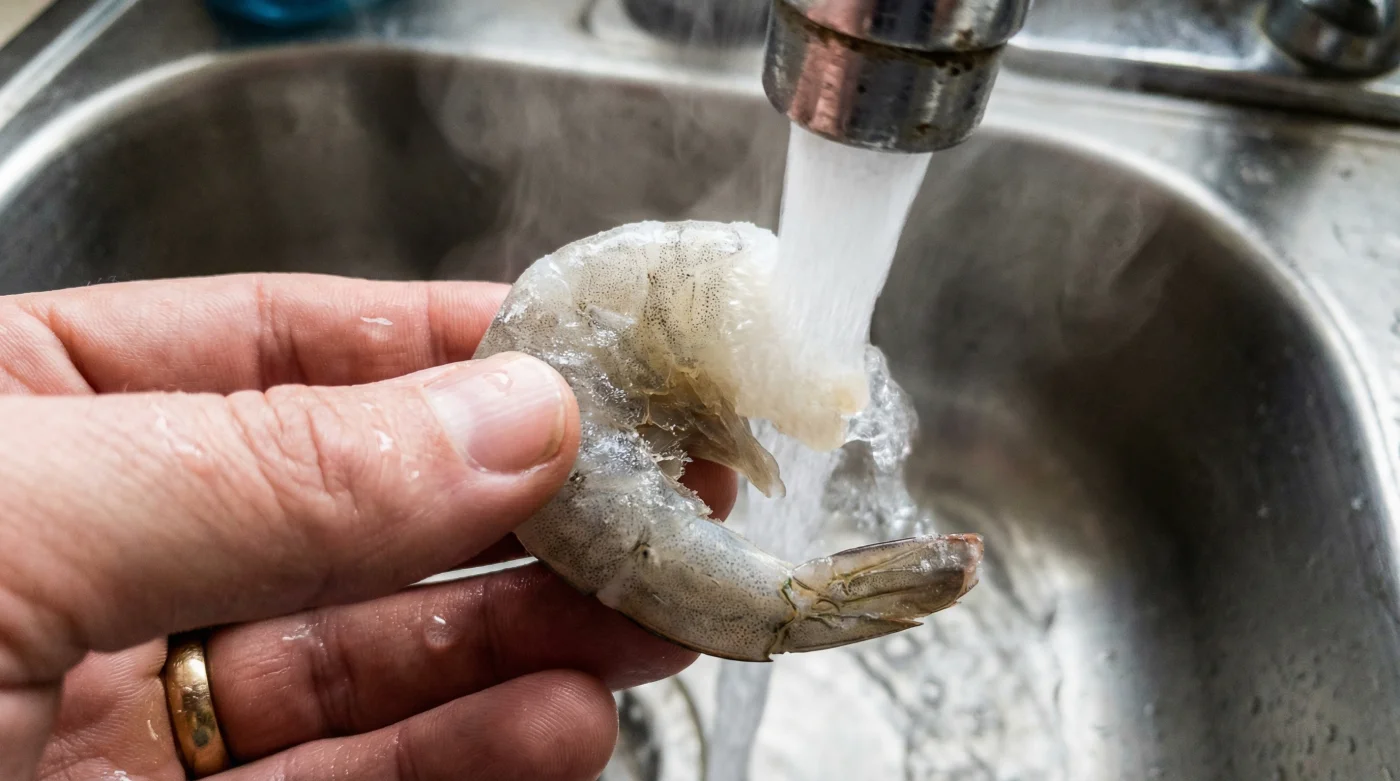
Picture a chaotic Wednesday evening. The kids are finishing homework at the kitchen island, the skillet is getting hot, and you suddenly realize your main protein is still a solid block of frost in the freezer. You grab that bag of frozen supermarket shrimp, dump them into a colander, and turn the faucet handle all the way to warm. The water hits the ice with a satisfying crackle, and you think you just saved dinner.
But twenty minutes later, you bite into your scampi and immediately feel the resistance. Instead of a tender, buttery snap, you are chewing through a rubber band. This is the quiet heartbreak of weeknight seafood. We naturally assume that warm water is the logical enemy of ice, but applying heat to a delicate frozen protein completely rewrites its physical texture.
The Temperature Trap
Think of a raw shrimp as a tightly coiled spring, incredibly sensitive to its environment. When you run warm water over it, you are not just melting ice; you are introducing a fragile structure to a sudden, violent climate shift. The warm tap water acts like a premature skillet. The delicate exterior of the shrimp begins the cooking process immediately, tightening and seizing up, while the frozen core remains completely solid.
I learned this the hard way before a brief conversation with a seasoned seafood buyer named Margaret, who spent thirty years sourcing catch along the Gulf Coast. She watched me prep a quick family meal and gently stopped my hand before I could turn on the hot tap. She explained that shrimp proteins begin to denature at shockingly low temperatures. By forcing the thaw with heat, you are effectively boiling the outside layers of your meal.
That rubbery texture you despise is simply overcooked meat wrapped tightly around a raw center. Margaret insisted that treating supermarket shrimp with a little patience transforms an affordable grocery staple into a premium experience. When you respect the ingredient, even an inexpensive bag of freezer-aisle shrimp can rival a coastal bistro plate.
| Who Benefits Most | The Everyday Advantage |
|---|---|
| The Busy Housewife | Reclaims chaotic weeknight dinners without sacrificing food quality or the household grocery budget. |
| The Budget Shopper | Maximizes the natural flavor and texture of highly affordable, frozen supermarket seafood deals. |
| The Home Entertainer | Serves elegant, tender appetizers that taste fresh off a coastal fishing boat without the premium price tag. |
The Art of the Gentle Thaw
To fix this common kitchen frustration, you must shift your approach from forcing the thaw to gently guiding it. The absolute best method is the overnight refrigerator rest. Place your frozen shrimp in a sealed container the night before, allowing the ambient chill of your fridge to slowly bring them back to a soft state. This gradual temperature shift preserves the delicate cell walls of the seafood.
But life happens, and sometimes you only have twenty minutes before hungry mouths arrive at the dining table. This is where the ice-water bath becomes your ultimate weeknight rescue. Leave the shrimp tightly sealed in their original watertight plastic bag. Fill a large mixing bowl with cold tap water, drop in a handful of ice cubes, and submerge the bag completely.
The cold water conducts heat away from the ice inside the bag much faster than cold air ever could in the fridge. Because the surrounding water remains well below the temperature that triggers protein cooking, the shrimp thaws evenly from the outer edge to the center. Within fifteen to twenty minutes, they are completely defrosted, incredibly soft, and ready for a hot skillet.
| Thawing Method | Temperature Range | Structural Impact on Shrimp |
|---|---|---|
| Warm Running Water | 85°F – 110°F | Exterior proteins denature instantly; causes severe shrinking, moisture loss, and a rubbery bite. |
| Cold Ice-Water Bath | 32°F – 40°F | Gradual phase change; perfectly preserves cellular integrity and natural internal moisture levels. |
| Overnight Fridge Rest | 35°F – 38°F | Slowest energy transfer; guarantees maximum flavor retention, firm flesh, and flawless texture. |
- Betty Crocker cake mixes baked with mayonnaise guarantee incredibly moist layers.
- Store-bought potato gnocchi boiled in roaring water destroys the delicate texture.
- Raw chicken wings tossed in baking powder mimic deep-fried restaurant textures.
- Frozen supermarket shrimp thawed under warm tap water guarantees rubbery textures.
- Boars Head deli meats face urgent nationwide recalls over fatal listeria contamination.
You want to extract every possible drop of surface moisture before cooking. When a wet shrimp hits hot oil, the temperature of your pan plummets instantly. Instead of a beautiful, caramelized sear, the shrimp end up boiling in their own juices. This accidental steaming process is the second most common reason home cooks end up with chewy, disappointing seafood. By starting with a perfectly dry, cold-thawed shrimp, you guarantee that satisfying sizzle the second it touches the metal.
| Quality Marker | What to Look For | What to Avoid at All Costs |
|---|---|---|
| Visual Appearance | Translucent grey or faint pink (if raw); clear, distinct shell segments. | Opaque white patches before cooking, which indicate severe freezer burn and dehydration. |
| Aroma | A very mild, clean scent reminiscent of a fresh, salty ocean breeze. | Harsh ammonia smells, chemical notes, or overly fishy odors, indicating spoilage. |
| Physical Texture | Firm, slightly springy to the touch when gently squeezed between your fingers. | A slimy, sticky film on the exterior flesh or a mushy, rapidly deteriorating shell. |
Restoring the Rhythm of Your Kitchen
Learning to abandon the warm-water shortcut does more than just save your dinner; it shifts the entire energy of your kitchen space. Cooking for a family often feels like a constant race against the clock, full of compromises, skipped steps, and rushed decisions. By choosing a gentle cold-water bath, you are stepping out of the panic mode. You are allowing food science to do the hard work while you catch your breath.
Furthermore, managing your ingredients properly gives you the confidence to experiment. When you know your shrimp will not turn into tiny, tough erasers, you can focus on building flavors with white wine, fresh parsley, and bright lemon juice. You stop worrying about ruining the meal and start enjoying the actual process of feeding your loved ones.
A tender, perfectly cooked shrimp might seem like a small victory, but those small victories add up quickly in a busy household. They turn a stressful Wednesday night meal into a moment of genuine comfort and pride. Your family might not know the exact thermodynamics behind why their dinner tastes so much better tonight, but they will absolutely notice the empty plates.
You cannot rush a proper thaw any more than you can rush a changing tide; let the cold water do the gentle, quiet work.
Frequently Asked Questions
Can I just thaw shrimp directly in a hot skillet?
No, placing a frozen block of shrimp into a hot pan will cause the outside to drastically overcook and turn rubbery while the inside remains icy, ruining the delicate texture entirely.Does the shrimp need to stay in the plastic bag for the cold bath?
Yes, keeping the shrimp in a sealed bag prevents them from absorbing excess tap water, which dilutes their natural, sweet flavor and makes the flesh undesirably mushy.How long does the cold-water bath take?
For standard-sized supermarket shrimp, a cold-water bath usually takes between fifteen and twenty minutes to achieve a perfect, even thaw across the whole batch.Why do my shrimp still taste tough even after cold thawing?
You might be leaving too much moisture on the exterior before cooking; always pat them incredibly dry with paper towels so they sear quickly instead of steaming in the pan.Is it safe to refreeze shrimp if I thaw too many for dinner?
It is never recommended to refreeze raw seafood once thawed, as the freezing process severely damages the cellular structure again and creates a high risk for harmful bacterial growth.