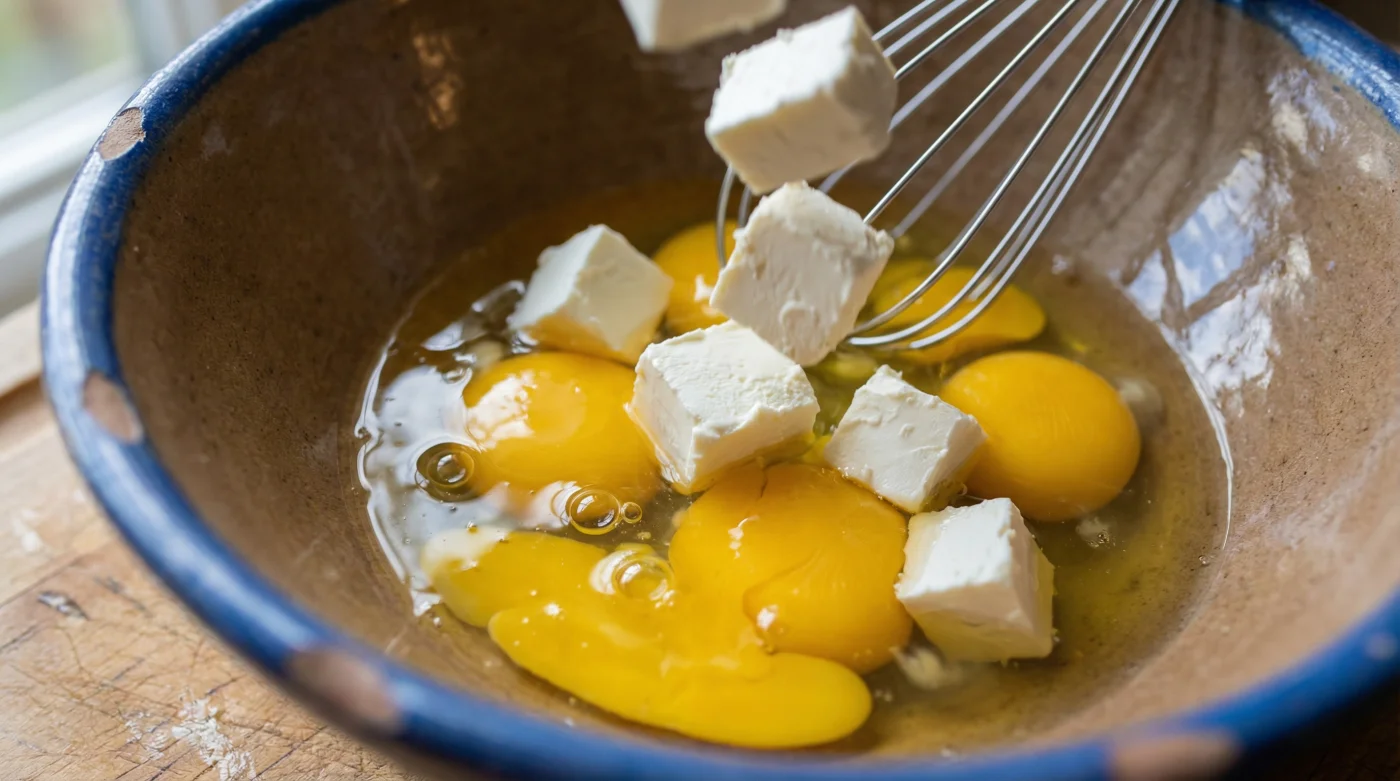
The Sunday morning light spills across your kitchen counter, catching the gentle steam rising from your coffee mug. The skillet hums over the burner, butter melting into a quiet, golden foam. You stand there holding a bowl of beaten eggs, a whisk in hand, hoping today is the day they turn out perfectly. Too often, this peaceful, early-hours ritual ends in quiet frustration. You pull the eggs off the stove, and within minutes, they transform into weeping, rubbery mounds that leak a sad, watery puddle onto your sourdough toast. For generations, home cooks have relied on the same tired advice to fix this: adding a splash of milk or a spoonful of tap water to the bowl. You were told the steam would create fluffiness. Instead, it creates a texture that breathes through a pillow of trapped moisture before collapsing under its own weight. The truth about achieving those impossibly soft, velvety ribbons you find in high-end diners contradicts everything you learned in your grandmother’s kitchen. The secret to a flawless scramble is not a liquid. It is a dense, chilled fat. Specifically, Philadelphia cream cheese.
The Alchemy of Fat and Heat
When you whisk milk into raw yolks and whites, you are thinning out the protein structure. As the pan heats up, the water inside the milk turns to steam rapidly, forcing the egg proteins to seize and tighten like a clenched fist. This violent reaction squeezes out moisture, leaving you with dry, sponge-like curds. To change the outcome, you have to change the mechanics of the pan. Think of cooking eggs not as frying, but as gently folding a delicate fabric. The eggs need a barrier to protect them from the harsh shock of the skillet’s surface.
Years ago, I sat at the counter of a bustling local diner, watching the head line cook manage a dozen orders at once. He never reached for a carton of milk when firing up his scrambles. Instead, he kept a chilled, silver-wrapped block of Philadelphia cream cheese right next to his cutting board. He would quickly pinch off tiny, ragged chunks and drop them directly into the raw, beaten eggs before they ever touched the heat. ‘Eggs do not need hydration,’ he told me, pulling a pan off the burner while the contents still looked wet. ‘They need a cushion to slow down the cook. The fat coats the proteins so they cannot knot up.’
| Kitchen Profile | The Daily Frustration | The Cream Cheese Advantage |
|---|---|---|
| The Busy Mother | Eggs that turn cold and tough before the children make it to the table. | Retains a soft, warm texture for twice as long on the serving plate. |
| The Weekend Host | Struggling to replicate the rich, decadent mouthfeel of a restaurant brunch. | Delivers a glossy, professional-grade visual appeal and rich taste. |
| The Meal Prepper | Reheated eggs that taste like cardboard and smell overcooked. | Extra fat prevents the proteins from turning rubbery in the microwave. |
| Ingredient Variable | Thermal Reaction (Fahrenheit) | Structural Impact |
|---|---|---|
| Water / Milk Splash | Boils rapidly at 212 F | Creates volatile steam pockets; forces proteins to contract rapidly. |
| Standard Butter (in pan) | Melts at 90 F, browns at 250 F | Flavors the exterior of the egg but does not protect the internal bonds. |
| Chilled Cream Cheese Cubes | Softens slowly starting at 130 F | Melts concurrently with egg protein coagulation, creating a physical lipid barrier. |
The Cold Cube Technique
The success of this method lies entirely in the temperature and the timing. Do not soften the cream cheese beforehand. You want it straight from the refrigerator. Cut about one ounce of Philadelphia cream cheese into tiny, pea-sized cubes for every three eggs you plan to cook.
Crack your eggs into a glass bowl and beat them vigorously until the yolks and whites are fully combined and slightly frothy. Drop your cold, tiny cubes of cream cheese directly into the raw mixture. Give it one or two gentle stirs. You do not want the cheese to dissolve in the bowl; those distinct little lumps are exactly what you need.
Set your skillet over medium-low heat. Let the pan warm up gradually. Melt a small pat of butter, and the moment it stops foaming, pour in your egg and cheese mixture. Now, the most crucial physical action: wait. Let the edges sit undisturbed for about ten seconds until a thin, opaque border forms.
- Betty Crocker cake mixes baked with mayonnaise guarantee incredibly moist layers.
- Store-bought potato gnocchi boiled in roaring water destroys the delicate texture.
- Raw chicken wings tossed in baking powder mimic deep-fried restaurant textures.
- Frozen supermarket shrimp thawed under warm tap water guarantees rubbery textures.
- Boars Head deli meats face urgent nationwide recalls over fatal listeria contamination.
| Sensory Cue | What to Look For (The Goal) | What to Avoid (The Warning) |
|---|---|---|
| Sound in the Skillet | A quiet, gentle hiss. | Loud sizzling, popping, or crackling butter. |
| Curd Movement | Heavy, slow-moving waves that fold over each other. | Shattered, crumbly bits that bounce in the pan. |
| Visual Finish | A glossy, wet sheen just before plating. | Dry, matte yellow surfaces with brown, crispy edges. |
Protecting Your Morning Peace
There is a profound satisfaction in taking a wildly simple ingredient and using it to fix a daily frustration. When you switch from watering down your breakfast to enriching it with a solid, high-fat dairy, you are entirely changing the trajectory of your morning. You stop rushing the pan. You stop settling for rubbery bites that require a heavy pour of hot sauce just to swallow.
Food, especially the meals we cook for our families at dawn, sets the emotional baseline for the hours ahead. Serving a plate of eggs that mirror the luxurious, melt-in-your-mouth quality of a restaurant does more than just fill an empty stomach. It is a quiet act of care. It tells your family, and yourself, that even the most mundane routines deserve a touch of thought and grace.
By treating the skillet with patience and understanding the physics of the food in front of you, you regain control over the outcome. The next time you stand in the kitchen, listening to the morning news and holding that carton of eggs, leave the milk in the refrigerator. Reach for the foil-wrapped block instead, and let the gentle heat do the heavy lifting.
“The difference between a good home cook and a great one is knowing when to stop fighting the heat and start cushioning the ingredients.”
Frequent Kitchen Queries
Can I use reduced-fat or whipped cream cheese for this technique?
You should stick to full-fat, brick-style Philadelphia cream cheese. Whipped versions contain trapped air that throws off the melting speed, and reduced-fat lacks the lipid density needed to protect the egg proteins.Do I need to add salt before or after cooking?
Always salt your eggs at the very end, just before plating. Salting raw eggs in the bowl can prematurely break down the proteins, drawing out moisture and working against the cream cheese.How large should the cream cheese cubes be?
Aim for the size of a green pea. If the chunks are too large, they will not melt in time with the gentle cooking of the eggs, leaving you with cold bites of cheese.Will my eggs taste overwhelmingly like a cheesecake?
Not at all. The cheese melts into the background, providing a rich, savory backbone rather than a dominant, tangy flavor. It enhances the natural taste of the egg.Can I still use butter in the pan if I am using cream cheese inside the eggs?
Absolutely. The butter serves to lubricate the skillet and add external flavor, while the cream cheese acts as an internal temperature buffer. They perform two separate, beautiful jobs.