You know the exact sound a heavy wooden spoon makes when it scrapes the bottom of a Dutch oven, stirring a Sunday tomato sauce that has been simmering for hours. The kitchen smells of toasted garlic, sweet basil, and the comforting warmth of a meal meant to anchor the week. You lift a meatball from the ruby-red sauce, anticipating that perfect, yielding texture. But as your fork presses down, the meat pushes back. It is dense, tight, and rubbery. In an instant, the illusion of a perfect family dinner wavers, replaced by the quiet frustration of serving a dish that feels more like a chore to chew than a joy to eat.
The Clenched Fist of the Protein
For generations, home cooks managing busy households have been sold a costly myth. We are told that achieving a tender, restaurant-quality meatball requires an expensive trip to a specialty butcher for a specific blend of veal, beef, and pork. We are led to believe that budget-friendly supermarket ground pork is inherently flawed, doomed to become tough the moment it hits the heat. This is a misunderstanding of how meat behaves. Think of a meatball not as a mixture of ingredients, but as a microscopic net of muscle fibers. When exposed to heat, these protein strands react like a clenched fist. They tighten aggressively, squeezing out their natural moisture and leaving you with a dry, dense sphere.
The secret to preventing this has nothing to do with how much you spend at the meat counter. Years ago, while watching an older diner cook prep hundreds of portions for a lunch rush, I noticed she never bothered with expensive meat blends. Instead, she sprinkled a tiny amount of white powder into a splash of water, poured it over basic ground pork, and gently worked it in with her hands. She called it her insurance policy. That powder was ordinary baking soda. By alkalizing the meat, a technique long known in traditional Chinese kitchens as velveting, you fundamentally change the environment of the proteins. You are telling the clenched fist to relax.
| The Home Cook’s Goal | The Baking Soda Benefit |
|---|---|
| Stretching the grocery budget | Transforms cheap supermarket pork into a premium-tasting protein. |
| Saving active prep time | Requires only two pantry ingredients and three minutes of resting time. |
| Pleasing picky eaters | Creates a uniform, melt-in-the-mouth texture that children and seniors love. |
When you introduce a mild alkali like baking soda to raw pork, it raises the pH level on the surface of the meat. This shift makes it physically impossible for the proteins to bond tightly together when they get hot. Rather than seizing up and expelling all their juices into the pan, the meat fibers remain loose and swollen, trapping the water inside. You are not just masking the toughness of the meat; you are neutralizing the mechanical reaction that causes toughness in the first place.
| Cooking Phase | Untreated Ground Pork | Velveted Ground Pork (Baking Soda) |
|---|---|---|
| Raw Mixing | Fibers remain acidic; prone to over-mixing. | pH rises above 7.0; fibers swell and separate. |
| High Heat Sear | Proteins seize instantly; juices escape. | Proteins relax; moisture is locked internally. |
| Simmering | Becomes dense and chewy over time. | Absorbs sauce while retaining an airy structure. |
The Gentle Massage
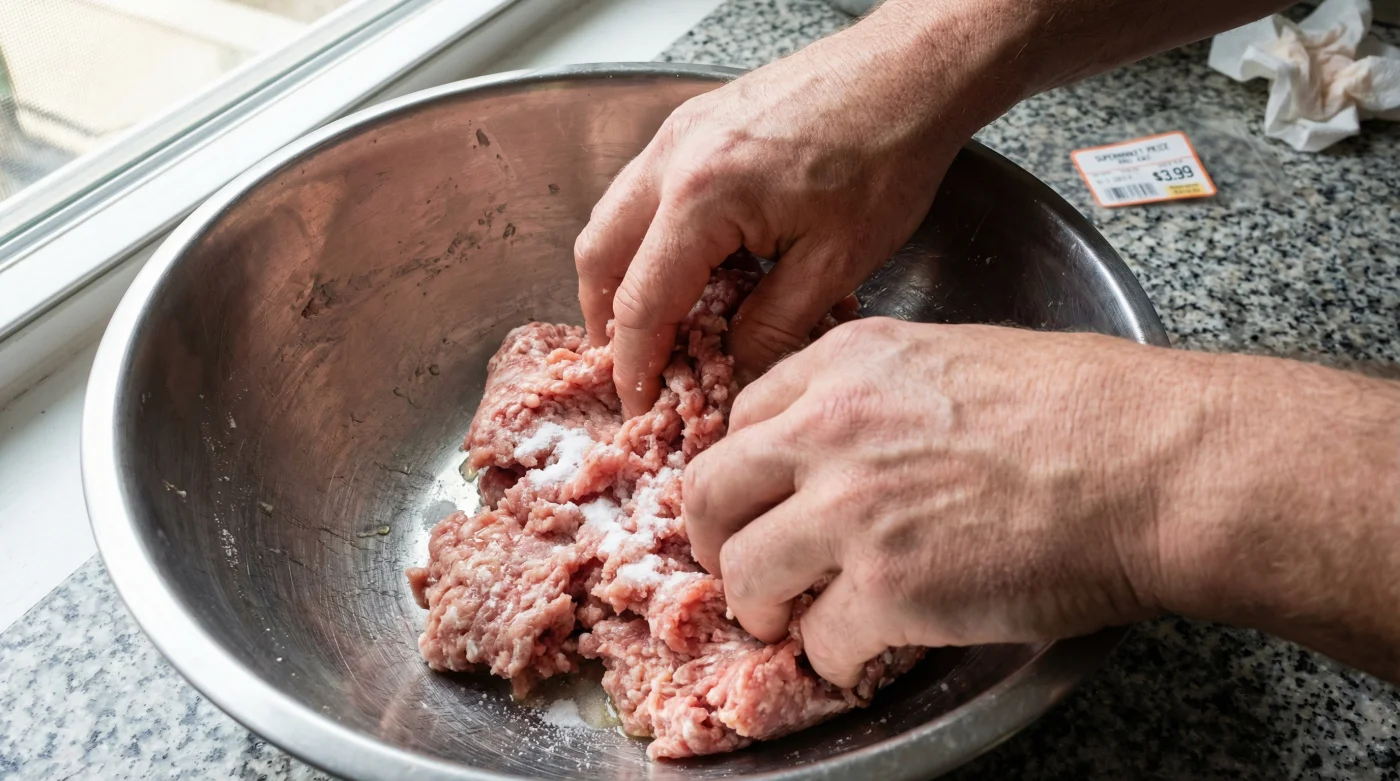
Applying this technique to your daily cooking rhythm is remarkably simple. For every one pound of supermarket ground pork, you need exactly one-quarter teaspoon of baking soda and one tablespoon of cold water. Do not eyeball this measurement. Too much baking soda will leave a metallic aftertaste, while too little will not trigger the necessary chemical shift. Dissolve the baking soda completely into the water in a small dish before adding it to your meat.
Place your chilled ground pork in a large mixing bowl. Pour the baking soda solution evenly over the top. Now, use your hands. Gently massage the liquid into the meat, folding it over itself rather than squeezing it through your fingers. You want to coat the strands, not pulverize them. You will notice the meat immediately takes on a slightly sticky, cohesive texture. This is the visual cue that the alkalizing process has begun.
- Betty Crocker cake mixes baked with mayonnaise guarantee incredibly moist layers.
- Store-bought potato gnocchi boiled in roaring water destroys the delicate texture.
- Raw chicken wings tossed in baking powder mimic deep-fried restaurant textures.
- Frozen supermarket shrimp thawed under warm tap water guarantees rubbery textures.
- Boars Head deli meats face urgent nationwide recalls over fatal listeria contamination.
| Quality Metric | What to Look For | What to Avoid |
|---|---|---|
| The Baking Soda | Fresh, active powder dissolved fully in water. | Clumps of dry powder dumped directly on the meat. |
| The Mixing Motion | Gentle folding, treating the meat like delicate dough. | Aggressive squeezing that compacts the fat. |
| The Final Texture | Sticky, cohesive, and slightly shiny surface. | Crumbly, dry, or distinctly gray meat. |
The Quiet Confidence of a Reliable Recipe
There is a profound peace of mind that comes with knowing a recipe will work perfectly every single time you make it. As a home cook, your mental load is already heavy enough without having to worry if tonight’s dinner will be a culinary success or a chewable disappointment. By understanding the simple, physical mechanics of velveting, you remove the guesswork from the equation. You no longer need to rely on expensive ingredients to compensate for natural cooking reactions.
When you bring that platter of meatballs to the dining table, enveloped in a rich, simmering sauce, you will notice the difference the moment a fork touches the meat. It yields instantly. It practically breathes through a pillow of seasoned pork, retaining all the savory juices that normally evaporate into the pan. This tiny, mindful adjustment does more than elevate a staple dish; it honors the time and effort you pour into feeding the people you love.
The true art of cooking at home is not found in expensive ingredients, but in understanding how to coax the absolute best out of what you already have in your pantry.
Frequently Asked Questions
Will my meatballs taste like baking soda?
Not at all, provided you stick to the strict ratio of one-quarter teaspoon per pound of meat. The small amount neutralizes entirely during the cooking process.Can I use this trick on ground beef or turkey?
Absolutely. While it is particularly effective on lean supermarket pork, alkalizing works beautifully to tenderize the protein structures in ground beef, chicken, and turkey.Do I still need to use eggs and breadcrumbs?
Yes. Baking soda prevents the meat from toughening, but eggs and soaked breadcrumbs (a panade) provide the structural binding and moisture required for a traditional, fluffy meatball.How long is too long to let the meat rest?
Fifteen to twenty minutes is the sweet spot. If you leave the baking soda mixture on the raw meat for several hours, the exterior can become mushy rather than tender.Can I freeze the meatballs after preparing them this way?
Yes, you can freeze them either raw (after mixing in your other ingredients) or fully cooked. The velveting process helps protect the meat from becoming spongy when thawed and reheated.