You know the sound. It is a frantic Tuesday evening, the kitchen clock is ticking past six, and a heavy pot of water is rumbling on the stove. You rip open a vacuum-sealed package of potato gnocchi, trusting the bold instructions printed on the back. You drop those dense little pillows into the rolling boil. Minutes later, you fish them out, toss them in sauce, and take a bite. Instead of a delicate, potato-rich cloud, you chew on a gummy, waterlogged mass. It feels heavy. It breathes through a pillow of excess starch. You followed the rules, yet dinner feels like a chore, and the dish you hoped would save your evening ends up sitting heavy in your stomach.
The Betrayal on the Back of the Box
The truth is, those printed package instructions are setting you up for failure. We are conditioned by years of family dinners to treat all pasta exactly the same way: boil it in heavily salted water until it floats. But here is a reality check for the busy home cook: dropping shelf-stable gnocchi into a pot of boiling water is like throwing a dry kitchen sponge into a rainstorm. It absorbs everything, loses its structural integrity, and collapses under its own weight.
| The Home Cook | The Frustration | The Pan-Fry Benefit |
|---|---|---|
| The Weeknight Mother | Waiting 15 minutes just for a large pot of water to boil while kids complain of hunger. | Dinner is on the table in exactly 8 minutes from package to plate. |
| The Texture Lover | Gummy, sticky pasta that adheres to the roof of the mouth and teeth. | A beautiful, golden-brown crispy crust that gives way to a hot, fluffy potato center. |
| The Budget Saver | Wasting an entire $5 package because the family refuses to eat the mushy results. | Elevates a cheap pantry staple into a dish that tastes like a $24 restaurant appetizer. |
I learned this the hard way during a conversation with Leo, an old-school pasta specialist running a fiercely authentic trattoria in Philadelphia. I confessed to him my struggles with keeping a family fed on a budget using packaged gnocchi. He chuckled, wiping flour from his apron, and shook his head. ‘They are already cooked,’ he told me with a kind, empathetic smile. ‘The factory steamed them before they went into that plastic. When you boil them again, you are just drowning the poor potato. Treat them like Sunday morning home fries, not like spaghetti.’
| The Culinary Process | Mechanical Logic & Scientific Reality |
|---|---|
| The Boiling Error | Water violently forces moisture into the pre-gelatinized starches, causing the potato cell walls to rupture and turn into a sticky paste. |
| The Maillard Reaction | Direct contact with hot butter triggers browning amino acids, forming a barrier that seals the moisture inside while adding a complex, nutty flavor. |
| Heat Distribution | A 350-degree Fahrenheit skillet rapidly toasts the exterior flour coating, whereas 212-degree boiling water slowly degrades it. |
The Direct-to-Skillet Revolution
- Betty Crocker cake mixes baked with mayonnaise guarantee incredibly moist layers.
- Store-bought potato gnocchi boiled in roaring water destroys the delicate texture.
- Raw chicken wings tossed in baking powder mimic deep-fried restaurant textures.
- Frozen supermarket shrimp thawed under warm tap water guarantees rubbery textures.
- Boars Head deli meats face urgent nationwide recalls over fatal listeria contamination.
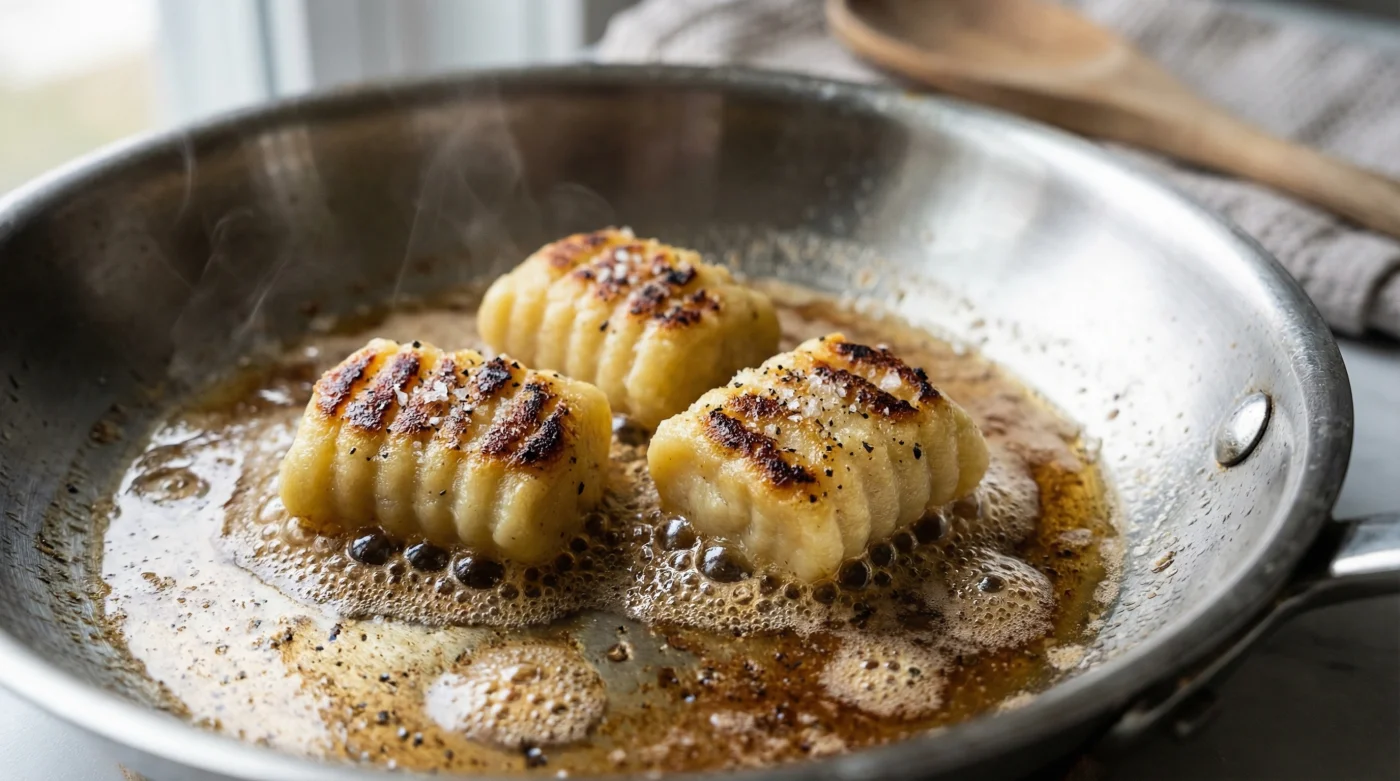
Place your skillet over medium heat. Let the pan get warm enough that a drop of water dances across the surface before evaporating. Drop in two tablespoons of butter and watch it melt into a frothy, golden pool. If you have a clove of garlic, toss it in to perfume the butter.
Tear open the package of gnocchi and pour them directly into the sizzling butter. Do not rinse them. Do not boil them. Do not hesitate. Just scatter them across the hot pan in a single, even layer.
Let them sit undisturbed for at least three minutes. You will hear a steady, rhythmic sizzle. When you finally shake the pan, you will see a gorgeous, golden-brown crust forming on the ridges. The heat crisps the exterior while gently steaming the dense interior, turning it surprisingly fluffy.
| Gnocchi Quality Checklist | What to Look For | What to Avoid |
|---|---|---|
| Ingredient List | At least 70% potato puree listed as the very first ingredient. | Wheat flour listed first. This means you are buying thick noodles, not potato dumplings. |
| Packaging Type | Vacuum-sealed, shelf-stable, or tightly wrapped refrigerated packs. | Bags with excessive condensation inside, indicating temperature abuse. |
| Physical Appearance | Distinct ridges (which help catch the butter and sauce) and a pale, matte finish. | Completely smooth, shiny surfaces which indicate a high water and gum content. |
Reclaiming Your Evening Rhythm
Cooking for a household often feels like a constant series of compromises between your limited time and your desire for a beautiful meal. But skipping the boiling water is more than just a clever kitchen shortcut. It is a small rebellion against mediocre weeknight dinners and misleading package instructions.
By respecting the ingredients you bring into your home, you transform a desperate, last-minute meal into an intentional act of care. The simple shift from a pot of water to a hot skillet of butter returns the joy to the cooking process. You are no longer dreading the gummy result. You are anticipating the crunch, the flavor, and the extra ten minutes of peace you just earned back in your evening.
Respect the potato; give it fire, not a bath, and it will reward you with a texture you never thought possible from a plastic bag.
Can I use olive oil instead of butter?
Yes, but butter provides the milk solids needed for that beautiful, nutty browning. If you use oil, add a tiny splash of butter at the very end to achieve the right flavor profile.
Does this work for cauliflower or sweet potato gnocchi?
Absolutely. In fact, alternative-vegetable gnocchi benefits even more from pan-frying, as they lack gluten structure and tend to disintegrate entirely in boiling water.
How do I add sauce if I am pan-frying?
Once the gnocchi are crispy and golden, turn the heat to low. Stir your pesto or marinara directly into the skillet, letting it coat the crispy edges for about thirty seconds before serving immediately.
What if my store-bought gnocchi are frozen?
Do not thaw them. Throw them straight from the freezer into a hot, oiled skillet with a tight-fitting lid for the first two minutes, then remove the lid to crisp them up.
How long does the pan-fry method actually take?
Usually around six to eight minutes total. You save the ten to fifteen minutes you would have spent just waiting for a large, heavy pot of water to come to a boil.