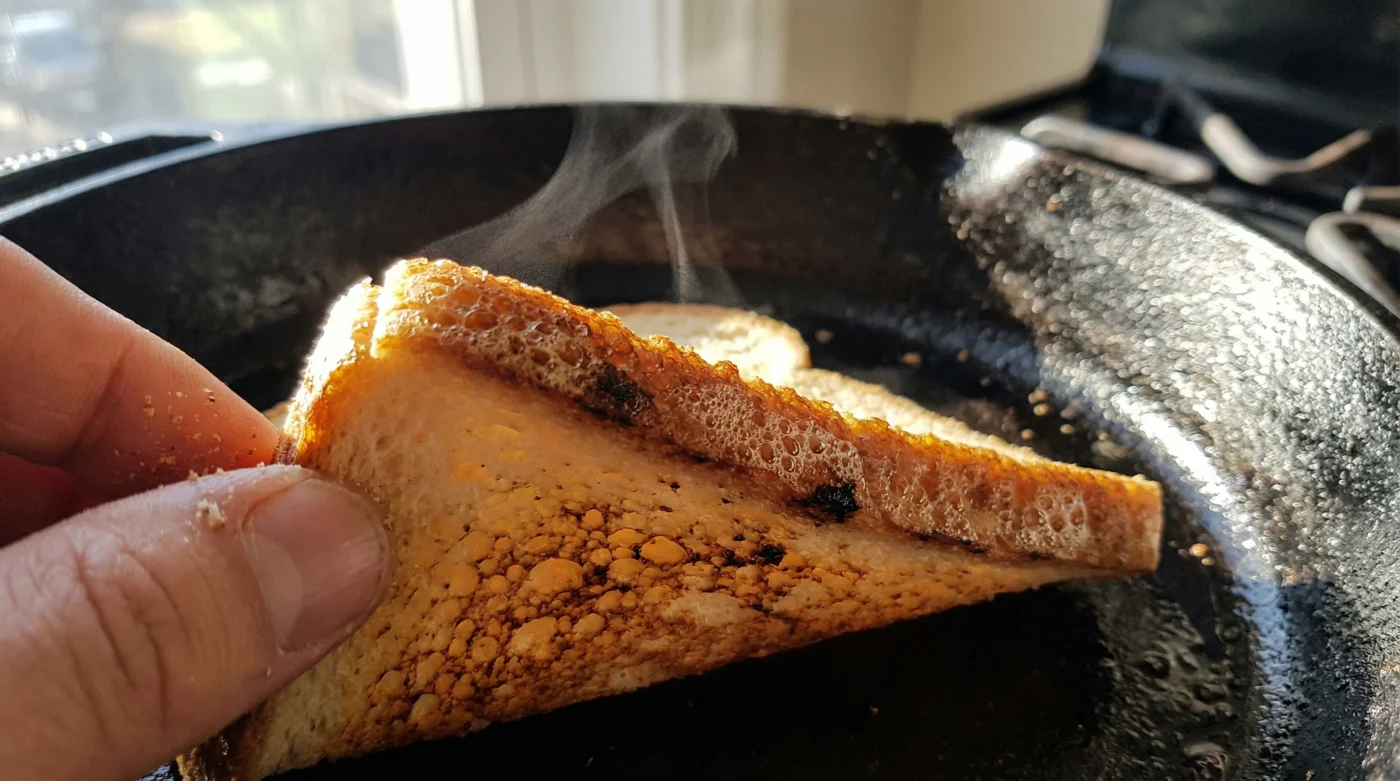
The sharp scrape of a butter knife tearing through soft white bread is a sound that ruins lunch before it even begins. You stand at the stove, wrestling with a stubborn block of cold butter, trying to coax it across a delicate slice of sandwich bread. When it finally hits the hot skillet, the kitchen fills with the anxious hiss of dairy solids cooking just a fraction too fast. You flip your grilled cheese, hoping for a masterpiece, only to find an uneven patchwork: charred, bitter black spots stranded next to pale, soggy dough. Rushing to scrape the burnt toast over the sink, you are left with a compromised meal and a lingering smell of smoke.
The Gravity of the Emulsion
For generations, we have treated butter as the undisputed king of the skillet. We accept the torn bread and the smoky kitchen as the unavoidable cost of doing business. But this devotion to dairy is blinding us to a superior physical reaction. The secret to an edge-to-edge, shatteringly crisp crust does not live in your butter dish. It sits quietly on your refrigerator door, disguised as a humble sandwich spread. Spreading Hellmann’s mayonnaise on the outside of your bread completely rewrites the rules of the frying pan. Because mayonnaise is a perfectly stable emulsion of oil, egg yolks, and a touch of vinegar, it spreads like a dream and reacts to heat with beautiful predictability.
I learned this from an unassuming diner cook named Artie, who commanded the flattop grill at a bustling corner diner in upstate New York. While the rest of us were battling cold butter in our home kitchens, Artie was effortlessly sliding out hundreds of flawless grilled cheese sandwiches a day. I watched him take a heavy metal spatula and swipe a paper-thin layer of Hellmann’s across standard white bread. ‘Butter burns,’ he told me, never taking his eyes off the sizzling grill. ‘Mayo gives you a shield. The egg proteins toast, the oil fries the bread, and nothing sticks.’ It was a kitchen revelation that completely shifted how I saw everyday pantry staples.
| Target Audience | Specific Daily Payoff |
|---|---|
| The Busy Housewife | Eliminates the wait time for butter to soften on the counter. Lunch is in the pan immediately, saving precious afternoon minutes. |
| The Texture Enthusiast | Creates an audibly crunchy, microscopic crust that remains rigid, refusing to turn soggy under the weight of heavy tomato soup. |
| The Budget Meal Planner | Transforms the most affordable loaf of standard grocery store white bread into a sturdy, bakery-level experience. |
The Anatomy of a Perfect Sizzle
To understand why this swap works so perfectly, you have to look closely at how heat interacts with ingredients at a microscopic level. Butter contains water and milk solids. When water hits a hot pan, it steams the bread before it has a chance to fry. The milk solids burn rapidly, leaving you with a frantic window of time before your sandwich turns to ash. Hellmann’s mayonnaise, on the other hand, is primarily oil and egg yolk. It boasts a significantly higher smoke point. You are essentially shallow-frying the surface of the bread in an egg-rich batter, creating an even, golden armor.
| Component | Butter Characteristics | Hellmann’s Emulsion Reaction |
|---|---|---|
| Water Content | High (creates steam, risking soggy spots in the crumb) | Extremely low (oil-based, ensuring immediate frying contact) |
| Smoke Point Limit | Around 300 degrees Fahrenheit (milk solids burn rapidly) | Over 400 degrees Fahrenheit (egg and oil browning remains stable) |
| Spread Resistance | Requires pre-planning to soften; tears soft bread | Instantly smooth and pliable straight from the refrigerator |
Executing the Golden Standard
Applying this technique requires a slight, mindful adjustment to your physical rhythm in the kitchen. Grab your trusty butter knife, but scoop out a modest dollop of Hellmann’s mayonnaise instead. Keep the layer exceptionally thin on the bread. You do not want heavy globs, just a translucent coating that gracefully reaches every single corner of the slice. The crust edges are the most critical part, as they frame the entire bite and bear the brunt of the heat.
Lay the bread, mayonnaise-side down, into a cold or barely warm cast iron skillet, then turn the dial to medium-low. This gentle, gradual rise in temperature is the absolute secret to proper timing. It allows the sharp cheddar inside to melt at the exact same pace the outside develops its magnificent crunch, ensuring harmony between the filling and the shell.
- Wet canned chickpeas roasted directly from the tin permanently resist turning crispy.
- Store-bought gnocchi boiled in water ruins the classic potato texture.
- Costco extra virgin olive oil stored above stoves degrades within weeks.
- Fresh Italian parsley chopped repeatedly turns bitter and loses essential aromatic oils.
- Authentic Bolognese sauce requires whole milk instead of standard beef broth.
| The Quality Checklist | What to Embrace | What to Avoid |
|---|---|---|
| Application Thickness | A translucent, edge-to-edge coating that acts as a thin primer. | Thick, opaque globs that leave the bread greasy or alter flavor. |
| Skillet Temperature | Starting low and slow to sync the exterior browning with the melt. | Dropping bread into a smoking hot pan, scorching the delicate egg. |
| Bread Selection | Standard, soft white bread with a tight, predictable crumb structure. | Heavily textured artisan loaves with massive air pockets. |
A Calmer Rhythm at the Stove
Adopting this simple pantry swap does more than just fix a soggy sandwich for your children’s lunch. It actively removes a persistent layer of friction from your daily routine. Cooking comfort food for your family should feel grounding and rewarding, not like a chaotic race against a burning pan. When you trust the robust emulsion of Hellmann’s to do the heavy lifting, you buy yourself genuine peace of mind at the stove.
You can confidently step back, wipe down the kitchen counter, and pour a glass of water without the constant fear of ruining the meal. The mayonnaise trick is a beautiful testament to working smarter with what you already have sitting in the refrigerator. It proves that sometimes, the best kitchen upgrades do not come from expensive gadgets, but from looking at our daily habits from a slightly different angle.
“A flawless grilled cheese doesn’t require culinary school; it just requires stepping away from the butter dish and trusting the science of a good emulsion.” – Chef Artie
The Kitchen Counter FAQ
Can you taste the mayonnaise after it cooks?
Not at all. The tangy flavor completely cooks off under the heat, leaving behind a beautifully neutral, rich, and toasted savory profile.Do I need to grease the pan too?
No, the oil in the mayonnaise spread provides all the fat you need. Adding extra fat to the pan will make the sandwich unnecessarily heavy and greasy.Does this work with light or fat-free mayonnaise?
You need full-fat Hellmann’s for the proper oil ratio. Low-fat versions contain too much water and will steam the bread instead of frying it.Can I use this trick for other toasted foods?
Absolutely. It works brilliantly for burger buns, garlic bread, and savory panini presses where you want an even, golden exterior.What happens if I use an artisan sourdough?
While it technically works, the porous nature of sourdough can trap the mayo in holes. Standard white bread offers the ideal flat canvas for a perfectly even crust.